
EPISODE · Oct 6, 2019 · 18 MIN
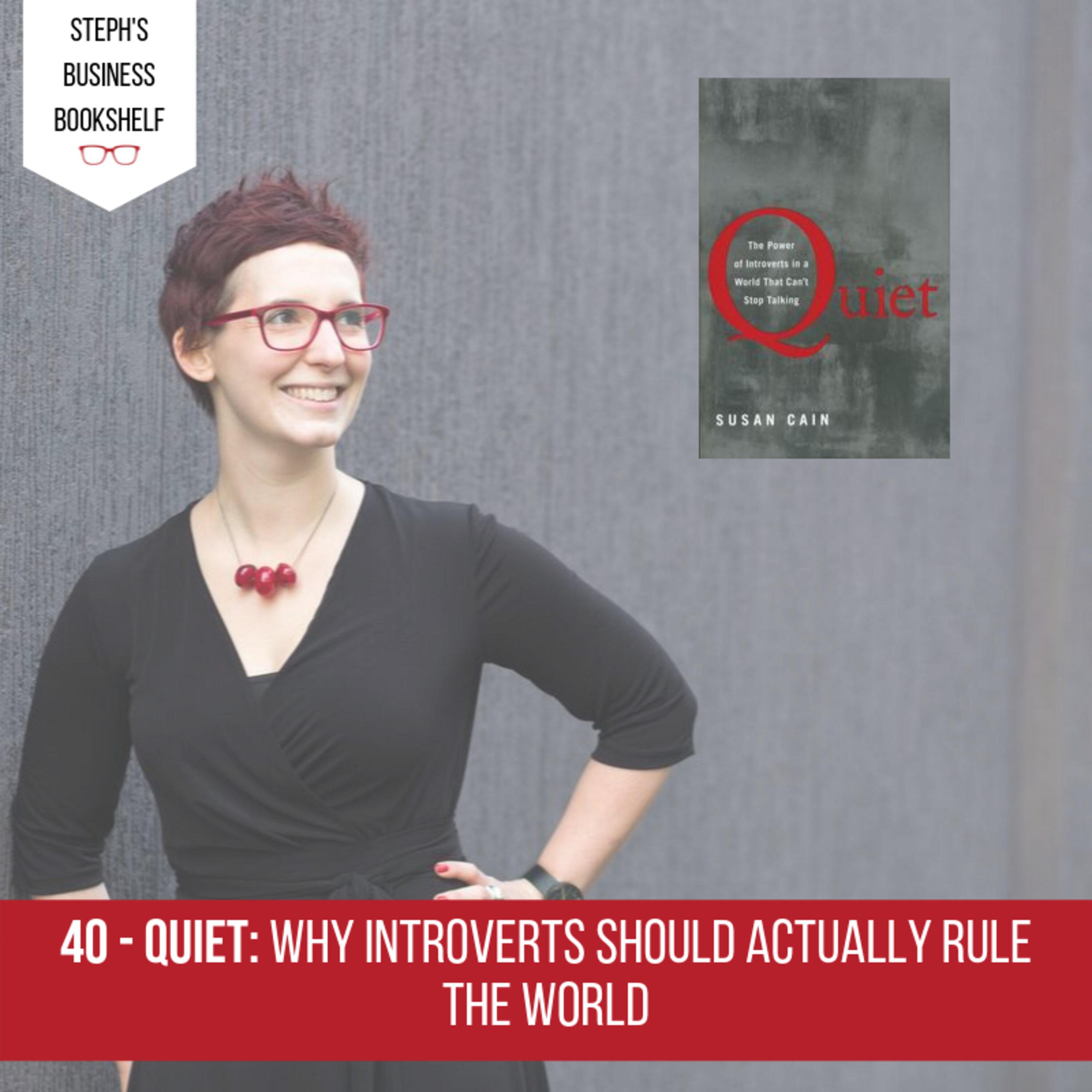
Quiet by Susan Cain: Why introverts should actually rule the world
from Steph's Business Bookshelf Podcast · host Steph Clarke
About the author SUSAN CAIN is the author of the bestsellers Quiet Power: The Secret Strengths of Introverts, and Quiet: The Power of Introverts in A World That Can’t Stop Talking, which has been translated into 40 languages, is in its seventh year on the New York Times best seller list, and was named the #1 best book of the year by Fast Company magazine, which also named Cain one of its Most Creative People in Business. Her writing has appeared in the The New York Times, The Atlantic, The Wall Street Journal, and many other publications. Her record-smashing TED talk has been viewed over 30 million times on TED.com and YouTube combined, and was named by Bill Gates one of his all-time favorite talks. Susan prefers listening to talking, reading to socializing, and cozy chats to group settings. She likes to think before she speaks (softly). And until a few years ago, was terrified of public speaking, so is still amazed that such a giant fear is conquerable. She lives in the Hudson River Valley with her husband and two sons. Visit Cain and the Quiet Revolution at www.quietrev.com. Source: https://www.quietrev.com/author/susan-cain/ Click here to buy on The Book Depository https://www.bookdepository.com/Quiet/9780141029191/?a_aid=stephsbookshelf About the book Susan Cain’s Quiet: The Power of Introverts in a World That Can’t Stop Talking shows how dramatically we undervalue introverts and how much we lose in doing so. Taking the reader on a journey from Dale Carnegie’s birthplace to Harvard Business School and from a Tony Robbins seminar to an evangelical megachurch, Cain charts the rise of the Extrovert Ideal in the twentieth century and explores its far-reaching effects. She talks to Asian-American students who feel alienated from the brash, backslapping atmosphere of American schools. She questions the dominant values of American business culture, where forced collaboration can stand in the way of innovation and where the leadership potential of introverts is often overlooked. And she draws on cutting-edge research in psychology and neuroscience to reveal the surprising differences betweenextroverts and introverts. Finally, she offers invaluable advice on everything from how to better negotiate differences in introvert-extrovert relationships and empower an introverted child to when it makes sense to be a “pretend extrovert.” Source: https://www.quietrev.com/quiet-the-book/ Links Join the 24 million other people who have watched Susan’s TED talk:https://www.ted.com/talks/susan_cain_the_power_of_introverts?language=en Find out more tips and advice on living as, or with, an introvert on Susan’s website: https://www.quietrev.com/ Listen to Susan’s podcast here (the first season focuses on giving parents and educators the tools to empower quiet kids): https://www.quietrev.com/susan-cain-quiet-podcast/ BIG IDEA 1 (6:40) – We are all wired differently. The different parts of the brain light up differently in different situations for introverts and extroverts. For example the reward part of the brain is actually bigger in extroverts and they tend to be very reward driven. They tested this with babies, toddlers and teens to see if introversion or extroversion is a natural tendency or something nurtured. They put stimulants all around such as lights, sounds and strong smells in the room. They saw some babies threw their arms and legs in the air while other babies just laid there and weren’t bothered by the sounds. They found that those babies who were thrashing their arms around weren’t having a good time but actually showing a sign of discomfort for all the stimulation. While those babies who were unbothered by all the noise around them and laid there quietly, turned out to be extroverts because they were not over stimulated by the things going on around them. High or low reactivity is one way of explaining extroversion or introversion. They also found that introverts are more likely to choose intellectual jobs as often you can close the door from unexpected stimulations and enjoy the quiet environment that they need to do the best work to succeed. BIG IDEA 2 (10:35) – The extrovert ideal. The ‘extrovert ideal’ was really birthed during the Dale Carnegie era of personal development; public speaking and sales skills linked to the growth economy where those skills were touted as the new way of work. Warren Susman, a cultural historian called this as a shift from a culture of character to a culture of personality. Interesting, the word ‘personality’ didn’t even exist until the 18th century and wasn’t widely used until the 20th century. In a country such as the US, that is powered by antidepressants and anti-anxiety drugs to try and ‘cure’ introversion, on the basis that to get ahead of work and be promoted, get a sale, or even get married, you seem to need to be extroverted. The book mentioned about inventions from some of the society’s favorite introverts. If it wasn’t for them, we wouldn’t have today’s greatest inventions. What does this mean? There is definitely space for both types and we need to look past this outdated (and misguided) notion of the extrovert ideal. BIG IDEA 3 (14:15) – Why groups are like drugs. There is a research in the book about why ideas are better when you come up with them alone first. Research also shows that group brainstorming doesn’t work and performance drops as a result of group size increasing. For teams of more than six to eight people, the output or productivity are probably worse because of the size of your group being bigger than that. People from the group doesn’t share good ideas either because of fear of being judged or other noise that could potentially mess up a good idea. Interestingly, virtual groups actually perform better because each person is alone. There’s a quote in the book that groups are like mind altering substances. Working in a group actually lowers the decision making part of the brain and increases the perception part of the brain. It changes the way we perceive a situation. Music By: Paper Planes by Paper Planes Support my book habit: https://www.buymeacoffee.com/stephsbookshelfSee omnystudio.com/listener for privacy information.
Embed this episode
NOW PLAYING
Quiet by Susan Cain: Why introverts should actually rule the world
No transcript for this episode yet
Similar Episodes
No similar episodes found.
Similar Podcasts
No similar podcasts found.