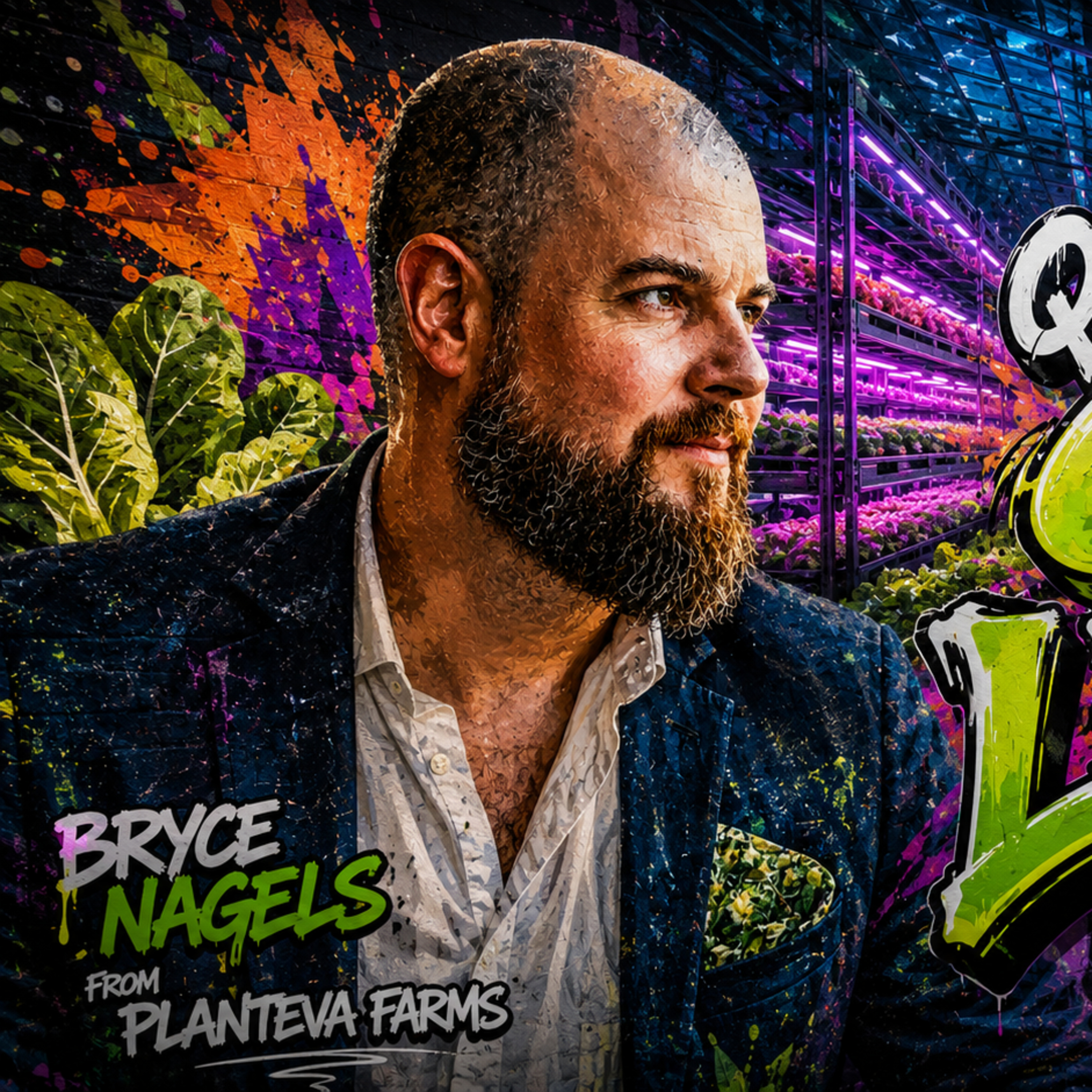
Quit Code to Grow Lettuce episode artwork

EPISODE · May 7, 2026 · 49 MIN

Quit Code to Grow Lettuce

from AI for Founders with Ryan Estes · host aiforfounders.co

In a market obsessed with AI multiples and overnight unicorn exits, Bryce Nagels is making a different bet. The CEO and co-founder of Planteva Farms is building what he calls a "halo company": high asset, low obsolescence. The kind of business that doesn't get wiped out when the next model drops, and actually gets stronger every time AI improves.Planteva specializes in propagation. They take seeds, grow them into uniform, pest-free, disease-free transplants in a tightly controlled environment, then ship those young plants to commercial growers, indoor farms, greenhouses, and field operations. It's the most overlooked step in agriculture, and Bryce realized it was also the highest-leverage one. Get the first 12 to 14 days right, and the entire downstream economics of farming change.In this conversation with Ryan, Bryce walks through how a former software engineer ended up running a CapEx-heavy biology business, what he learned pitching 120 VCs and getting shut down by most of them, and how his agronomists are now using Claude to wire together multispectral cameras, climate systems, and lighting protocols without writing a line of production code themselves. He gets candid about the mental health toll of founding capital-intensive companies, why "the goalpost always moves," and why celebrating wins matters when you're already filing your Series A paperwork the day your seed closes.This episode is for founders who want to think bigger about white space — the categories AI can't replace, only amplify — and the specific advantages of building where software can't follow.The Halo Company Thesis (High Asset, Low Obsolescence)Sit at the intersection of physical infrastructure and biological realityBuild things that must exist and can't be digitized awayAI makes the business more valuable, not obsoleteDefensible moats: hard assets, proprietary processes, real-world outputsThe pressures (labor shortages, supply chain fractures, climate) compound your value over timeThe Brake Pad Strategy (Specialize on the Critical Step)Don't try to own the whole stack; own the step nobody else is optimizingPropagation is to farming what brake pads are to automotive: invisible, essential, and underbuiltConvergence creates opportunity: as industries mature, secondary solutions emerge that streamline the whole systemPosition yourself as the upgrade input, not the end productThe Multi-Recipe Propagation MethodOne seed, multiple growth recipes throughout a single 12 to 14 day cycleLighting changes 4 to 5 times based on destination environment (indoor vs. field)Multispectral cameras detect photosynthesis in real time and trigger biofeedback loopsSame crop, different protocols based on where the plant is going nextResult: celery germination jumped from 50 to 60 percent up to 89 to 95 percent, with crop cycle cut from 65 to 80 days down to 40 to 45The Capital-Intensive Founder's Investor FilterVCs want unicorn exits; CapEx businesses need different moneyTarget family offices, strategic corporates, large-scale operators with personal stake in the outcomeLook for investors with operational vision, not just capitalExpect rejection at scale (Bryce pitched 115 to 120 VCs); treat the muscle of rejection as a deliverableThe Founder Mental Health Operating SystemAcknowledge the isolation: high-stakes decisions early in your career with limited peers who get itBuild founder community deliberately (Bryce supports the Quebec ecosystem; Ryan referenced Hampton)Reject the "4:30 a.m. tech CEO" archetype as fiction for most operatorsCelebrate wins explicitly with your team, because the goalpost always moveshttps://www.plantevafarms.com/linkedin.com/in/brycenagels⁠⁠https://www.linkedin.com/in/estesryan/⁠⁠⁠⁠https://aiforfounders.co⁠⁠https://trynina.co/

In a market obsessed with AI multiples and overnight unicorn exits, Bryce Nagels is making a different bet. The CEO and co-founder of Planteva Farms is building what he calls a "halo company": high asset, low obsolescence. The kind of business that doesn't get wiped out when the next model drops, and actually gets stronger every time AI improves.Planteva specializes in propagation. They take seeds, grow them into uniform, pest-free, disease-free transplants in a tightly controlled environment, then ship those young plants to commercial growers, indoor farms, greenhouses, and field operations. It's the most overlooked step in agriculture, and Bryce realized it was also the highest-leverage one. Get the first 12 to 14 days right, and the entire downstream economics of farming change.In this conversation with Ryan, Bryce walks through how a former software engineer ended up running a CapEx-heavy biology business, what he learned pitching 120 VCs and getting shut down by most of them, and how his agronomists are now using Claude to wire together multispectral cameras, climate systems, and lighting protocols without writing a line of production code themselves. He gets candid about the mental health toll of founding capital-intensive companies, why "the goalpost always moves," and why celebrating wins matters when you're already filing your Series A paperwork the day your seed closes.This episode is for founders who want to think bigger about white space — the categories AI can't replace, only amplify — and the specific advantages of building where software can't follow.The Halo Company Thesis (High Asset, Low Obsolescence)Sit at the intersection of physical infrastructure and biological realityBuild things that must exist and can't be digitized awayAI makes the business more valuable, not obsoleteDefensible moats: hard assets, proprietary processes, real-world outputsThe pressures (labor shortages, supply chain fractures, climate) compound your value over timeThe Brake Pad Strategy (Specialize on the Critical Step)Don't try to own the whole stack; own the step nobody else is optimizingPropagation is to farming what brake pads are to automotive: invisible, essential, and underbuiltConvergence creates opportunity: as industries mature, secondary solutions emerge that streamline the whole systemPosition yourself as the upgrade input, not the end productThe Multi-Recipe Propagation MethodOne seed, multiple growth recipes throughout a single 12 to 14 day cycleLighting changes 4 to 5 times based on destination environment (indoor vs. field)Multispectral cameras detect photosynthesis in real time and trigger biofeedback loopsSame crop, different protocols based on where the plant is going nextResult: celery germination jumped from 50 to 60 percent up to 89 to 95 percent, with crop cycle cut from 65 to 80 days down to 40 to 45The Capital-Intensive Founder's Investor FilterVCs want unicorn exits; CapEx businesses need different moneyTarget family offices, strategic corporates, large-scale operators with personal stake in the outcomeLook for investors with operational vision, not just capitalExpect rejection at scale (Bryce pitched 115 to 120 VCs); treat the muscle of rejection as a deliverableThe Founder Mental Health Operating SystemAcknowledge the isolation: high-stakes decisions early in your career with limited peers who get itBuild founder community deliberately (Bryce supports the Quebec ecosystem; Ryan referenced Hampton)Reject the "4:30 a.m. tech CEO" archetype as fiction for most operatorsCelebrate wins explicitly with your team, because the goalpost always moveshttps://www.plantevafarms.com/linkedin.com/in/brycenagels⁠⁠https://www.linkedin.com/in/estesryan/⁠⁠⁠⁠https://aiforfounders.co⁠⁠https://trynina.co/

NOW PLAYING

Quit Code to Grow Lettuce

0:00 49:02

No transcript for this episode yet

We transcribe on demand. Request one and we'll notify you when it's ready — usually under 10 minutes.

MG Show MG Show The MG Show, hosted by Jeffrey Pedersen and Shannon Townsend, is a leading alternative media platform dedicated to uncovering the truth behind today’s most pressing political issues. Launched in 2019, the show has grown exponentially, offering unfiltered insights, comprehensive research, and real-time analysis. With a commitment to independent journalism and factual integrity, the MG Show empowers its audience with knowledge and encourages active participation in the political discourse. French Your Way Jessica: Native French teacher founder of French Your Way Boost your French listening skills and test your comprehension with this one of a kind series of podcasts. Get the chance to listen to a real conversation between native speakers talking at normal speed AND customise your learning experience through carefully designed sets of questions (2 levels of difficulty) available for download at www.frenchvoicespodcast.com. All interviews also come with the transcript. French teacher Jessica interviews native speakers of French from around the world who share a bit of their life and passion. Where else would you meet in one same place a French yoga teacher based in Melbourne, a soap manufacturer from Provence, or a couple cycling around the world? That Hoarder: Overcome Compulsive Hoarding That Hoarder Hoarding disorder is stigmatised and people who hoard feel vast amounts of shame. This podcast began life as an audio diary, an anonymous outlet for somebody with this weird condition. That Hoarder speaks about her experiences living with compulsive hoarding, she interviews therapists, academics, researchers, children of hoarders, professional organisers and influencers, and she shares insight and tips for others with the problem. Listened to by people who hoard as well as those who love them and those who work with them, Overcome Compulsive Hoarding with That Hoarder aims to shatter the stigma, share the truth and speak openly and honestly to improve lives. The Small Business Startup School – Business Notes | Financial Literacy | Retail Psychology – For Professionals & Entrepreneurs The Small Business Startup School Inc. Starting or buying a small business? While personal circumstances may vary, business patterns remain timeless. On The Small Business Startup School, we explore strategies, insights, and practical solutions to help entrepreneurs confidently navigate their journey.Hosted by Ola Williams—a retail entrepreneur, fintech founder, and financial coach with over two decades of experience—this podcast marries financial awareness and retail psychology with optimism to deliver actionable takeaways.Join us to learn, grow, and connect as we uncover the keys to business success.Let’s continue to learn together and be encouraged to keep on connecting!

Frequently Asked Questions

How long is this episode of AI for Founders with Ryan Estes?

This episode is 49 minutes long.

When was this AI for Founders with Ryan Estes episode published?

This episode was published on May 7, 2026.

What is this episode about?

In a market obsessed with AI multiples and overnight unicorn exits, Bryce Nagels is making a different bet. The CEO and co-founder of Planteva Farms is building what he calls a "halo company": high asset, low obsolescence. The kind of business that...

Can I download this AI for Founders with Ryan Estes episode?

Yes, you can download this episode by clicking the download button on the episode player, or subscribe to the podcast in your preferred podcast app for automatic downloads.
URL copied to clipboard!