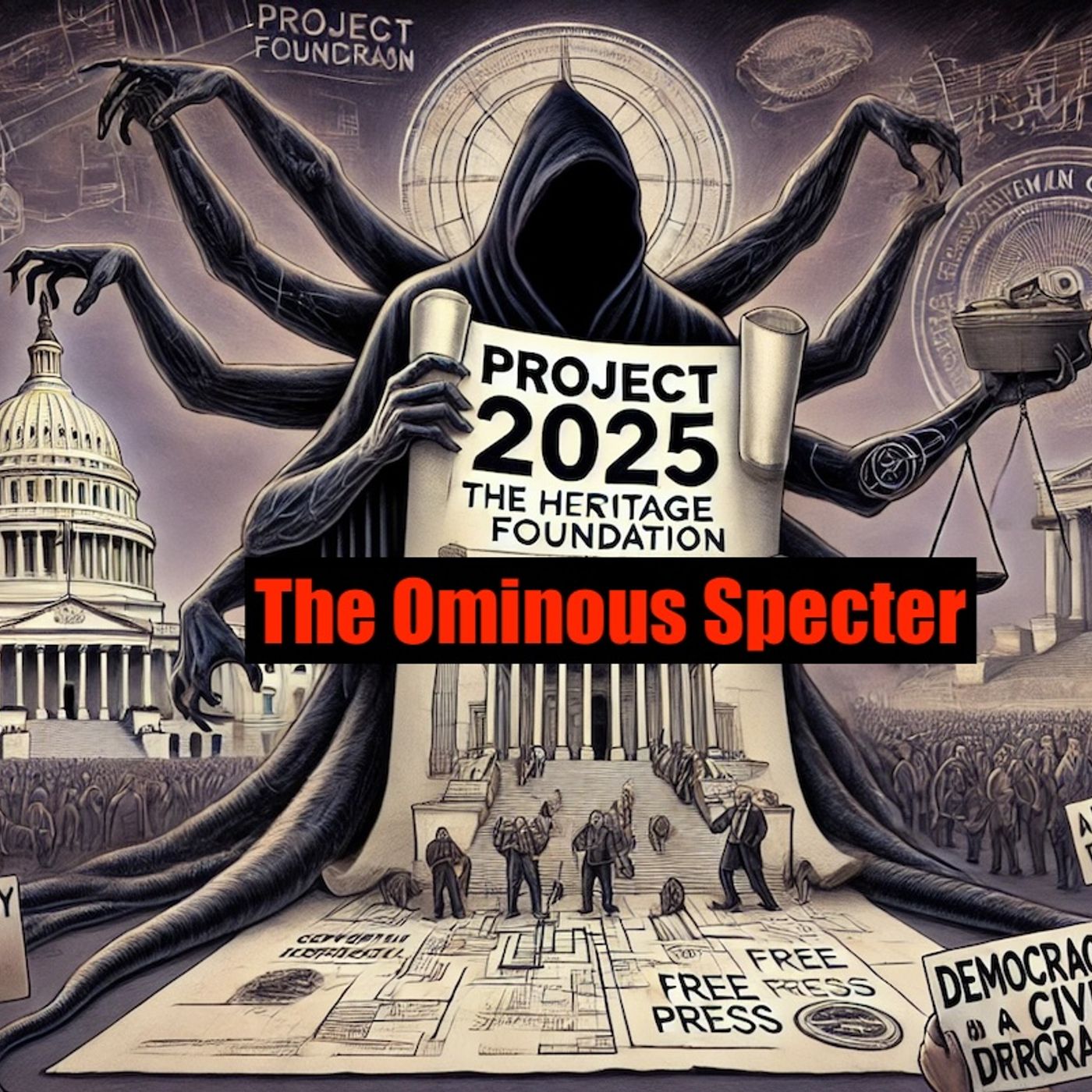
Radical Overhaul or Concerning Shift? Project 2025's Sweeping Proposal for the Future of American Government episode artwork

EPISODE · Dec 26, 2024 · 7 MIN

Radical Overhaul or Concerning Shift? Project 2025's Sweeping Proposal for the Future of American Government

from Project 2025: The Ominous Specter · host Inception Point AI

As I delve into the intricacies of Project 2025, a sweeping initiative crafted by the Heritage Foundation, it becomes clear that this is more than just a policy blueprint – it’s a vision for a fundamentally transformed American government. Released in April 2022, Project 2025 is presented as a governing agenda tailored for a potential second Donald Trump presidency, although Trump himself has attempted to distance himself from the project. At its core, Project 2025 is a 900-page manifesto that outlines radical changes to economic, social, and environmental policies, as well as the structure and functioning of federal agencies. One of the most striking aspects is the proposal to dismantle or significantly alter several key departments. For instance, the plan suggests abolishing the Department of Education, transferring or terminating its programs, and dismantling the Department of Homeland Security[1][4][5]. The project's authors envision a federal government under the tight control of the executive branch, advocating for the "unitary executive theory." This would allow the president to replace thousands of civil service employees with political appointees, streamlining decision-making but also eroding the independence of agencies like the Department of Justice[3][4]. In the realm of healthcare, Project 2025 proposes drastic cuts to Medicare and Medicaid, and it urges the government to explicitly reject abortion as healthcare. The plan also seeks to eliminate coverage of emergency contraception and use the Comstock Act to prosecute those who send and receive contraceptives and abortion pills. These measures are part of a broader agenda that includes work requirements for those reliant on the Supplemental Nutrition Assistance Program and changes to overtime rules that could weaken worker protections[1][4]. The environmental sector is another area where Project 2025's impact would be profound. The plan recommends reducing environmental and climate change regulations to favor fossil fuels, encouraging the consumption of more natural gas despite concerns about methane leaks, and repealing the Inflation Reduction Act, which allocates $370 billion for clean technology. The Environmental Protection Agency (EPA) would be significantly altered, with proposals to prevent the agency from using "unrealistic" climate change impact projections and to subject EPA research activities to closer oversight by political appointees rather than scientific experts[1][2]. The project's stance on science policy is equally contentious. It prioritizes fundamental research over deployment, arguing that many current Department of Energy programs act as subsidies to the private sector. The plan also suggests eliminating offices focused on energy technology development and climate change programs within the Department of Energy. Additionally, it proposes restricting academic and technology exchanges with countries like China, which are labeled as adversaries[2]. In the co This content was created in partnership and with the help of Artificial Intelligence AI.

As I delve into the intricacies of Project 2025, a sweeping initiative crafted by the Heritage Foundation, it becomes clear that this is more than just a policy blueprint – it’s a vision for a fundamentally transformed American government. Released in April 2022, Project 2025 is presented as a governing agenda tailored for a potential second Donald Trump presidency, although Trump himself has attempted to distance himself from the project. At its core, Project 2025 is a 900-page manifesto that outlines radical changes to economic, social, and environmental policies, as well as the structure and functioning of federal agencies. One of the most striking aspects is the proposal to dismantle or significantly alter several key departments. For instance, the plan suggests abolishing the Department of Education, transferring or terminating its programs, and dismantling the Department of Homeland Security[1][4][5]. The project's authors envision a federal government under the tight control of the executive branch, advocating for the "unitary executive theory." This would allow the president to replace thousands of civil service employees with political appointees, streamlining decision-making but also eroding the independence of agencies like the Department of Justice[3][4]. In the realm of healthcare, Project 2025 proposes drastic cuts to Medicare and Medicaid, and it urges the government to explicitly reject abortion as healthcare. The plan also seeks to eliminate coverage of emergency contraception and use the Comstock Act to prosecute those who send and receive contraceptives and abortion pills. These measures are part of a broader agenda that includes work requirements for those reliant on the Supplemental Nutrition Assistance Program and changes to overtime rules that could weaken worker protections[1][4]. The environmental sector is another area where Project 2025's impact would be profound. The plan recommends reducing environmental and climate change regulations to favor fossil fuels, encouraging the consumption of more natural gas despite concerns about methane leaks, and repealing the Inflation Reduction Act, which allocates $370 billion for clean technology. The Environmental Protection Agency (EPA) would be significantly altered, with proposals to prevent the agency from using "unrealistic" climate change impact projections and to subject EPA research activities to closer oversight by political appointees rather than scientific experts[1][2]. The project's stance on science policy is equally contentious. It prioritizes fundamental research over deployment, arguing that many current Department of Energy programs act as subsidies to the private sector. The plan also suggests eliminating offices focused on energy technology development and climate change programs within the Department of Energy. Additionally, it proposes restricting academic and technology exchanges with countries like China, which are labeled as adversaries[2]. In the co This content was created in partnership and with the help of Artificial Intelligence AI.

NOW PLAYING

Radical Overhaul or Concerning Shift? Project 2025's Sweeping Proposal for the Future of American Government

0:00 7:17

No transcript for this episode yet

We transcribe on demand. Request one and we'll notify you when it's ready — usually under 10 minutes.

Frequently Asked Questions

How long is this episode of Project 2025: The Ominous Specter?

This episode is 7 minutes long.

When was this Project 2025: The Ominous Specter episode published?

This episode was published on December 26, 2024.

What is this episode about?

As I delve into the intricacies of Project 2025, a sweeping initiative crafted by the Heritage Foundation, it becomes clear that this is more than just a policy blueprint – it’s a vision for a fundamentally transformed American government. Released...

Can I download this Project 2025: The Ominous Specter episode?

Yes, you can download this episode by clicking the download button on the episode player, or subscribe to the podcast in your preferred podcast app for automatic downloads.
URL copied to clipboard!