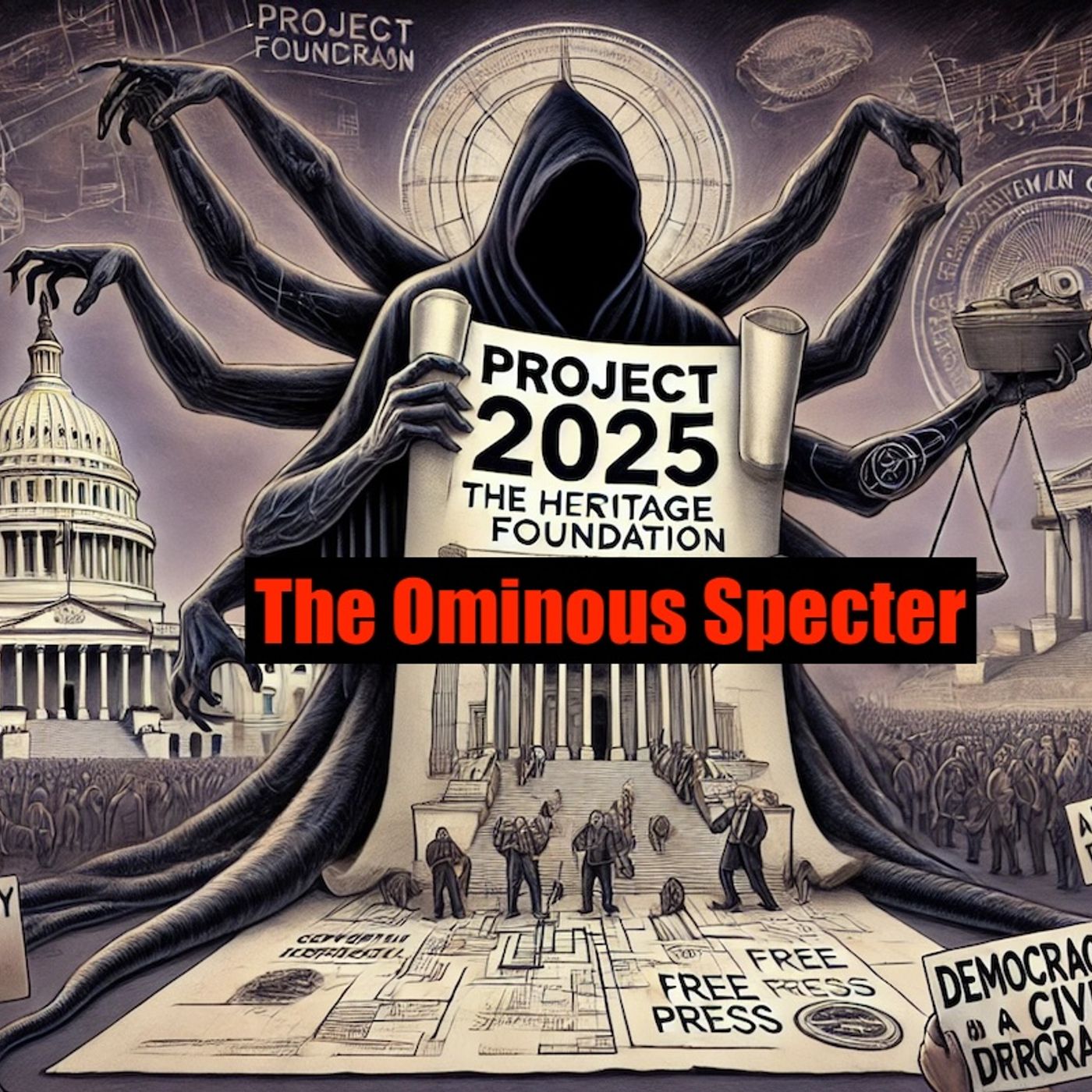
Radical Overhaul: Project 2025's Blueprint for a Reshaped Federal Government episode artwork

EPISODE · Mar 2, 2025 · 6 MIN

Radical Overhaul: Project 2025's Blueprint for a Reshaped Federal Government

from Project 2025: The Ominous Specter · host Inception Point AI

As I delved into the intricacies of Project 2025, a blueprint crafted by the Heritage Foundation for a potential second Donald Trump presidency, I was struck by the sheer scope and ambition of its proposals. This 900-page document is more than just a policy guide; it is a comprehensive plan to reshape the federal government, consolidate executive power, and implement a far-right agenda that touches nearly every aspect of American life. At its core, Project 2025 is about centralizing power in the White House. The plan advocates for the elimination of the independence of key federal agencies, including the Department of Justice (DOJ), the Federal Communications Commission (FCC), and the Federal Trade Commission (FTC). This aligns with the unitary executive theory, which posits that the president should have complete control over the executive branch. As Kevin Roberts, a key figure in the project, put it, "all federal employees should answer to the president"[1]. One of the most striking aspects of Project 2025 is its approach to federal staffing. The plan proposes reclassifying tens of thousands of federal civil service workers as political appointees, allowing for their replacement with individuals loyal to the president. This is not a new idea; during Trump's first term, he established the Schedule F job classification by executive order, which was later rescinded by President Biden. However, with Trump's return to office, this classification has been revived, paving the way for a significant purge of federal employees deemed disloyal[1]. The project's impact on education is equally profound. It envisions a drastic reduction in the federal government's role in public education, advocating for the closure of the Department of Education and transferring its responsibilities to the states. This would mean the end of federal funding for programs like Title I, which provides $18 billion annually to schools in low-income areas, and the Head Start program, which supports children from low-income families. Instead, public funds would be channeled into school vouchers that could be used for private or religious schools, a move that critics argue would exacerbate educational inequality[1][3]. In the realm of healthcare, Project 2025 proposes significant cuts to social safety nets. It recommends reducing funding for Medicare and Medicaid, and ending programs aimed at forgiving student loans. The plan also targets the National Institutes of Health (NIH), suggesting a reduction in its independence and the defunding of stem cell research. These changes are part of a broader agenda to align scientific research with conservative principles, with a particular emphasis on reducing funding for climatology research and reversing the EPA's finding that carbon dioxide emissions are harmful to human health[1]. Environmental policies are another critical area where Project 2025 seeks to make its mark. The plan advocates for the relaxation of regulations on the foss This content was created in partnership and with the help of Artificial Intelligence AI.

As I delved into the intricacies of Project 2025, a blueprint crafted by the Heritage Foundation for a potential second Donald Trump presidency, I was struck by the sheer scope and ambition of its proposals. This 900-page document is more than just a policy guide; it is a comprehensive plan to reshape the federal government, consolidate executive power, and implement a far-right agenda that touches nearly every aspect of American life. At its core, Project 2025 is about centralizing power in the White House. The plan advocates for the elimination of the independence of key federal agencies, including the Department of Justice (DOJ), the Federal Communications Commission (FCC), and the Federal Trade Commission (FTC). This aligns with the unitary executive theory, which posits that the president should have complete control over the executive branch. As Kevin Roberts, a key figure in the project, put it, "all federal employees should answer to the president"[1]. One of the most striking aspects of Project 2025 is its approach to federal staffing. The plan proposes reclassifying tens of thousands of federal civil service workers as political appointees, allowing for their replacement with individuals loyal to the president. This is not a new idea; during Trump's first term, he established the Schedule F job classification by executive order, which was later rescinded by President Biden. However, with Trump's return to office, this classification has been revived, paving the way for a significant purge of federal employees deemed disloyal[1]. The project's impact on education is equally profound. It envisions a drastic reduction in the federal government's role in public education, advocating for the closure of the Department of Education and transferring its responsibilities to the states. This would mean the end of federal funding for programs like Title I, which provides $18 billion annually to schools in low-income areas, and the Head Start program, which supports children from low-income families. Instead, public funds would be channeled into school vouchers that could be used for private or religious schools, a move that critics argue would exacerbate educational inequality[1][3]. In the realm of healthcare, Project 2025 proposes significant cuts to social safety nets. It recommends reducing funding for Medicare and Medicaid, and ending programs aimed at forgiving student loans. The plan also targets the National Institutes of Health (NIH), suggesting a reduction in its independence and the defunding of stem cell research. These changes are part of a broader agenda to align scientific research with conservative principles, with a particular emphasis on reducing funding for climatology research and reversing the EPA's finding that carbon dioxide emissions are harmful to human health[1]. Environmental policies are another critical area where Project 2025 seeks to make its mark. The plan advocates for the relaxation of regulations on the foss This content was created in partnership and with the help of Artificial Intelligence AI.

NOW PLAYING

Radical Overhaul: Project 2025's Blueprint for a Reshaped Federal Government

0:00 6:30

No transcript for this episode yet

We transcribe on demand. Request one and we'll notify you when it's ready — usually under 10 minutes.

Frequently Asked Questions

How long is this episode of Project 2025: The Ominous Specter?

This episode is 6 minutes long.

When was this Project 2025: The Ominous Specter episode published?

This episode was published on March 2, 2025.

What is this episode about?

As I delved into the intricacies of Project 2025, a blueprint crafted by the Heritage Foundation for a potential second Donald Trump presidency, I was struck by the sheer scope and ambition of its proposals. This 900-page document is more than just...

Can I download this Project 2025: The Ominous Specter episode?

Yes, you can download this episode by clicking the download button on the episode player, or subscribe to the podcast in your preferred podcast app for automatic downloads.
URL copied to clipboard!