
EPISODE · Dec 17, 2025 · 9 MIN
Rail Union Opposition to Union Pacific–Norfolk Southern Merger Risks
from Breaking News To Trading Moves
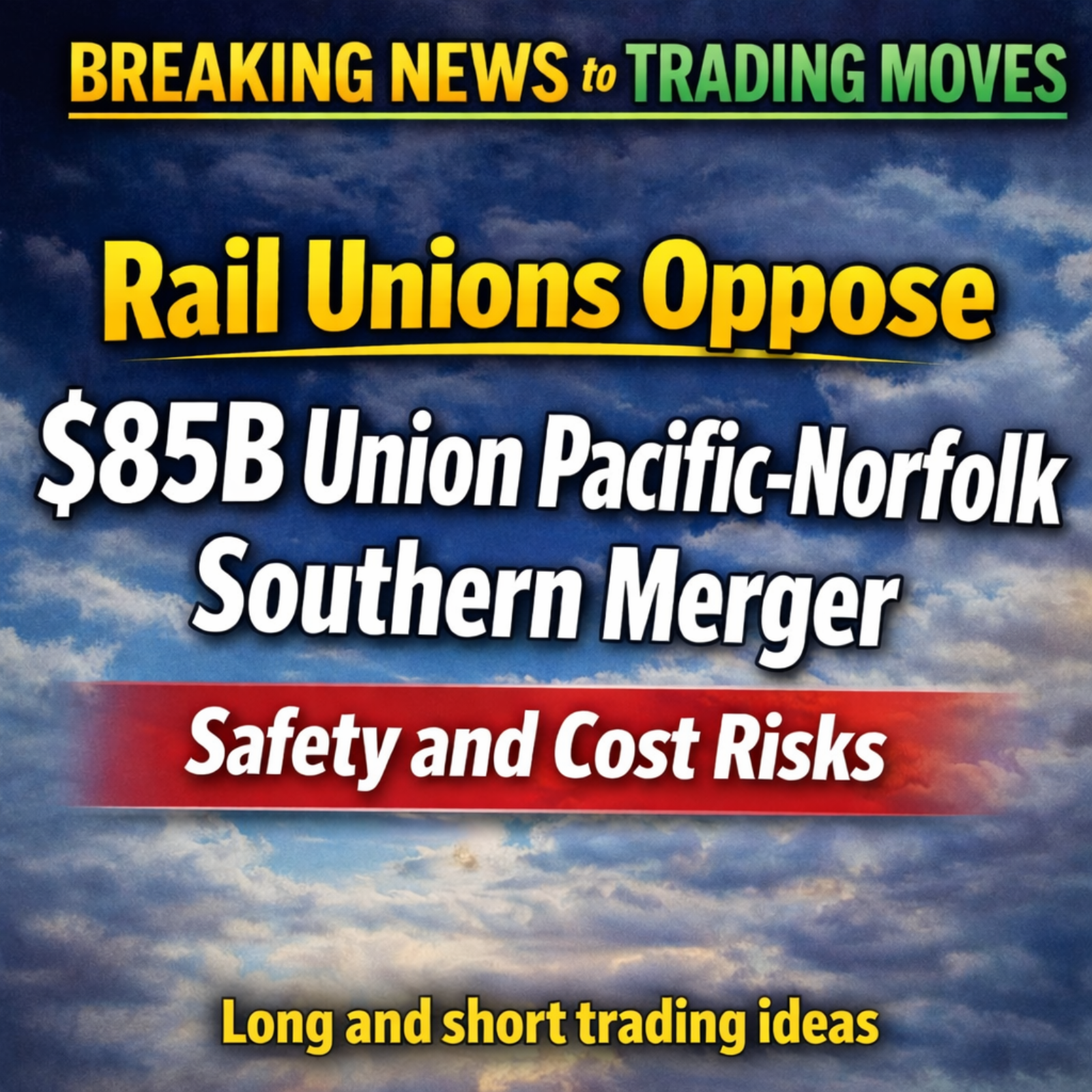
Rail Unions Oppose $85B Union Pacific–Norfolk Southern Merger, Citing Safety and Cost Risks What Happened 2 major rail unions said they oppose the proposed $85 billion merger between Union Pacific and Norfolk Southern, warning it could raise safety risks, disrupt service, and push shipping costs higher. The deal would create the 1st transcontinental railroad in the US and will face scrutiny from the Surface Transportation Board under strict merger standards. Why This Matters For MarketsThis is a regulatory-risk headline. Big union opposition can increase the odds of delays, tougher conditions, or a rejection, which can hit merger confidence. It also supports a “freight shifts away from rail” narrative if shippers worry about service or pricing. Winners (Grouped)Competing rail networks that could gain share if the merger gets delayed or blockedReason: If customers fear less competition or service disruptions, they may diversify freight across other networks. Rival rails also benefit if uncertainty freezes long-term contracting with the merging carriers.Names: $CSX, $CP, $CNI, $BRK.BTrucking and logistics providers positioned to capture freight if rail service tightens or rates riseReason: If rail becomes less attractive due to pricing, reliability, or disruption during integration, freight can shift to truckload, LTL, and brokerage networks.Names: $JBHT, $ODFL, $XPO, $CHRWRail technology and equipment suppliers if regulators and operators lean harder into safety and efficiency spendingReason: Labor and regulator focus on safety can translate into more capex on monitoring, braking, inspection, and modernization across the industry.Names: $WAB, $TRN, $GBXLosers (Grouped)The merging railroads if deal risk rises and timelines stretchReason: More opposition can mean higher compliance costs, more concessions, a longer review, and a wider spread between “deal story” and reality.Names: $UNP, $NSC Bulk shippers that rely on competitive rail pricing, especially chemicals and agricultureReason: If consolidation reduces shipper leverage or access to routes, freight costs can rise and service options can shrink, pressuring margins.Names: $DOW, $LYB, $ADM, $BG Big-box and e-commerce freight users if transportation costs rise broadlyReason: If rail shipping gets pricier and more volume shifts to trucking, that can lift overall domestic freight costs and complicate peak-season planning.Names: $WMT, $TGT, $AMZN#StockMarket #Trading #Investing #DayTrading #SwingTrading #Railroads #Freight #Transportation #Logistics #Earnings #MergersAndAcquisitions #RegulatoryRisk
Embed this episode
Ready to play
Rail Union Opposition to Union Pacific–Norfolk Southern Merger Risks
No transcript for this episode yet
Similar Episodes
No similar episodes found.
Similar Podcasts
No similar podcasts found.