
EPISODE · Mar 6, 2026 · 13 MIN
Raising Our Children as Eco-Guardians in a Time of Collapse
from Gaia's Call · host Brad Swift
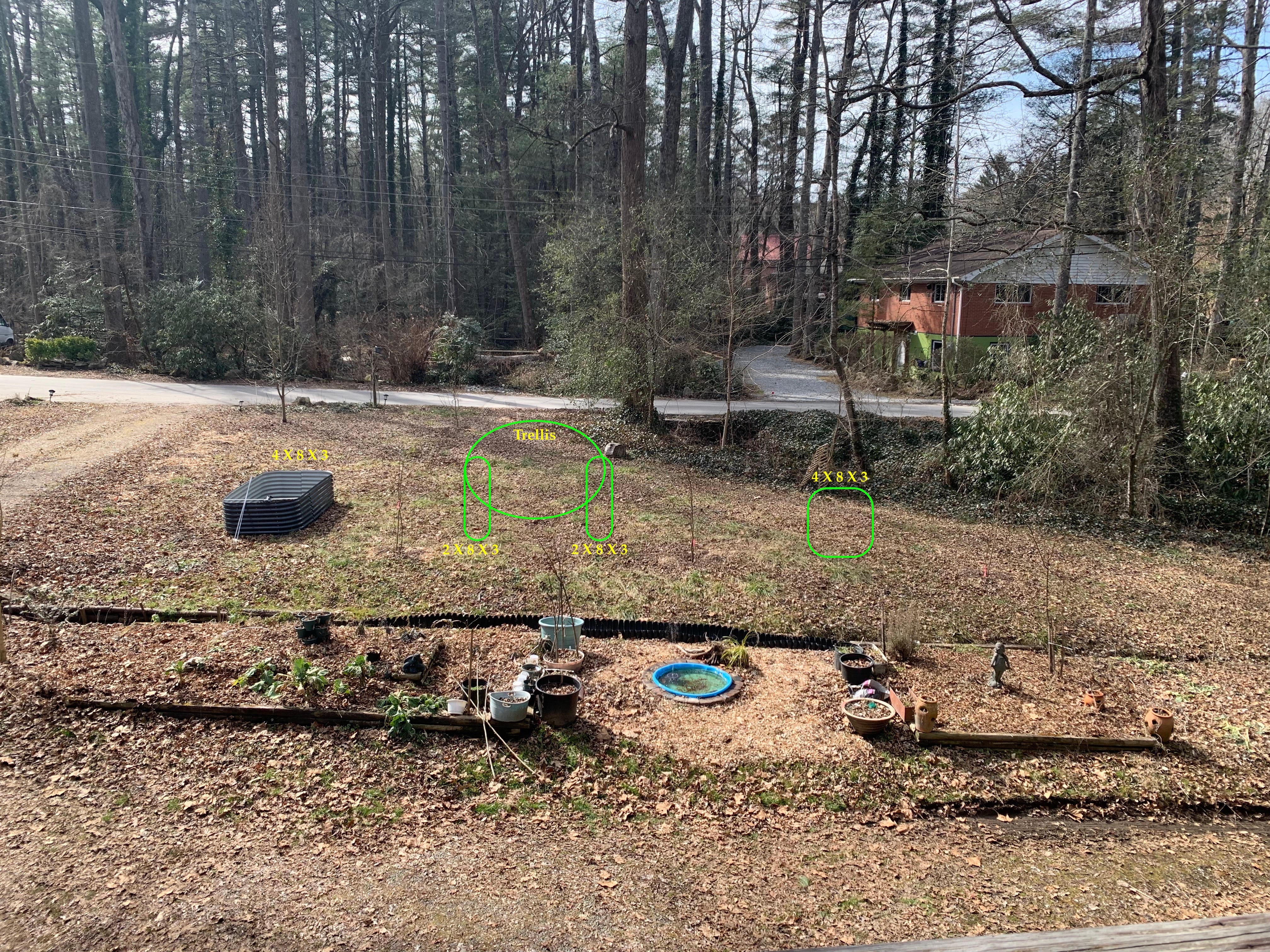
A few weeks ago, Ann and I reopened a conversation that has been quietly circling for years. What if Amber and Justin moved into the upstairs of Loving Homestead… and Ann and I moved downstairs to the ‘mother-in-law’ apartment? Four loving adults. Two extraordinary children. One shared roof. One shared experiment.It feels beautiful. It feels bold. It feels right. And then—as real life tends to do—a wrinkle surfaced. The local school Logan and Piper would attend has a “poor” rating. That word landed heavily. Of course it did. Parents want the best for their children. We all do.And I found myself sitting with a deeper, slightly uncomfortable realization: even if the school had a five-star rating… would it actually be preparing them for the world they are growing into?That question has not left me.The World Our Children Are InheritingWe are living in what many are calling a polycrisis or metacrisis—overlapping ecological, political, economic, technological, and spiritual disruptions. Some call it the Great Collapse. Others call it the Great Turning. And others, including myself, see it as something messier and more mysterious—like what happens inside a chrysalis as a caterpillar transforms into a butterfly.Inside that chrysalis, everything dissolves. Structures break down. It looks like chaos. And yet, imaginal cells begin to organize around a new pattern of being.Perhaps we are living inside such a chrysalis moment. Perhaps our children are not merely inheriting a mess—perhaps we and they are the imaginal cells of what comes next. Whatever language we use, one thing is clear: the world Logan and Piper will inhabit as adults will not look like the world I grew up in. And probably not even like the world their parents grew up in.So the real question isn’t, “Is this school highly rated?” The real question is: What prepares children to steward a changing world?Stewardship Is Not the Same as SuccessMost school ratings measure standardized test scores, reading and math proficiency, graduation rates, and college admissions. Important? Yes. Sufficient? Not even close…not for these times that are before us and that our children are inheriting.Because stewardship requires something deeper.Stewardship is about how we show up in relationship to the Earth, to community, to uncertainty, and to ourselves. It asks not only, “Can you compete?” but “Can you care?” Not only, “Can you achieve?” but “Can you regenerate?”In many ways, our dominant educational model is based on and a reflection of the Great Untruths:* that we are separate from nature,* that more is always better,* that Earth’s resources are unlimited, or* that technology will save us.* But the world our children are stepping into demand a different set of capacities altogether—ones based in and are a reflection of the four Great Truths.What Might Actually Prepare Our Children?As I’ve reflected on this—both as a grandfather and as someone deeply living true to the four Great Truths—a few qualities rise to the top.Emotional resilience. Not the stiff upper lip of suppression, but the ability to feel deeply without being overwhelmed. To face unsettling realities without collapsing into despair. To experience disappointment without losing direction. In a time of disruption, emotional regulation may be more important than algebra.Collaborative skills. The future will not be navigated alone. Climate events, economic shifts, technological upheaval—these are collective challenges. Children who can listen, negotiate, co-create, and repair relationships will be far better equipped than lone high-achievers. Stewardship is relational.Comfort with uncertainty. My generation was largely raised with the promise of predictability: study hard, work hard, retire comfortably. That storyline is fraying. Our children need to become fluent in ambiguity—not paralyzed by not knowing, but energized by exploration. This may be one of the most countercultural capacities of all.Ecological intimacy. To steward something, you must feel connected to it. If nature is merely scenery or resource, stewardship feels optional. But if children grow up planting, composting, repairing, noticing birds, understanding soil… something shifts. They no longer see themselves as separate from nature. They experience interconnection. And that changes everything.Entrepreneurial adaptability. Not hustle culture, but creative agency. The ability to see problems as invitations. To start small initiatives. To experiment and pivot. In a rapidly shifting world, adaptability may matter more than institutional credentials.Inner steadiness. Perhaps the quiet foundation beneath all the others—an anchored sense of self, a moral compass not easily swayed by noise, a capacity to act from values rather than panic. Inner steadiness is cultivated slowly—through modeling, conversation, presence. Not through rankings.The Deeper RealizationAs I’ve wrestled with the school rating question, I’ve had to confront something in myself.Part of me still wants reassurance—a five-star rating, a clear path, a sense that everything will continue more or less as it has. But another part of me knows that no school—highly rated or not—can single-handedly prepare children for this moment in history.Education is ecological.It happens in families, in communities, in gardens, at dinner tables, in moments of failure, in how adults handle disagreement, and in whether we model fear or steadiness.Recently, I created a miniature hydroponic system out of a plastic take-home container so Logan and Piper could watch seeds sprout in real time. Nothing fancy. Just water, light, and patience. But when those first tiny green shoots emerged, their eyes widened. The miracle of growth became immediate, tangible, intimate.That, too, is education.That, too, is stewardship training.And if Ann and I move downstairs while Amber and Justin move upstairs, something extraordinary becomes possible: four adults consciously shaping a micro-culture—one in which the capacities of stewardship are lived daily, not merely discussed.A Shift in the QuestionInstead of asking, “Is this school good enough?” perhaps the better question is:How do we, as parents and grandparents, cultivate the qualities that will allow our children to steward whatever world unfolds? School matters. But it is not destiny. Atmosphere may matter more. Alignment among adults may matter more. Modeling resilience may matter more.Each morning, I renew a vow—to live as if the Four Great Truths are real and trustworthy. To embody interconnectedness, sufficiency, reciprocity, and stewardship—not perfectly, but sincerely. That vow subtly shapes my decisions, my conversations, and the kind of world I’m trying to create within my own home.Because ultimately, our children are watching far more than they are listening.The InvitationI don’t pretend to have the final answer. In fact, one of the most important things our children may learn from us is how to navigate not knowing. But I am increasingly convinced of this:If we raise children who are emotionally resilient, collaborative, comfortable with uncertainty, ecologically intimate, adaptable, and inwardly steady…They will be capable of stewarding a world in transition.Whether the school rating is high or low.Whether the times are calm or turbulent.Whether the future is predictable or entirely new.And perhaps that is the deeper work before us—not simply protecting our children from a changing world, but preparing them to participate in its regeneration.P.S. Here are a few pics of what has taken up much of my time (and had me miss publishing a Substack article on Feb. 20th): This is a public episode. If you'd like to discuss this with other subscribers or get access to bonus episodes, visit wbradfordswift.substack.com/subscribe
Embed this episode
Ready to play
Raising Our Children as Eco-Guardians in a Time of Collapse
No transcript for this episode yet
Similar Episodes
No similar episodes found.