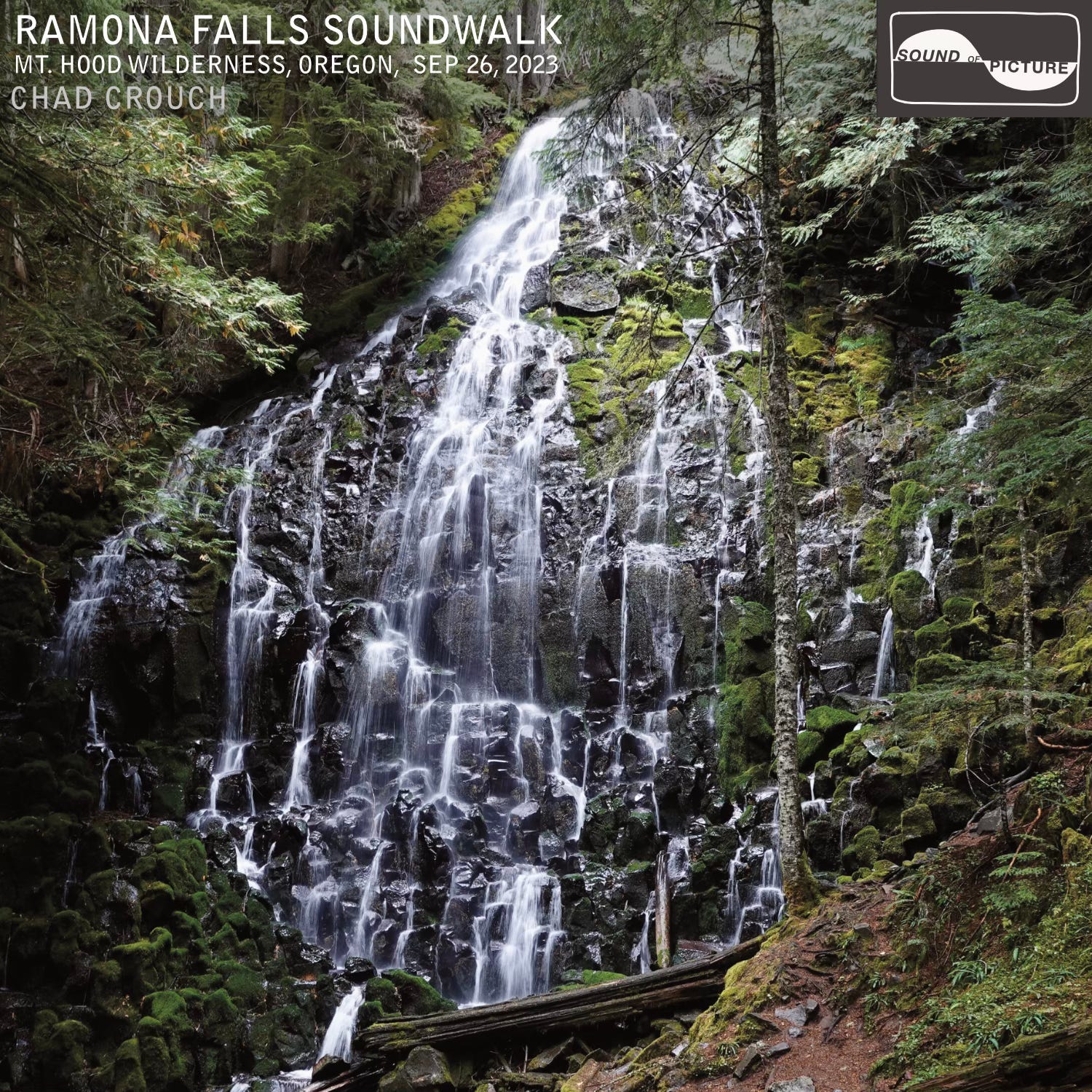
Ramona Falls Soundwalk
from Soundwalk Hosted by Chad Crouch
This is a free preview of a paid episode. To hear more, visit chadcrouch.substack.com Ramona Falls lies within the Mt. Hood National Wilderness, near the headwaters of the Sandy River. Volcanic eruptions on Mt. Hood in 1780 created a mudflow. This event inspired the name of the Sandy river, as Lewis and Clark called it [in 1805], "Quicksand River." The name was later changed to the "Sandy River." The Ramona Falls was apparently named by US Forest Service worker John E. Mills in 1933. He named the falls after his late wife, Ramona. -worldatlas The trail is a roughly seven mile out-and-back or loop option. The northernmost section, trail #797, closely follows Ramona Creek and is in my opinion the prettier and more musical option. You’ll hear my feet scuffling on the coarse sand trail approaching the Sandy River crossing. I cut out the portion of audio crossing the Sandy River because—and this is not intuitive to most people—larger, fast-moving rivers are not intrinsically pleasing to listen to. They’re not bad, but they tend to sound like walls of white noise, often masking wildlife sounds and the acoustics of place. They sound meh. Loud and featureless. Interestingly, because it’s a wilderness area, The Forest Service doesn’t maintain a bridge across The Sandy. The logic is a little convoluted, given they used to have a modular “seasonal bridge”, and there are numerous footbridges crossing Ramona Creek. It may have something to do with a tragic accident in 2014 when a hiker was swept away crossing the seasonal bridge in a flash flood event. His body was found a mile downstream. Was that bridge deemed a safety liability? I can only remember combinations of leaps and shimmying on downed logs to cross it. It must have been 2015 when I made the trip up there with my dad. He told me a story about coming upon a hiking group in distress on the trail above the falls many years before. One of their party had died on from an allergic reaction to a bee sting, of all things. I recall he spoke of spending quite a few hours helping them. I looked for a historical news article for details. I couldn’t find one. The hike to Ramona Falls may be statistically safer than walking on a city street, but something about the remoteness of wilderness frames a wider existential perspective on life and death. Mountains do that. They take you out of yourself for a spell. I will always associate Ramona Falls with the last time I did a day hike with my dad. I distinctly remember the vivid colors of the moss and lichen that day. The clouds were very low and misty, diffusing the low-hanging autumn sun. It was dreamlike. Liminal. This particular day was similar. The clouds lingered, offering occasional showers, but were less prismatic in their density. Red Crossbills winged by overhead. Dark-eyed Juncos foraged on the ground and low in the canopy. Once again, I had a sustained moment with a raven. I love crossing paths with ravens. The focal point of the soundscape is largely Ramona Creek, culminating in an approach to the spectacular falls: What makes it so striking? It’s not tall or awesomely powerful. It’s approachable, decorated with emerald-hued moss, and often dramatically lit from rays of sun filtering through the fir trees. It’s strikingly symmetrical, roughly diamond shaped, and finely textured. Its song is more music than thunder. It’s just a one-of-a-kind waterfall to lay eyes and ears on, and I’m pleased to share it with you! Ramona Falls Soundwalk is available on all streaming platforms (Spotify, Apple, Tidal, Amazon, YouTube…) tomorrow Apr. 12. Lastly, if you didn’t catch them, I recently posted Soundscape podcast episodes of the Total Solar Eclipse (in a stereo image featuring wildlife on the left and humans on the right), and a nice long relaxing recording I made at Pacific Beach, WA a couple weeks ago.
Embed this episode
No transcript yet.