
EPISODE · Jun 30, 2019 · 19 MIN
Raspberry Pi 4 - Episode 197
from Piltch Point (Video) · host PLUGHITZ Live
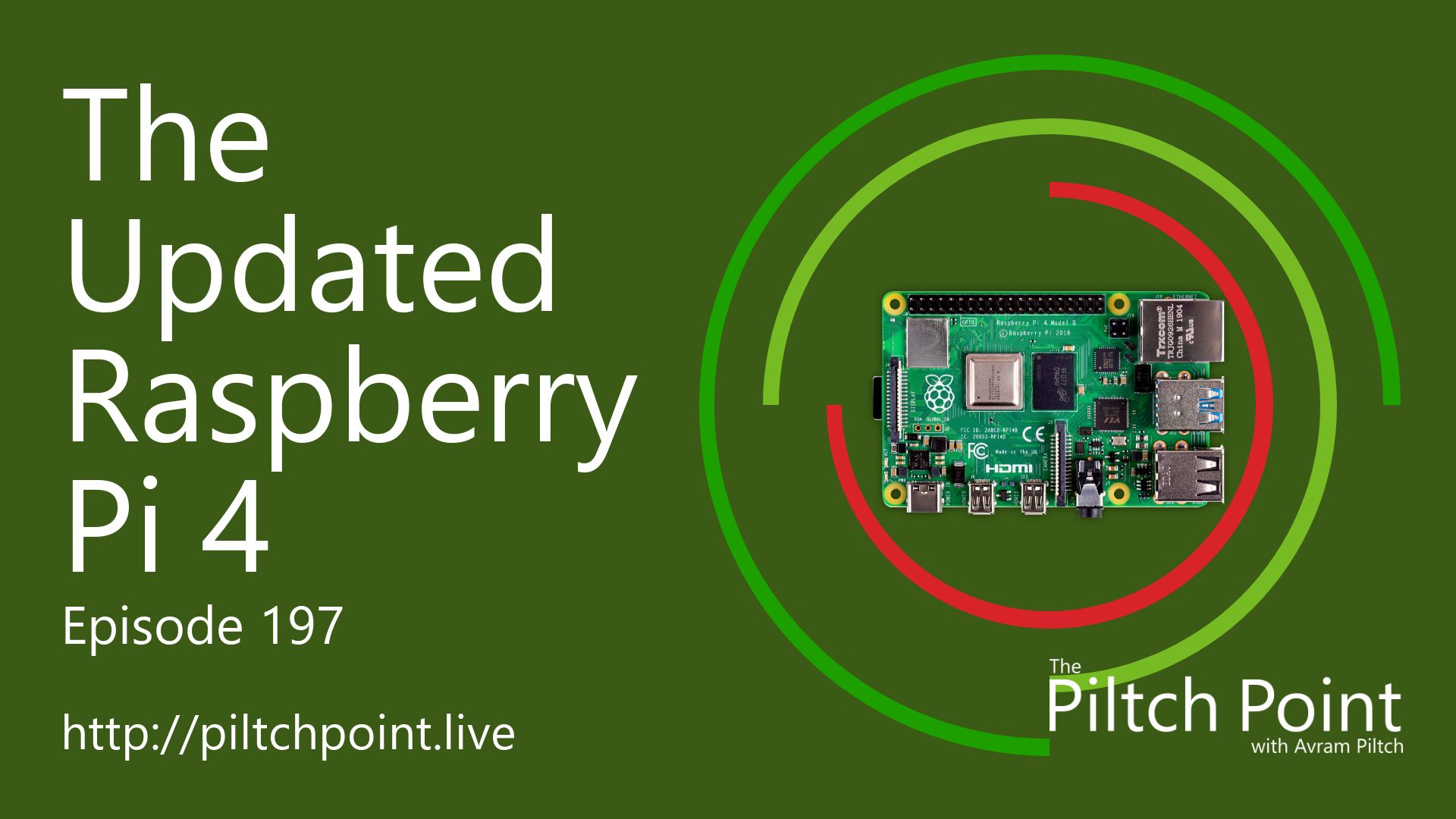
This week, Avram Piltch shows off the newest entry in the Raspberry Pi family: the Raspberry Pi 4. While this new model was not supposed to come out until this year, improved processor sourcing made it possible to bring it to market significantly earlier than expected. The newest model is a welcomed update to the Raspberry Pi 3, with the ability for more RAM, faster processing, and updated ports.The most notable update is the changing of the video ports. Rather than a single HDMI port, the newest model has dual micro HDMI ports. This change allows for the use of two monitors rather than one on the previous model. In addition, both monitors can be run at 4K, albeit with performance degradation. In dual 4K, the monitors refresh at 30Hz. In single 4K or dual 1080p, the monitors can run in 60Hz, a marked improvement. The dual 4K monitors can also cause a lot of lag on the system itself.In addition to the updated video ports, the USB ports also saw an upgrade. The center USB ports are now blue, indicating that they are now USB 3, rather than the USB 2 on the previous model. With the addition of USB 3 comes the ability to gain some huge performance improvements on external devices, such as SSDs. It also allows for important peripherals like the Google Coral Accelerator, which makes the Raspberry Pi better at image processing.The new hardware comes along with a new version of the Raspbian operating system, Raspbian Buster. The new OS was not released ahead of the hardware, meaning that a lot of software does not work with it just yet. Of course, this is not unusual for Linux distributions, so users shouldn't be worried. Updated software will be released over the coming weeks, bringing back potentially lost features.The Raspberry Pi 4 is available now online and from some local retailers.
Embed this episode
What this episode covers
Description This week, Avram Piltch shows off the newest entry in the Raspberry Pi family: the Raspberry Pi 4. While this new model was not supposed to come out until this year, improved processor sourcing made it possible to bring it to market significantly earlier than expected. The newest model is a welcomed update to the Raspberry Pi 3, with the ability for more RAM, faster processing, and updated ports. The most notable update is the changing of the video ports. Rather than a single HDMI port, the newest model has dual micro HDMI ports. This change allows for the use of two monitors rather than one on the previous model. In addition, both monitors can be run at 4K, albeit with performance degradation. In dual 4K, the monitors refresh at 30Hz. In single 4K or dual 1080p, the monitors can run in 60Hz, a marked improvement. The dual 4K monitors can also cause a lot of lag on the system itself. In addition to the updated video ports, the USB ports also saw an upgrade. The center USB ports are now blue, indicating that they are now USB 3, rather than the USB 2 on the previous model. With the addition of USB 3 comes the ability to gain some huge performance improvements on external devices, such as SSDs. It also allows for important peripherals like the Google Coral Accelerator , which makes the Raspberry Pi better at image processing. The new hardware comes along with a new version of the Raspbian operating system, Raspbian Buster. The new OS was not released ahead of the hardware, meaning that a lot of software does not work with it just yet. Of course, this is not unusual for Linux distributions, so users shouldn't be worried. Updated software will be released over the coming weeks, bringing back potentially lost features. The Raspberry Pi 4 is available now online and from some local retailers. Participants Scott Ertz Host Scott is a developer who has worked on projects of varying sizes, including all of the PLUGHITZ Corporation properties. He is also known in the gaming world for his time supporting the rhythm game community, through DDRLover and hosting tournaments throughout the Tampa Bay Area. Currently, when he is not working on software projects or hosting F5 Live: Refreshing Technology, Scott can often be found returning to his high school days working with the Foundation for Inspiration and Recognition of Science and Technology (FIRST), mentoring teams and helping with ROBOTICON Tampa Bay. He has also helped found a student software learning group, the ASCII Warriors, currently housed at AMRoC Fab Lab. Avram Piltch Host Avram's been in love with PCs since he played original Castle Wolfenstein on an Apple II+. Before joining Tom's Hardware, for 10 years, he served as Online Editorial Director for sister sites Tom's Guide and Laptop Mag, where he programmed the CMS and many of the benchmarks. When he's not editing, writing or stumbling around trade show halls, you'll find him building Arduino robots with his son and watching every single superhero show on the CW. Live Discussion Powered by Newegg.com
Ready to play
Raspberry Pi 4 - Episode 197
No transcript for this episode yet
Similar Episodes
No similar episodes found.