
EPISODE · Apr 7, 2021 · 20 MIN
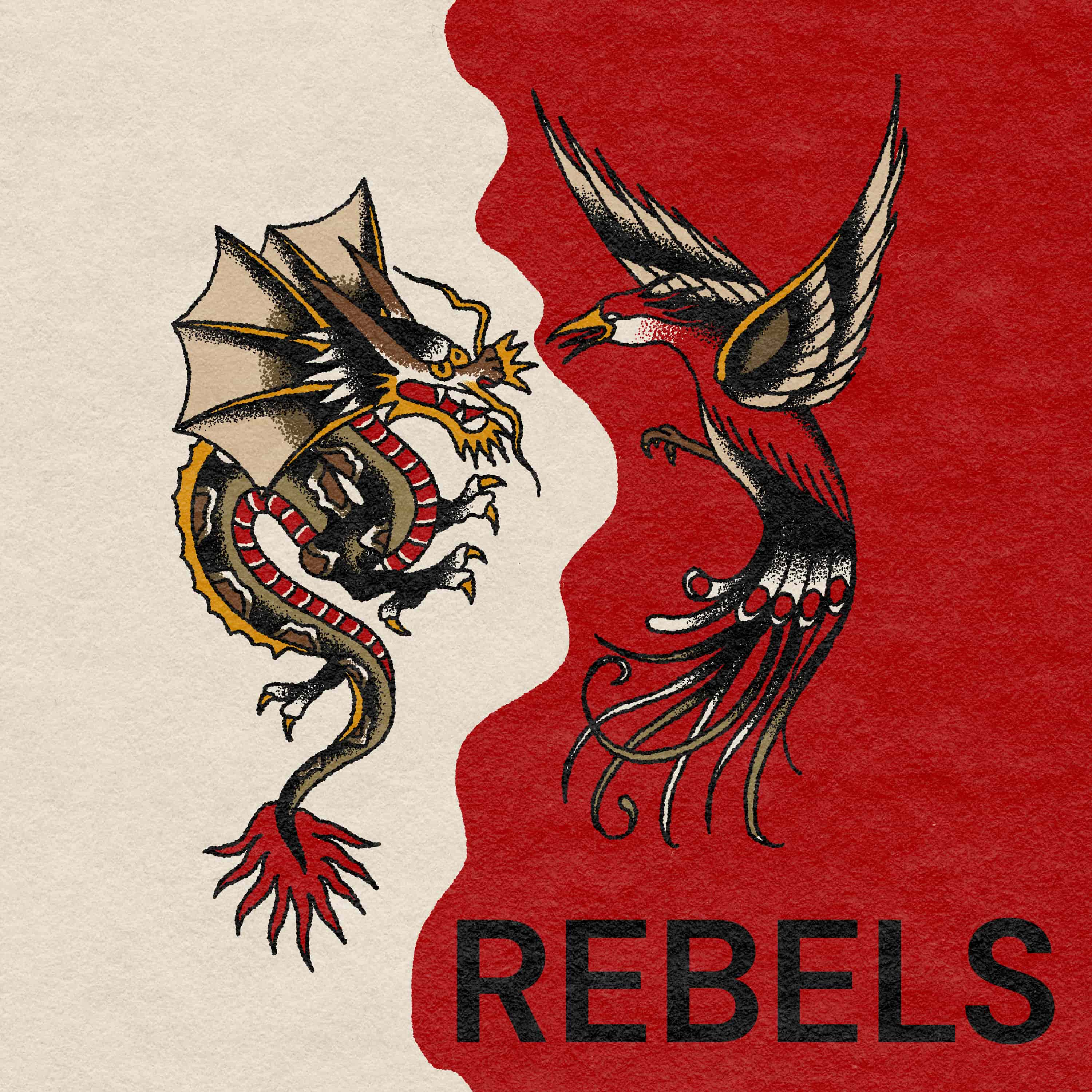
2 - Rebels
In some ways, one might think of this episode as containing our version of a land acknowledgment. Immigrants are always trying to listen to natives and learn from them, and I thought Yut Ho and Ah Choy deserved a chance to do so.Indian Camp is a fictional waypost in the foothills of the coastal range near Big Sur. The Elder who dwells there is called only by his title, Haya, which is a transliteration of the Esselen word for “Father.” He is a member of the Esselen tribe who, like many other groups, received exceedingly brutal treatment from the governments of Mexico and then the United States as their ancestral home was conquered and fought over by the two imperial powers. They are still not recognized by the US government’s Bureau of Indian Affairs, but they are still here, and you can read more about them on the tribal website https://www.esselentribe.org/historyOur group does not have any known association with the living Esselen or Olhone people. However, we have walked on their native land, drunk from the streams from which their ancestors drank, and worshipped the spirits of their homeland in foreign tongues. It behooves us to learn as much as we can about their history and culture. California was and is home to a staggering diversity of indigenous cultures. In Los Angeles, the Tongva people are very vocal and active in the reclamation of indigeonous and pre-colonial history. The Tongva are a large, diverse group in themselves, and our group has worked with activists from Tongva communities on other projects. Another LA indigenous group is the Tataviam. UCLA has a very engaging interactive site with information on Indignous LA here: https://www.arcgis.com/apps/MapJournal/index.html?appid=a9e370db955a45ba99c52fb31f31f1fcYut Ho’s story is, in substance, historically accurate. The Taiping Rebellion was fought between the two Opium wars. It was a rebellion against both British and North-Chinese imperialism, and was spearheaded by the Hakka (or Kejia) tribes of the South-Chinese interior. The Huang Family is Hakka, and likely had members on both sides of the conflict. In many ways, the Taiping Rebellion foreshadowed the Communist uprisings of the 20th century in its ideology (populist egalitarianism) and scale (at least 20 million killed, which is comparable to the figure from World War 1.) However, it was far from the first Chinese rebellion against a hated imperial regime. China is huge, with an immense level of linguistic, cultural and ethnic diversity. Every time one group has conquered many of the others to form a dynasty, injustice and resentment have led to large scale rebellions. The Chinese Communist Party is only the latest wave of conquest to subjugate the entire region to the northern capital of Beijing. Their repressive policies are partly founded on fear of rebellion.Yut Ho mistakes the Esselen elder for a Chinese elder for good reason: Native Americans and East Asians are closely related not only on a genetic level, but also culturally. Certainly, both my father and I are frequently mistaken for Indigenous men (at least, by indigenous people) but the connection is more than skin deep. During the years my father (that is to say, our narrator, Dr. Huang) spent studying traditional music with Tewa elder Peter Garcia in San Juan Pueblo, NM, he was struck again and again by the similarities in family structure, social etiquette, and mythology between the Tewa and our own Hakka/Baihue family. Mr. Garcia said that the Tewa were Turtle People (a trope also touched on by writer Sherman Alexie) and that long ago, in the old country, the Turtle people had lived alongside the Snake people, but the two groups had quarreled, and the Turtle People had come to this land as a result. Mr. Garcia was a skilled painter as well as a master musician. He gave me and my brother Jonah (5 and 2 at the time, respectively) special rattles made out of gourds, and painted with the mythical flying Snake of Tewa iconography. My parents still have one of them. It looks a lot like a Chinese Dragon.Those who want to go for a deep dive into the cultural history of the pacific rim can find plenty of resources on waves of migration, cultural exchange and so forth. One of the most striking is the book “The Zuni Enigma,” in which author Nancy Yaw Davis explores the surprising connections between the Zuni and Japanese languages. https://www.publishersweekly.com/978-0-393-04788-2Both Native Americans and Chinese people have been profoundly affected by colonialism and attempted colonialism. The results have been drastically different, but It felt right to give Yut Ho and the Elder the opportunity to muse about it together.The Chinese Creator Goddess is sometimes called Nu-Wa. She really did make people out of clay on a river bank, but that was long ago, and in another country.Except for when one of them (I’m looking at you, Ah Choy) is translating, the Characters are presented as speaking in Cantonese, rendered as an accessible, 20th-century English familiar to the listening public. So much for Historical Verisimilitude. Here is a basic lexicon for transliterated terms used in the story:Gwailo: Translating as something like “ghost” or “foreign ghost,” it refers to western would-be-colonizers in China. Also used in the US, by such figures as that APB-busting superhero, Ghostface Killa.Mei: a common Chinese diminutive for younger sisterHaya: anglicization of the Esselen word for FatherIf you have questions, thoughts, your own family stories, or historical context to share, please send us a message at @bloodongoldmountain on Facebook or Instagram. -----Blood on Gold Mountain is brought to you by The Holmes Performing Arts Fund of The Claremont Colleges, The Pacific Basin Institute of Pomona College, The Office of Public Events and Community Programs at Scripps College, The Scripps College Music Department, and The Entrepreneurial Musicianship Department at The New England Conservatory. Blood on Gold Mountain was written and produced by Yan-Jie Micah Huang, narrated by Hao Huang, introduced by Emma Gies, and features music composed by Micah Huang and performed by Micah Huang and Emma Gies. A special thanks to Sheila Kolesaire for her critical PR guidance, Muqi Li for her brilliant guzheng playing, Rachel Huang for her editing prowess, and Evo Terra from Simpler Media Productions for his immense expertise and support. -----More details at bloodongoldmountain.comConnect with us on Facebook and InstagramSupport the show on Patreon
NOW PLAYING
2 - Rebels
No transcript for this episode yet
Similar Episodes
Apr 22, 2025 ·32m
Feb 27, 2025 ·0m
Sep 20, 2024 ·57m
Aug 7, 2024 ·16m