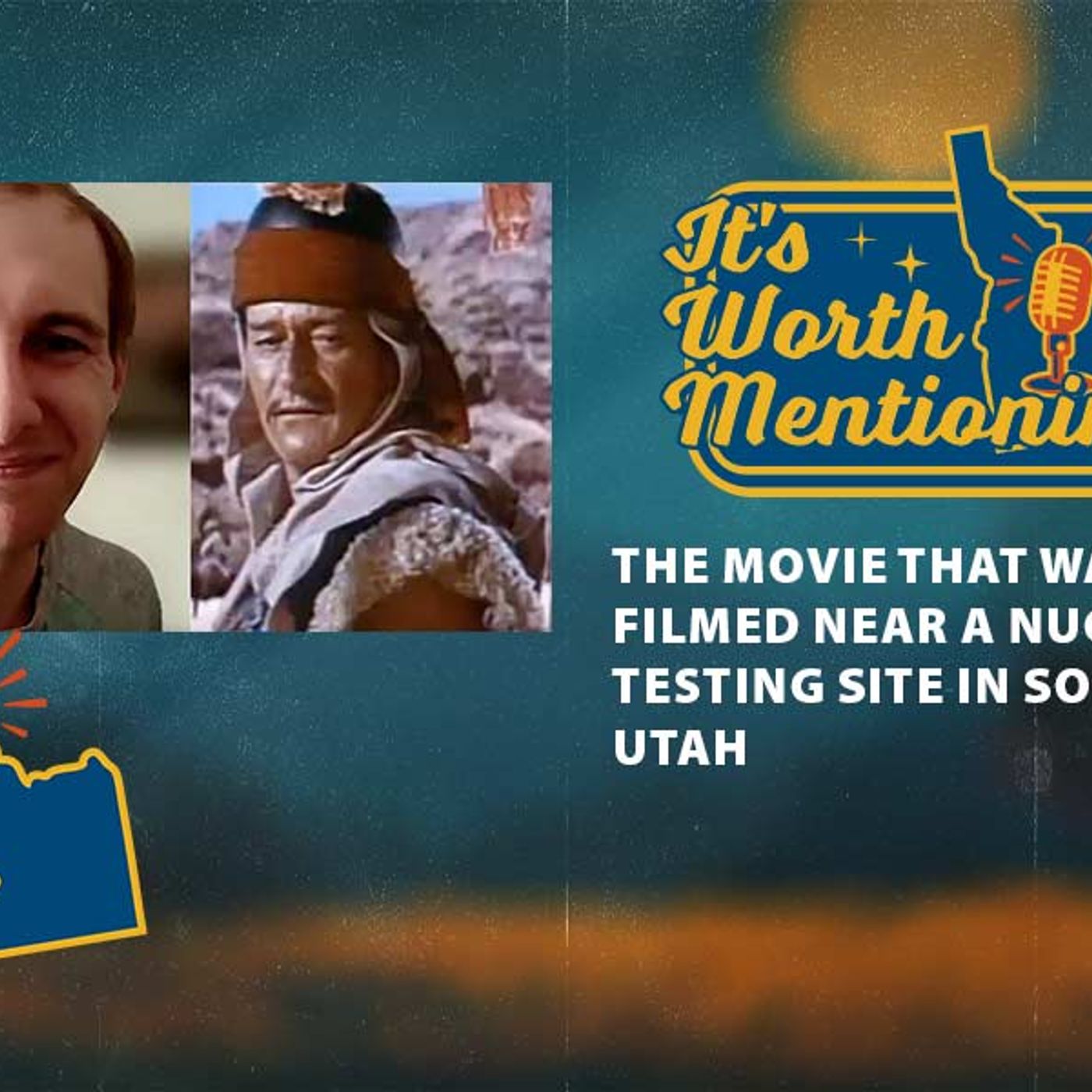
REBROADCAST | Idaho Downwinders added to federal compensation program — the shocking history behind it episode artwork

EPISODE · Apr 27, 2026 · 58 MIN

REBROADCAST | Idaho Downwinders added to federal compensation program — the shocking history behind it

from It's Worth Mentioning · host Rett Nelson

EDITOR’S NOTE: This episode originally aired on November 30, 2025.A recent report indicates that Idaho downwinders stricken with cancer can now get federal compensation.Last week, the Idaho Statesman reported that Idaho is now included in the Radiation Exposure Compensation Act. The act is a federal law that “provides partial restitution” to people who developed certain illnesses after being exposed to radiation from the U.S. nuclear weapons program, among other projects, according to the U.S. Department of Justice.Between 1951 and 1962, the federal government conducted nuclear tests in Nevada. The radiation affected people up to hundreds of miles away in Idaho and other surrounding states. Most of the tests were underground, but about 100 were atmospheric tests where the “atomic weapons exploded at or above ground level, resulting in radioactive material being released into the atmosphere,” according to a report prepared by the Congressional Research Service.Now, through December 2027, people across Idaho can apply for $100,000 in compensation if they or a family member had one of the eligible cancers and lived in the state between 1951 and 1962. Survivors can apply for equal shares of the payment if the person has died. It was a provision included in President Donald Trump’s “One Big, Beautiful Bill,” which was signed into law last summer. People who need assistance can contact U.S. Senator Mike Crapo’s office. The Idaho Downwinders Facebook page also has additional information.This week on “It’s Worth Mentioning,” Rett Nelson revisits the nuclear weapons testing program that resulted in the plight of the downwinders and the decades-long battle to receive compensation.In this conversation from November 2025, he’s joined by author Ryan Uytdewilligen, a whose 2022 book highlights a specific round of testing that took place place between March and June of 1953. On a desert site about 65 miles north of Las Vegas, 11 atomic bomb detonations were part of Operation Upshot-Knothole.The largest of these detonations, a warhead known as Harry, yielded 32 kilotonnes of radioactive energy — more than double the amount produced from the bomb that was dropped on Hiroshima, Japan, during World War II.About a year later, the desert near St. George, Utah, which was downwind of the nuclear fallout, was selected as the filming location for a major Hollywood film.Uytdewilligen discusses the reason for the testing and the government’s response to locals’ concerns. He reveals the name of the movie and the actors involved — you’ll recognize the names — and why a desert in proximity to a nuclear testing site was selected as the filming location. He also discusses the longterm impact of that decision.If you’re a cinephile and enjoy post-war history, this is an episode you don’t want to miss!Watch previous episodes here. Check out the show on Facebook. If you have a tip or a guest idea, email [email protected] LINKS: https://www.eastidahonews.com/2026/04/after-long-fight-idaho-downwinders-stricken-by-cancer-can-get-compensation/https://www.eastidahonews.com/2025/09/federal-act-providing-compensation-for-downwinders-reinstated-decades-after-nuclear-tests-in-idaho-and-other-states/

EDITOR’S NOTE: This episode originally aired on November 30, 2025.A recent report indicates that Idaho downwinders stricken with cancer can now get federal compensation.Last week, the Idaho Statesman reported that Idaho is now included in the Radiation Exposure Compensation Act. The act is a federal law that “provides partial restitution” to people who developed certain illnesses after being exposed to radiation from the U.S. nuclear weapons program, among other projects, according to the U.S. Department of Justice.Between 1951 and 1962, the federal government conducted nuclear tests in Nevada. The radiation affected people up to hundreds of miles away in Idaho and other surrounding states. Most of the tests were underground, but about 100 were atmospheric tests where the “atomic weapons exploded at or above ground level, resulting in radioactive material being released into the atmosphere,” according to a report prepared by the Congressional Research Service.Now, through December 2027, people across Idaho can apply for $100,000 in compensation if they or a family member had one of the eligible cancers and lived in the state between 1951 and 1962. Survivors can apply for equal shares of the payment if the person has died. It was a provision included in President Donald Trump’s “One Big, Beautiful Bill,” which was signed into law last summer. People who need assistance can contact U.S. Senator Mike Crapo’s office. The Idaho Downwinders Facebook page also has additional information.This week on “It’s Worth Mentioning,” Rett Nelson revisits the nuclear weapons testing program that resulted in the plight of the downwinders and the decades-long battle to receive compensation.In this conversation from November 2025, he’s joined by author Ryan Uytdewilligen, a whose 2022 book highlights a specific round of testing that took place place between March and June of 1953. On a desert site about 65 miles north of Las Vegas, 11 atomic bomb detonations were part of Operation Upshot-Knothole.The largest of these detonations, a warhead known as Harry, yielded 32 kilotonnes of radioactive energy — more than double the amount produced from the bomb that was dropped on Hiroshima, Japan, during World War II.About a year later, the desert near St. George, Utah, which was downwind of the nuclear fallout, was selected as the filming location for a major Hollywood film.Uytdewilligen discusses the reason for the testing and the government’s response to locals’ concerns. He reveals the name of the movie and the actors involved — you’ll recognize the names — and why a desert in proximity to a nuclear testing site was selected as the filming location. He also discusses the longterm impact of that decision.If you’re a cinephile and enjoy post-war history, this is an episode you don’t want to miss!Watch previous episodes here. Check out the show on Facebook. If you have a tip or a guest idea, email <a...

NOW PLAYING

REBROADCAST | Idaho Downwinders added to federal compensation program — the shocking history behind it

0:00 58:39

No transcript for this episode yet

We transcribe on demand. Request one and we'll notify you when it's ready — usually under 10 minutes.

No similar episodes found.

No similar podcasts found.

Frequently Asked Questions

How long is this episode of It's Worth Mentioning?

This episode is 58 minutes long.

When was this It's Worth Mentioning episode published?

This episode was published on April 27, 2026.

What is this episode about?

EDITOR’S NOTE: This episode originally aired on November 30, 2025.A recent report indicates that Idaho downwinders stricken with cancer can now get federal compensation.Last week, the Idaho Statesman reported that Idaho is now included in the...

Is there a transcript available for this episode?

Yes, a full transcript is available for this episode. You can read the complete transcript on the episode page.

Can I download this It's Worth Mentioning episode?

Yes, you can download this episode by clicking the download button on the episode player, or subscribe to the podcast in your preferred podcast app for automatic downloads.
URL copied to clipboard!