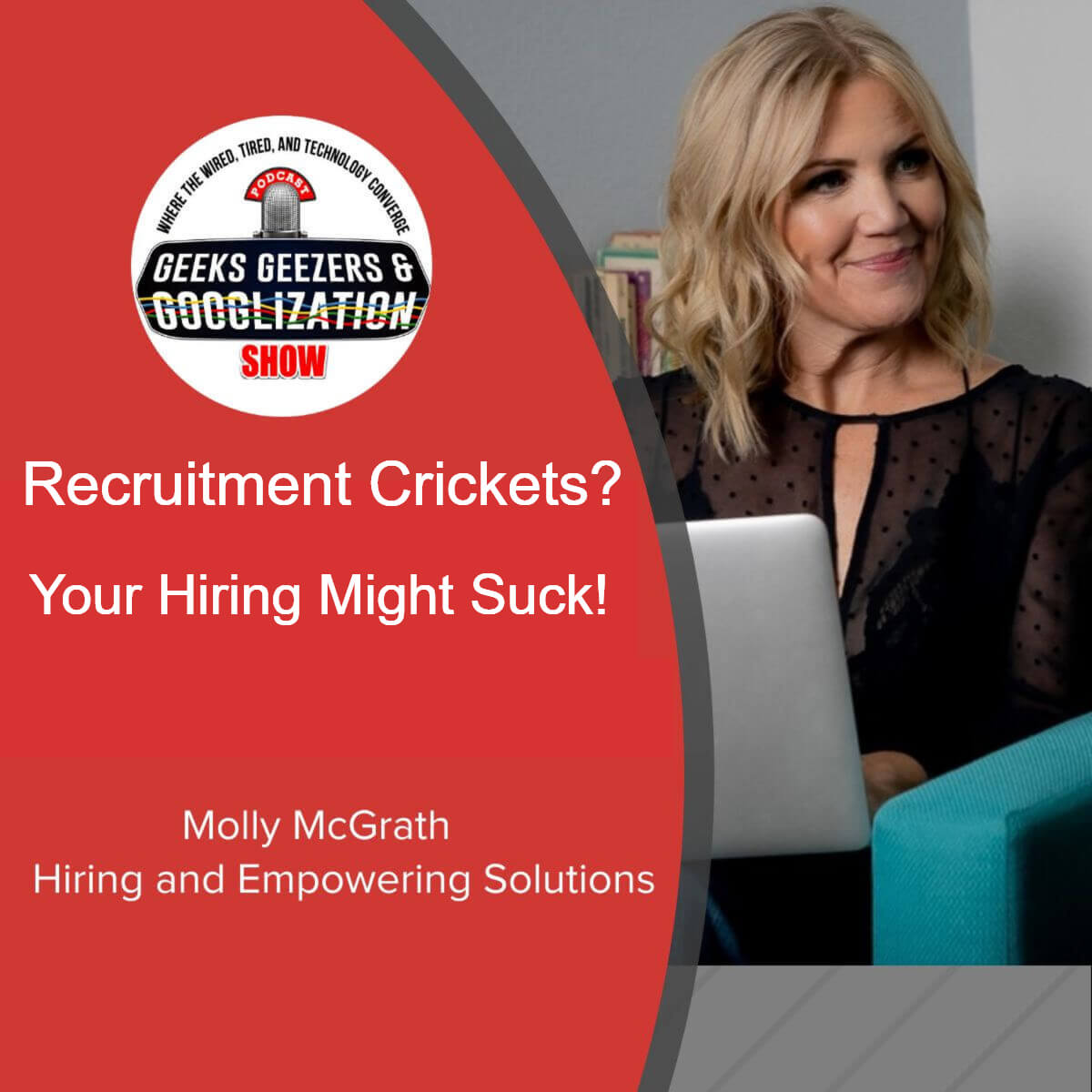
I cannot say enough about how critical and crucial the onboarding processes. Way back when I started recruiting 25 years ago and I used to do what you said I wrote where, give me my check, offer letter sign and here I go out of here. But why that didn't work is because after I would play someone inevitably, I would start to get the phone calls within two weeks or three weeks then starting saying, hey, should I be concerned about blah blah blah with the employee? And it was always from the employer and like, well, time out.
Let me just check, talk to me about your onboarding process. The topics and opinions expressed in the following show are solely those of the hosts and their guests and others of W4C radio, it's employees are affiliates. We make no recommendations or endorsements for radio show programs, services or products mentioned on air on our web. No liability, explicit or implied should be extended to W4C radio, it's employees are affiliates.
Any questions or comments should be directed to those show hosts. Thank you for choosing W4C radio. Welcome back everyone to the Geek's Keezers and Googleization show, the home of Googleization Nation. We'll be talking with HR and business thought leaders about the crazy shift going on in the world of business, technology and HR.
Here's your host, Ira Wolf and co-host Joyce Joya. Hey, welcome everyone. Welcome, Googleization Nation. Welcome back to another episode of Geek's Keezers and Googleization.
Happy single day. So, Demaya Day. We'll be doing our proverbial drinks and toasts. Joyce, welcome back to another week.
Thank you, Ira. It's great to be back with you. The only thing you have to toast with is coffee though. Yep, got it.
Got it. Got it covered. So, we've been around long enough, but we've lived through enough events and it seems like deja vu to about 20 years ago, which was about when we first met. And we were talking about the perfect labor storm, you were talking about the impending crisis.
But every single, I can't even say every single day, every few hours. I get another email, another alert, another headline about the challenges of hiring people. And again, for slightly different reasons, I mean, in the late 1990s, we had an incredibly robust job creation, job generation because of the dot com technology that was just coming into play. And it's still in play and there's still many things.
But jobs are just being created, hundreds of thousands of jobs will be creating every month. Now, job creation is slowed a bit. We're fortunate to have about 150 to 200,000 a month and we're inching back up there. The problem is, there's just not enough people with the right skills or they're mal distributed.
They're not distributed in the right places. So that's where the jobs are. And there are many companies that are going toward those. Yeah, we have the Herman Group used to call that misemployment or disemployment.
Because we have millions of people who are perfectly trained and very capable of handling jobs that no longer exist. And that barrier should be dealt for many of those jobs, obviously, for clinical health care, it's a little difficult for many many jobs. And even those jobs, other than literally being bedside, there's many medical health care jobs, but there's manufacturing jobs, distribution, we still need our Amazon drivers and we get our drones and everybody has. And autonomous vehicles.
There are so many jobs that are present, but for other people, geography location is no longer a barrier. So you can tap that talent. So a lot of things are happening. So I'm really excited today.
We're going to have Molly McGrath as our first guest. Her company, she primarily works in the legal field, but her company is hiring and empowering solutions and we're going to talk about what she's finding and how she, you know, some of the tips and suggestions, what she advises her clients to do to help attract and also retain people. And then we're actually, actually Molly has this really nifty onboarding process that we're going to ask her about that practically, practically guarantees that her placements, she's a recruiter, well, it's day and her clients. That's so incredibly important.
I've worked with a few recruiters and it used to be, hey, we got your job offer, everything signed, send me the check for all the work done and they'll show up on, you know, make tenths. And that ended and, you know, included in my recruitment, the reach acronym, which is REACH, which is how you reach people, engage people, apply, communicate, and the final one is higher. And I don't spend a lot of time on it because companies are really struggling even to get people into the pipeline, but ultimately higher mean, you know, I say this all the time, hiring does not end the job offer. Hiring includes onboarding and it should go for months in that because there's so many employees that leave after 30, 60, 90 days, the turnover rates are just atrocious.
So we're going to be talking about that with Molly. And then our second segment today, we're going to have Tovis Sherman and we're going to be talking with her about her new book, which is called Win-Win-Win, but she has, she's going to be talking about disabled disability in the workplace and how that should be part of diversity and inclusion, which we've been talking about a lot. So that's going to be a really great topic. And she's got, you know, she has 18 inclusion tips, obviously can't cover them all, but every one of them we could have a whole show on.
Right. Well, maybe we'll ask her for the report once, right? Absolutely. There's always so much to talk about.
So one announcement, we want to make sure we cover it because we want to get Molly on. The webinar I've got coming up on May 20th is How to Grow. We changed the title a little bit, have a little fun with it. You know, we've been playing with the FCDD theme, the F-ed-up, which was frustrating, confusing, disappointing, disappointing, and distraction the other day.
It was like, you know, this is the world we live in. It's frustrating, confusing, disappointing, sometimes disappointing, and it's definitely a lot of distractions out there. So I applied that and we're going to be talking about how to grow and thrive in an FCDD world. And then next week, actually our guest is Debbie Levitt.
One of our guests is Debbie Levitt next week, and Debbie's going to be talking about UX and CX, but she's the one who introduced me to that acronym, and we've had a lot of fun with it. So that's- Well, maybe you'll introduce me to that acronym later. Yeah, but yeah, so we'll just be on everything. It's now become part of my key note, every presentation that I do.
And there's a link. It is free to come to the webinar on February 20th. It's 1 p.m. Eastern time.
So it's a Thursday. So to see you there. So appreciate that. And we want to thank, before we jump in, one last thing we want to thank in GOMO and success performance solutions where being our sponsors again, and you'll hear from more of them at the break.
So right now we're going to bring on Molly McGrath. Her company is hiring and empowering solutions, which sort of says it all. She works primarily in the legal field, which, you know, going back when I entered, when I started this business, I worked with professionals, you know, I worked primarily in healthcare. But I also some of my first clients were accountants, and I had one attorney, and it was pretty early in the game.
I mean, it was like they didn't see the need to, you know, to why did you need to screen people to hire them and selection? It was more as they go to the right school. You got the right school, right education. What was their interest?
They come in as an intern or an apprentice. You know, basically you're an aide. So it was pretty interesting. Yeah.
You know, things have definitely changed. So hopefully Molly is still attached to us. There she is. Thank you for having me.
I really enjoyed. Sure. Molly, both Ira and I have actually just discussed how very tight this job market is. What is your take and what does that mean for employers?
I have never seen anything like this. Like as I ever said, I buy large service and professional services with the main focus on the attorneys and the market has never been this tight. The pandemic exploded and people went and had to figure out how to work from home and adapt to that and now getting people that want to come back into the office and or to lead that remote life is extraordinary. You know, there's all this talk about unemployment and not being able to get people to come back to work because they want it'll hurt their unemployment or what have you that by and large is in the service and retail industry in the professional industry.
Right now, people, the pandemic taught them to really evaluate their core values, evaluate what they're looking for in an employer, what they're looking for and how they spend their time and energy every single day. And it's fascinating. So the days of throwing an ad up on indeed.com or what have you and having a million resumes come your way, that is completely dead. And it's in every industry.
I belong to several recruiting masterminds that have people from IT to healthcare to professional services to engineering. But have you and we're hearing this across the board where it is like crickets when you reach out to candidates. And so now as recruiters and employers, you have to get really, really creative with your education out to people. It's more so moved from the job application process to the recruiting process where you're spending when you spend your energy on recruiting and reaching out to people right in engaging a subject line and engaging body and revamp your employment ad.
I've equated to think about your writing your profile for Match.com. It's very similar. It is no different because at the end of the day you have to have a very engaging, compelling invitation for people to want to at least hop in a Zoom room with you or get on a phone call with you. Yes, the candidates are clearly back in the driver's seat.
Kind of like it was in the year 2000. I co-authored a book called How to Choose Your Next Employer because the candidates were choosing. Yes. Oh, indeed.
It absolutely is. When I get on the phone with them and I talk to them and say, why are you even getting on a call with me? Tell me what is taking your valuable time to that. And when I break it down, they'll say, well, I'm looking for there's not a tremendous amount of opportunity within my organization right now.
And my next question is what's your definition of opportunity? Talk to me about what opportunity means. Most employers think it's more money or higher up-leveled job description or title. That's not the case when I start really peeling away the layers of the onion.
It's no longer connected to the heartbeat of the business. They're not clear what true north is. And at the end of the day, the most simplistic thing that really has been blowing my mind and I'm hearing it over and over and over and over again is that really that entrepreneurs and employers and leaders are lacking giving employees the three basic things that they need and why they will never ever leave you. It's time, attention, and feedback.
You have to remember your hiring human beings first and foremost. And employers come from it from a place of hiring human doings. That's secondary. It's usually the human being stuff that either get people to leave or get them fired.
Yeah, you know, as you're talking, when I talk about recruitment marketing, I talk about improving the candidate experience. The way that employers use search for workers and the way that job seekers search for jobs is really different because it used to be. And certainly when we started our careers, when I started my career and Joyce, we have to leave it drive down to the place and fill out an application or we type a resume out and we have to physically mail it or drive it down. We have to do it one time.
Bad cop Xerox copies are maybe about. Now, what's changed is that you can with one click, you upload your resume and with one click. So what's changed is where the commitment is. When we went to apply for a job, when you have to manually fill out every single application or type of resume, there was a commitment.
We had to do that. And then you had to mail it or fax it or email it, whatever it was. Today, the commitment doesn't start until after the that you as a recruiter would call or contact the candidate and then they decide, do I want to pick up? Yes.
So there's no commitment there. But the other part that's really, really interesting is also from the job seekers, they say you contact them. The first thing they do is they go up to your website and the first thing they do is go on and link in and they check the company out. Right.
They go on the last door and see what kind of ratings you have. Right. They're checking what it looked like, what is their imagery? Is there a story?
And I love what you just said about the job descriptions or stories. You need to tell a story about your company. So what, you know, it's interesting. And I think you heard probably in the green room when we talked about it, when I started my career, I was going to focus just on professionals, you know, attorney.
And I came from healthcare. So it was going to be healthcare. And then my first two clients happened to be an attorney in the county and they were struggling hiring, you know, people. But it was a very different criteria.
You used to get the education, the credentials, what they needed the person to do. And it was a very different market. It was a lawyer. Why at the time?
Well, yeah, you know, it's interesting. A few things you want to, you said, I read that I really want to, I want to hang your hat on is number one. So often the employer, the biggest mistake they make is they get seduced by a resume and they judge a person by the resume. And to your point, it's all artificial intelligence right now.
And I tell people my recruiting processes, I want to talk to absolutely everybody, whether I, they apply or I recruit them because this is what happens because there's so much technology so often when I call someone and I say, tell me what's up with your resume. You know, you've been unemployed for six months or what have you. I can't tell you nine out of 10 people will say to me, where in the world did you get that resume? And I'm like, it came from Indeed or came from LinkedIn or what have you.
And there's so much we're depending on technology is that they're like, that was the old one that was uploaded or I uploaded that one before my two jobs ago and it's missing information. So number one, so I tell employers you have to talk to everybody because if they were award winning writers, they wouldn't be applying for your job. They would be in the journalists if they would be copywriters, they would be what have you. So really you want to talk to as many people as possible.
And I love that you use that analogy about attorneys where you say, well, the only thing that matters is what prestigious school they went to, you know, how many years has it experienced that hasn't changed. I talked to probably five law firms yesterday where they number one, they said, I don't want to talk to this candidate. I don't like they law school that they went to. And it's fascinating how the professional services really have not evolved in regards that and it takes a tremendous amount of coaching for me to say, well guess what, they went to your website and your website so completely outdated.
You don't have a video on there. You have no blogging on there. It's not interactive and your picture. I had a conversation with an attorney yesterday with phenomenal candidates, but when they go to the website, they say, I'm not interested.
And they trust recruiters, employers think that our employees think that we work for them, which is a cool thing because they overshare with us and give us a lot of information. And this one in particular law firm, the attorney's picture was terrible. He did not look approachable. Looks like a very mean, angry attorney and they worked in criminal law.
And I had a conversation with him saying, I get you got to update your website. You need some videos on there. You need to give me a video so I can inbox these candidates so they can see your essence. They can see your personality because the way your website is projecting your company is not who you are.
I know that. Yeah, most of them don't realize that if they show themselves interacting with their employees, that makes a big difference. It makes prospective candidates feel like maybe this is someplace that I'd like to work. Yeah, absolutely.
So, one is, Molly, and I'm sure you said this earlier, this says nothing. It's still a problem in law and accounting and healthcare engineering, but it's a problem everywhere. I mean, people still have these artificial criteria and then you get credential, what I had called credential creep a while ago. I hired somebody, they only had a two year degree and two years of experience and they didn't really work out well.
So let's make it a four year degree and five years experience. I love that. That's so true. And that works for the matter if you're hiring a bartender or an attorney.
Everybody still relies on skills. Once we get people into the pipeline and everybody's struggling with that, I don't want to just spend all that time on that. What are some of the, you have some really, really great suggestions, some of the things that you do, and we definitely want to cover on board it. But what are some of the other things you do or work or advise to, you know, whether it's professionals or a manufacturing plant that they do through the process beyond just, hey, write a better ad and you'll get thousands of people.
Yes. Once you have a candidate and you, if they've accepted your position and from the day that they start, I cannot say enough about how important and critical and crucial the onboarding process is away back when I started recruiting 25 years ago. And I used to do what you said. I wrote where, give me my check offer letter sign and here I go out of here.
But why that didn't work is because after I would play someone inevitably, I would start to get the phone calls within two weeks or three weeks, I'm starting saying, Hey, should I be concerned about blah, blah, blah, with the employee. And it was always from the employer and like, well, let me just check, talk to me about your onboarding process. And it was a crickets. It was, it was non-existent.
Well, I said that I threw them the employee manual. I sat them down and I put them in front of some training videos and et cetera. Right. But again, there was no true onboarding process.
So I cannot regard this when industry you are from day one, make it very, very simple. If you meet with someone and you get clear on their KPIs or key performance indicators that you want to see, I always make it simple when I facilitate the onboarding. My number one question is to the boss, to the manager, to the entrepreneur, whatever terminology resonates with you. What would make you absolutely delighted with the investment of this new employee when we are sitting here 30 days from now.
And I allow for them to dump it, allow, and then we really get it in a clear concise, well communicated where we can track and measure it and identify it into the top three, five goals. Now, if you don't have that skill set, invest in getting a facilitator or CEO or some nature that has a skill set to facilitate that. And I'm like, that's really not a 30 day goal. That's more of a 90 day goal.
So let's shuffle it over here and get really clear. And then you meet with the new employee that you just onboarded and make sure and clarify and verify that they understand what's being asked to them. Clarify and verify with them that they know what the resources are, that they're going to need to tap into either what they come with to the table or making certain that the company offers those resources. And then meet on that every single week.
And then at 30 days, do an evaluation where we're at and repeat that over and over again for this first six months onboarding. And then for your new employees and your existing employees, make sure that you have quarterly growth plan for all of your employees. I do presentations all the time on why the employee review must die. You know, reviews feel very archaic.
They feel like your head's on the chopping block. The employee doesn't like it. The employer doesn't like it. Nobody knows what to do with it.
Do you get a raise? Do you not get a raise? Are you keeping your job or you're not keeping your job and really transforming it and do a two millimeter shift of turning it into an employee growth plan. Where they're fully, wholly invested in their growth in addition to what they contribute to the company.
So you believe in the employee and the supervisor performing this evaluation, as I recall. Yes. Yeah. I love that you say that.
That's, I think that that shift has made the biggest difference with the businesses that I work with. First, the employee does a self evaluation. Again, if any of your guests want to get my process, I'd be happy to give it to you for free. So if the employee does a self evaluation, then the supervisor, manager does an evaluation and then they come together and treat it like a coaching conversation and just really solidify.
And giving that opportunity for them to walk away with a plan that they're both wholly in agreement with and excited about. There's two things. One is I love that about the performance review. I mean, I don't know how far you went back into my career, but I started as a dentist.
So again, professionals, how they hired people. One of the things I used to do, and I'm going back into the 80s, I'm going back a long time. And is we did it. We did an annual review.
Now, at that point, it was probably related more to salary increases than anything else. However, that's exactly how we did it. I used to do an evaluation and I have the employee doing evaluation. And I said, this isn't about whether if you're worried about having a job or keeping your job, then you wouldn't even be here.
I wouldn't ask you to fill this out if it was about terminating. This was about what your goals, what it looks like for the next year. And we have a conversation and I would look at, you know, I gave you a five, you gave yourself a three. Why do you think you're not doing as well as you should?
Or vice versa, which is usually, you know, what they looked for. So, you know, I love that as part of that. I want to make sure that we do cover really important topic, which we talked about at the beginning, which I'm boarding. So, what does that look like when, you know, the first day, I mean, after that job offer, what does that look like for you?
Yeah, again, I'd be happy to share my 90 day onboarding process with anyone as well. It's really you have the HR stuff that has to happen. But I tell people, listen, whoever that your supervisor is or what department that you're responsible for the first week, this is what I want you to do. I want you to shadow the employee shadow their supervisor manager, whatever department had their working with for one week from everything sitting, sitting every client meeting, every sales meeting, every production meeting, every desk time when they're sitting there within their desk time.
And I want you to between your shift to every activity. I want the manager, whoever's responsible for training to say, okay, great. Here's what we're walking into. Here's what we're transitioning or shifting into.
Here's what I want you to pay attention and to look for. And then you debrief with the employee after and have them. It makes them be responsible for their own learning. It makes them be fully present and self-governing.
And at that time, but then they also reflect back to you where maybe you're not processing. You're not duplicating. You might do three different sales meetings and do completely different all three different ways. And they'll say, well, why do you do it this way in the first one, this way in the second one, and they will shine the spotlight on where you have lack of process and standards and systems.
So they're actually doing many different training, number one, but they're also doing Python improvement, like a quality control analysis, what's where you might have holes in your systems and process. It is the most transformative way to onboard someone within the first week. And it's fascinating because depending on what role you sit in. So for me, a lot of times they're shadowing the remaker, the entrepreneur, the business or what have you.
And they will say after day one, they're like, how do you do what you do? They're completely exhausted watching their supervisor, their manager, and they have such appreciation for it. And that's where my second book that I wrote is called, Entrepreneurs in Entrepreneurs World, How to Get Your Employees to Step Up and Lead. And it really transforms them to have complete appreciation and respect for what your is coming at you.
And it really for me in that first week is how you have that line of delineation between an employee and an entrepreneur. And that process of job shadowing does something else that ties back to what I wrote. It talks a lot about, which is that in that job shadowing process, the employee gets to find out just how adaptable he or she will need to be in that position. And that adaptability we know is very important.
Indeed. So showing up on the first day of work and being greeted by, oh, we forgot you were coming. Nobody told me that you were coming today. It's not a good thing anymore.
Volley, again, so many great tips. And I'm listening to you. And there's so many things that just come back to me that I forget that I think that everybody takes for granted. And obviously they don't.
You mentioned that people can get your tips, your onboarding process. What's the best way for them to get a hold of you? Absolutely. You go to my website, hiring in a powering doc, and you can opt in.
You can send an email through the contact page and we will drop you at every Tuesday. We have a live podcast and I'd love to have you on my podcast. And every Thursday we drop a block that is just value, shock, pull in regards to tips, tricks and everything, hiring, firing, boarding, internal communication and leadership. So final question that we start.
I used to ask everybody I started last week and I'm going to throw this out to you 12 months from now. We have you back on. It's May 2022. What are we talking about?
I would love to be talking about entrepreneurs and entrepreneurs world and really a lot of the work that I do with my team empowerment academy. Sounds terrific. Thank you so much. We'll have you back and we'll be talking about that.
Hey, say, Molly appreciate it. Great tips and go to hiringempowering.com and to keep in contact with Molly. Thank you for having me. Bye bye.
Thank you. For many people, the bridge to the new normal is too far, too difficult, too scary. Waiting to get back to normal becomes a way of life. Build with fear and despair, but wait.
By are those people who dare to travel to the new normal celebrating opportunity and growth? How can you get a piece of the action? The bridge between the past and the future. The status quo in the new normal is adaptability.
You have a choice. What side of the future do you want to land on? Will it be coping and surviving or growing and thriving? Adaptability quotient is the new competitive edge.
Welcome back everyone to the Excheasers and Googleization. We have our second segment. We want to thank GOMU and the performance solutions. We're hosting for sponsoring the show.
We want to thank you, our listeners for being part of it. We've got another great guest here. Before we get there, I just want to put a reminder up about the weather. I was coming up.
We talked about in-depthability. You just saw the commercial. 20th, 1 PM. We've got the how to grow and thrive in an FCDD up world, which is frustrating, confusing, disappointing, and distracting.
That's the world that we live in. Today's Herman Trend Alert, which hasn't gone out yet, will be about a new community in Florida that's about 20 miles outside Fort Myers called Babcock Ranch. Babcock Ranch is the town of the future. It is 100% solar.
The preferred vehicles are bicycle and golf cart. There's a town center. There is an incubator called the Hatchery. It's really designed to foster innovation and creativity.
Every house that's built in this Babcock Ranch community must be equipped for electric vehicle charging. The homes start at two bedroom apartments or homes that start at around 200,000 and go up. You can imagine they go up to beautiful Lakeside mansions. It's quite an interesting community.
It's an engineered community so that it's built with people in mind and with the environment in mind. They reclaimed a bunch of swamp to bring back. It had been cleared for pastures and they wanted to bring back the original landscape. So it's just I can't wait.
And hopefully, hopefully, Ira, we will be able to have the developer Sid Kitzen on. Sid, is the recipient a gold Edison award for Babcock Ranch and also for his lifetime achievement, I believe. We're visiting my mother in Sarasota, which is only now in half the Fort Myers. Maybe even less depending on where in Fort Myers.
It's located. So hopefully, I know it won't happen this weekend, but in one of the future, hopefully, we'll be able to take a drive down and visit that. But it's also interesting that you bring that up. Since we're going to switch gears here since it doesn't look like something must have to happen.
We'll have to check on that once we get off the other day. Some people might have seen it that it made the news on the site. But I think it was on the Today Show is where I saw it. They talked about 3D printing homes.
And it was, you know, for half, and it's advanced so much just in the two or three years since I first started to talk about that. Two or three years ago, it talked about within a 24-hour period, you can produce a home about 700 square feet. So it's essentially was a room. And they were looking at this.
I can't any home. They were solving this for housing, you know, either instead of trailers after a hurricane, they can come in and bring in these trailers and they would just put these homes to house people. And, you know, again, it's mostly concrete. So, but it was basically four concrete walls and I don't know if they had an opening for a door and maybe a window or two.
I was just going to say no windows. Well, now, so anyway, I mentioned that two, I think it was two years ago or three years ago. I spoke at a national meeting and they were in the construction business. They weren't contractors, but they were in the equipment business.
And we were talking about, they said, can you come in and talk to our guys and most of them were guys. So our guys about what the future is going to be and what type of, you know, they don't get there. They're always, and it was from HR. They're always complaining how hard it is to find tradespeople.
Can you imagine now? This was two, three years ago. Exactly. And, you know, and they said, can you kind of, you know, I guess do the old two by four, you know, wake them up, get the aha moments.
So they go, oh, I realize things are changing so much. I don't realize that's what the market's like. And I talked about what the future was going to be. And essentially, if you're having trouble now finding, you know, builders and contractors and tradespeople, what's it going to be like in, you know, we were talking five to ten years and obviously it happened in two years.
I mentioned 3D printing and one guy literally, I was a guy, literally got up, said this is BS and walked out. And I looked in the front and a couple people were nodding the heads, a couple people were nodding in that way. And, you know, a few people walked up and they said, you were so right. But most of the people walked down and go, he's not from my industry.
You know, what's a dentist know about the future world? What's he know about this? That's never going to happen? Well, here it was.
They're now doing mass building. And I don't know if it was down in Houston. It was down in the south somewhere. And especially after hurricanes and one of the people that they interviewed said, you know, my home in the last 10 years, I've lost.
We've lost it two or three times. And the fact is that within 48 hours, they were able to build, I think of 1400 square foot home. They showed the interior of it. And you talk about not only, you know, not taking months to years to build up right, right, shortages of labor, but there's going to be shortage of labor, but the shortages of labor that what do we do about the lack of electricians and.
And I don't know what they're doing with that. So we still may need all these electricians and plumbers, but instead of hiring people to swing hammers, they may not need as many people. And within 48 hours at half the cost of building a similar home, they are. And now it opened up a whole new market for people who couldn't afford is $500,000 home in the area.
Now it's 250,000 where they couldn't afford a $300,000 home. It's $150,000. And again, approximately 1500 to 2000 square foot home, literally not quite ready to move in, but built and ready to get the finishing touches on it within that short period of time. So, you know, miracles of technology, but for companies, I'm sure there's still companies that would say this will never work here.
Well, 3D printing is amazing in what it can do. Now there are some native ships that instead of carrying an inventory, millions of parts simply have a 3D printer and the materials that they need to feed the 3D printer. And they can make whatever part they need on the spot just in time. Well, it's saved healthcare.
I mean, it saved a lot of industries last year because they were 3D when we couldn't get masks. We couldn't get shields. They couldn't get parts. There were companies that literally sprung up and there were people in their basement producing these.
I mean, it was a talk about it in the past three years. There were people that sprung up and they weren't doing millions of them, but everybody was able to do a little bit. And even if everybody on a 3D printer owned, that took the pressure off. I wrote about this in my book about an HVAC tech.
And now we basically need a repair. We need maintenance. They pull up in their truck. They check it out.
If they need a part, they may have it in their truck or they have to go back to the shop or they have to order it and then come back again. And the story that I told was, and I actually handed the book a few weeks ago to our HVAC was here about it. And he said he had to go back to the shop to get a part. Right.
So let me share this with you. That an autonomous vehicle shows up because there was a drone in the air because there were sensors on our unit. And the sensors set off an alarm that is queued over to the business. The business says we need to send somebody out.
So they send an autonomous vehicle out there. There may be a person in it or a robot, let's say, but there was a person in it. He goes out. He checks it, realizes that a part needs to be replaced, goes back to the van and prints the part.
Or triggers the call to the drone, goes to the shop and they send the part over with the drone. And everybody, you know, yeah, that's, boy, wouldn't that be amazing? Well, in some degree, in some fashion, it's happening already. I don't know.
I don't think we have enough time. So you'll go pulling up, you know, it's somebody in there and I don't think it's carrying a 3D printer. But it doesn't mean they don't go back to the shop and print the part up. It doesn't.
And it's so close to coming. But ultimately, we're talking about shortages of labor now. I mean, we're talking some basic skills that we don't have people that are interested in some very, very basic trades. What now you have like an HVAC tech is no longer a mechanic.
It used to be just a mechanic. It's like, he has to be computer liver now. They're a computer tech. They're a service technician.
It just happens to know electric or plumbing. Or HVAC, right. And again, there's people that make a lot of money. I mean, they're good, good paying jobs, as you know, we talk about that with Ed all the time.
And not necessarily college degree, probably not college. Probably not. Right. And a lot of them, but they continue their education and get a degree.
But they don't need that to get started. And, you know, yesterday and again, it's the stage of the again. I think it was on marketplace. And they were talking about manufacturing that manufacturers can't find enough people.
And how it's still considered a... Big size, right? Yeah, it's still considered a dirty, dark, smokestack industry. And parents are to blame.
I mean, we talk about this all the time is that, oh, you need a four-year degree. You don't want to go into the trade. You don't want to go into manufacturing. Manufacturing today is really a technology industry.
Look at the car industry. And look at the car industry. Look at all the shortage. We talked a couple of weeks ago about car rentals.
Why they couldn't get car rentals? Well, they couldn't get... They sold off their fleets because of the pandemic. Right.
Now the demand is coming back and they don't need cars. And car manufacturers can't build cars because they don't have the semiconductors. They can't reduce the cars. So now they're eating up the small business market.
And a lot of the used cars aren't serviceable because the chips have gone bad. And they can't get the replacements because of the semiconductor shortage. So it's interesting. Everything's all tied in.
And when anybody thinks that, oh, that's not my industry. That's not really... You don't understand my business. Time to wake up and literally smell the coffee.
And the truth is, we really need to encourage young people to go into the trades to take those high-paying jobs and to learn those computer systems. Because if we don't, it's going to be weeks before you can get a tracement to your house. And for every parent and every employer says that they're just natural at it. Now they know how to use...
Most everybody knows how to use the technology. They can pick up the phone and they can download a nap. But it's the repair. Who's going to service it?
Who's going to improve it? Who's going to connect all these... Literally, this year, 41 billion connected devices. Who's going to help connect those and keep that network up as we get more connected?
We apologize. We're really looking forward to Tova. She had some great suggestions. And her TED Talk was excellent.
Yeah, it was. It was outstanding. So I suggest just to get a preview. Hopefully we can get her back on the air in the future.
Check out Tova Sherman. New book is When, When, When. Thank you, Molly McGrath from Hiring and Empowering Solutions for being here at a great conversation about hiring tips and especially the importance of onboarding and so forth. Don't forget in the 20th, we got our webinar coming up.
How to grow and thrive in an F-DOT world. And I also, for those that might be interested, reach out to me and I'll send you the link. It is up on the website as well. But I have a webinar for your candidate experiences all F-DOT.
That's, that's mostly on recruitment marketing. We recorded a keynote that I've been giving at many conferences. And so it's up there 24-7 on demand. So you don't have to travel, get in the plane.
There is a small fee for it, but you'll also included that. You'll get my book as well. Any closing thoughts, Joyce, for the week? Take care of your employees and they will take care of you.
If you don't take care of your employees, no problem. Just like your teeth, they'll leave. And next week we've got two great guests. A friend of the show, she's been on a couple times I've interviewed her.
Solange Sharrah, Dr. Solange Sharrah. She'll be joining us. We're going to be talking about the new regulations from the SEC.
For so many years, companies have been, people are talking about, people are most important asset. Now they're going to have to put their money where their mouth is because it's going to be a requirement. They're going to have to stop looking at it as an expense and put them on the balance sheet. And then Debbie Levitt, as I mentioned earlier, is going to be on and is about, she has a new course out.
Good course. I'm really based on UX and CX of how to treat your hiring. Your candidate is better. So is Solange the first guest and definitely the second?
Yes, that's correct. Okay. Okay. So Solange's company is also H.C.
Moneyball. So she's actually from HR, but her passion is data analysts. Huge capital moneyball. I think I know her.
Excellent. We appreciate everybody being here. Thanks again. Thank you and GOMO.
Thank you, Success Performance Solution. Thank you, all our listeners. Thank you, Googleization Nation. Please stay safe and don't let the shift.
Take your plans.