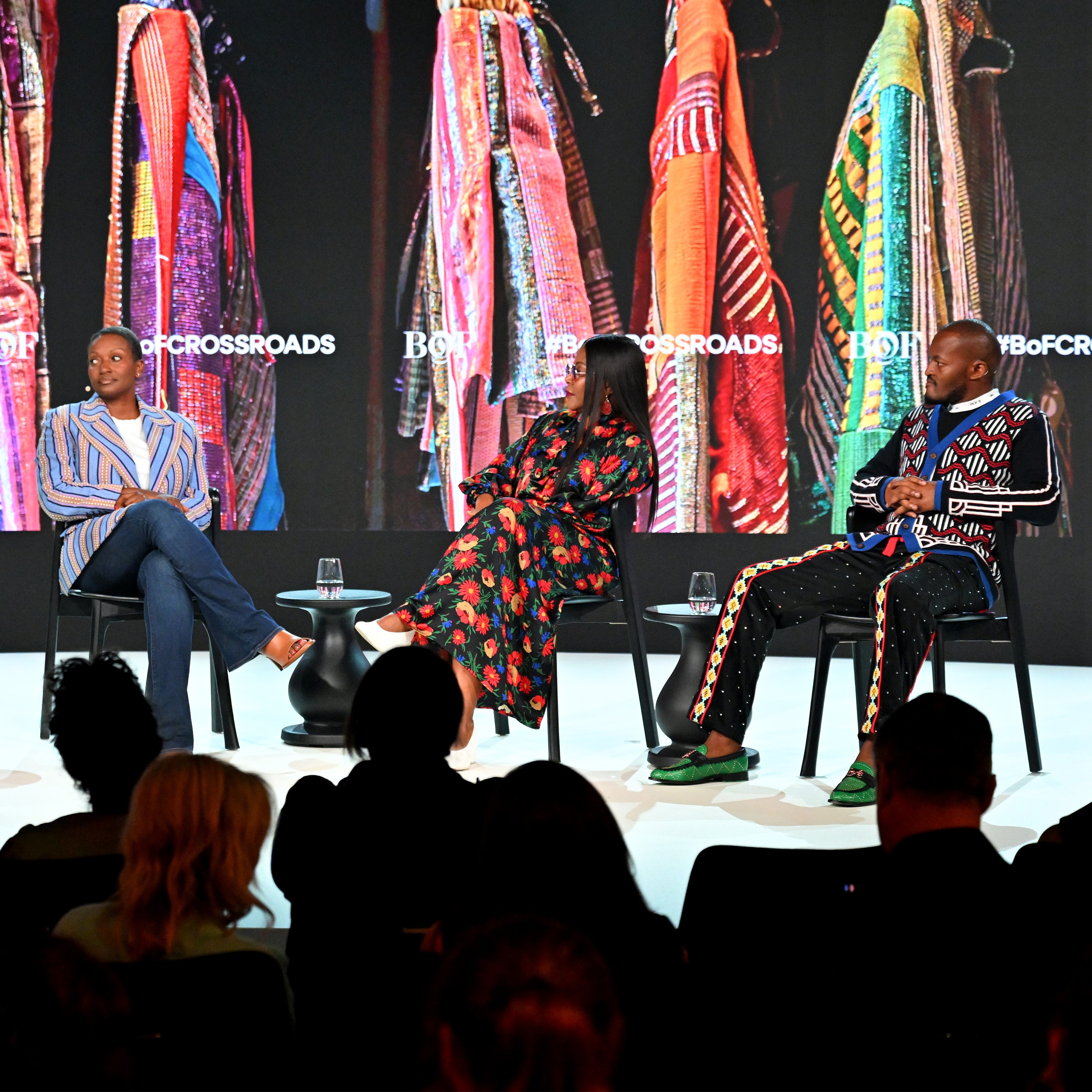
Redefining "Made in Africa" episode artwork

EPISODE · May 16, 2025 · 23 MIN

Redefining "Made in Africa"

from The Business of Fashion Podcast

Africa is experiencing an exciting shift, creatively and commercially, with growing global attention on its rapidly expanding middle-class population. Yet, local fashion entrepreneurs must navigate unique operational challenges and misconceptions about the quality and reputation of "Made in Africa."Pink Mango’s Maryse Mbonyumutwa entered apparel manufacturing in Rwanda to address both economic and social sustainability. "[Africa] is sustainable by nature, as we've not fully industrialised yet," he says. Laduma Ngxokolo, founder of South African luxury knitwear brand MaXhosa Africa, drew inspiration from his culture's traditional designs: "How do we take local traditional aesthetics and modernise them?" he asked. To celebrate African creativity, Reni Folawiyo founded the concept store Alara in Nigeria. "I started Alara from a very emotional place to elevate African creators, both on the continent and the diaspora," Folawiyo says. "The idea of elevating but also empowering remains in everything we do."On this episode of The BoF Podcast, an illuminating conversation unfolds on stage at BoF CROSSROADS 2025, where Mbonyumutwa, Ngxokolo, and Folawiyo, alongside Sudanese-British writer Rozan Ahmed, discussed Africa's unique contributions to fashion, the opportunities in sustainable manufacturing, and how they are redefining what it means to produce, create and sell in Africa.Key Insights: Africa's potential lies in sustainable manufacturing and social responsibility. Mbonyumutwa explains, "Africa is here to offer social sustainability ... to make sure that now when we talk about environmental sustainability and social sustainability they are aligned."Local retail can powerfully celebrate and elevate global African creativity. Folawiyo's vision for Alara was clear. "I started Alara in a very emotional place. I wanted to celebrate African creators, both on the continent and in the diaspora. I wanted to elevate their work, because I hadn't seen it done anywhere else," she says. “It was a self-empowerment, self-determination moment and I wanted it to be celebratory.” "Made in Africa" must represent prestige, not affordability. Ngxokolo says, "It's not cheap, yet there's a perception that anything that is made in Africa should be reasonably priced or cheap. We put in our heart and souls into our work and present it to the world so that it sits next to their level of brands.”Additional Resources:BoF CROSSROADS 2025: How to Tap into Fashion’s Future Growth MarketsDesigned, Made and Sold in Africa | BoF CROSSROADS 2025 | Youtube Hosted on Acast. See acast.com/privacy for more information.

Africa is experiencing an exciting shift, creatively and commercially, with growing global attention on its rapidly expanding middle-class population. Yet, local fashion entrepreneurs must navigate unique operational challenges and misconceptions about the quality and reputation of "Made in Africa."Pink Mango’s Maryse Mbonyumutwa entered apparel manufacturing in Rwanda to address both economic and social sustainability. "[Africa] is sustainable by nature, as we've not fully industrialised yet," he says. Laduma Ngxokolo, founder of South African luxury knitwear brand MaXhosa Africa, drew inspiration from his culture's traditional designs: "How do we take local traditional aesthetics and modernise them?" he asked. To celebrate African creativity, Reni Folawiyo founded the concept store Alara in Nigeria. "I started Alara from a very emotional place to elevate African creators, both on the continent and the diaspora," Folawiyo says. "The idea of elevating but also empowering remains in everything we do."On this episode of The BoF Podcast, an illuminating conversation unfolds on stage at BoF CROSSROADS 2025, where Mbonyumutwa, Ngxokolo, and Folawiyo, alongside Sudanese-British writer Rozan Ahmed, discussed Africa's unique contributions to fashion, the opportunities in sustainable manufacturing, and how they are redefining what it means to produce, create and sell in Africa.Key Insights: Africa's potential lies in sustainable manufacturing and social responsibility. Mbonyumutwa explains, "Africa is here to offer social sustainability ... to make sure that now when we talk about environmental sustainability and social sustainability they are aligned."Local retail can powerfully celebrate and elevate global African creativity. Folawiyo's vision for Alara was clear. "I started Alara in a very emotional place. I wanted to celebrate African creators, both on the continent and in the diaspora. I wanted to elevate their work, because I hadn't seen it done anywhere else," she says. “It was a self-empowerment, self-determination moment and I wanted it to be celebratory.” "Made in Africa" must represent prestige, not affordability. Ngxokolo says, "It's not cheap, yet there's a perception that anything that is made in Africa should be reasonably priced or cheap. We put in our heart and souls into our work and present it to the world so that it sits next to their level of brands.”Additional Resources:BoF CROSSROADS 2025: How to Tap into Fashion’s Future Growth MarketsDesigned, Made and Sold in Africa | BoF CROSSROADS 2025 | Youtube Hosted on Acast. See acast.com/privacy for more information.

NOW PLAYING

Redefining "Made in Africa"

0:00 23:48

No transcript for this episode yet

We transcribe on demand. Request one and we'll notify you when it's ready — usually under 10 minutes.

Frequently Asked Questions

How long is this episode of The Business of Fashion Podcast?

This episode is 23 minutes long.

When was this The Business of Fashion Podcast episode published?

This episode was published on May 16, 2025.

What is this episode about?

Africa is experiencing an exciting shift, creatively and commercially, with growing global attention on its rapidly expanding middle-class population. Yet, local fashion entrepreneurs must navigate unique operational challenges and misconceptions...

Can I download this The Business of Fashion Podcast episode?

Yes, you can download this episode by clicking the download button on the episode player, or subscribe to the podcast in your preferred podcast app for automatic downloads.
URL copied to clipboard!