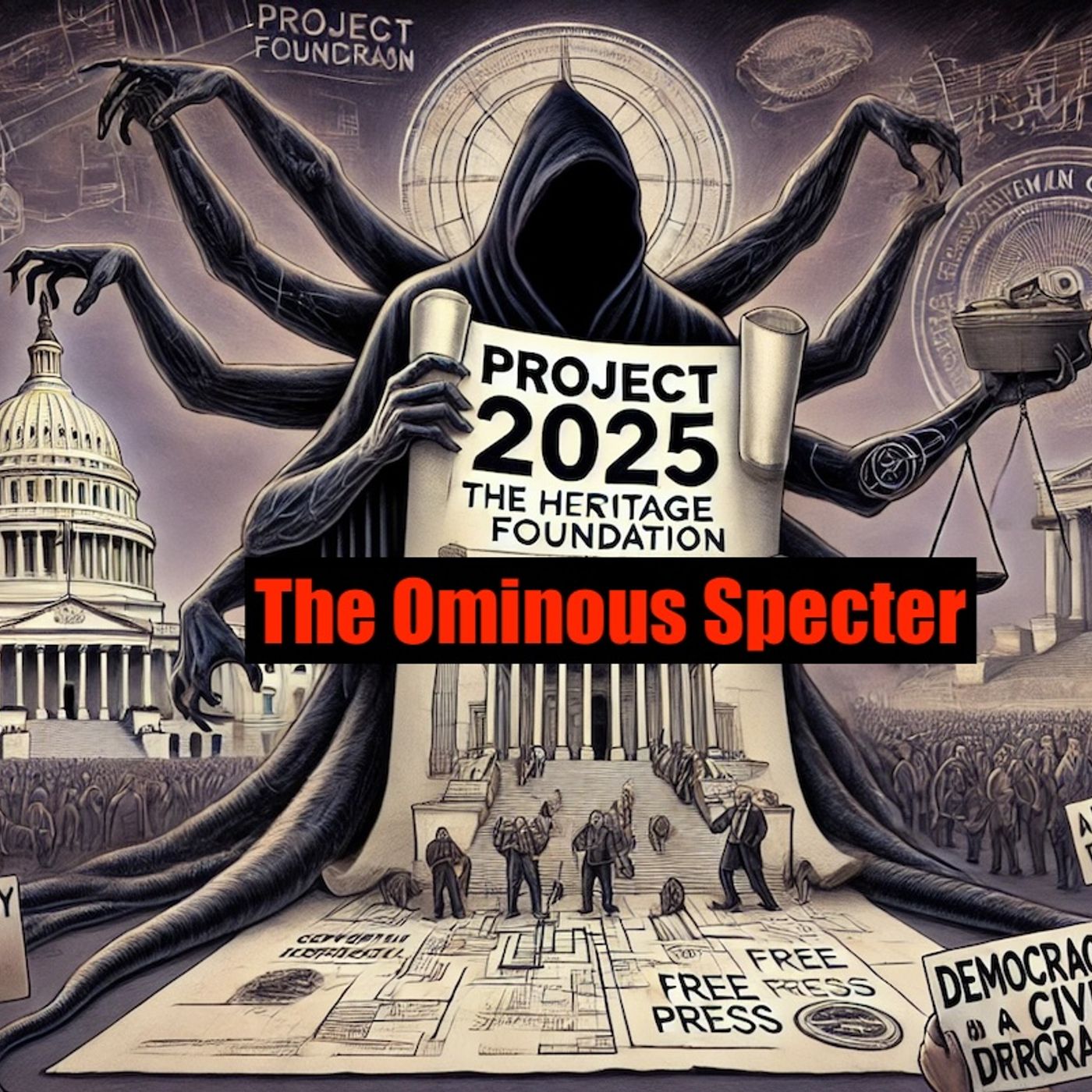
Redefining the Future: Project 2025's Ambitious Vision for a Radical Overhaul of the U.S. Government episode artwork

EPISODE · Jan 21, 2025 · 7 MIN

Redefining the Future: Project 2025's Ambitious Vision for a Radical Overhaul of the U.S. Government

from Project 2025: The Ominous Specter · host Inception Point AI

As I delved into the intricacies of Project 2025, a initiative spearheaded by the Heritage Foundation, I was struck by the sheer scope and ambition of its proposals. This is not just a policy guide; it is a comprehensive blueprint for a radical overhaul of the U.S. government, crafted with the next Republican president in mind. At its core, Project 2025 is a four-pillared initiative: a detailed policy guide, a database of potential personnel, a training program for these candidates, and a playbook for actions to be taken within the first 180 days of a new administration. Led by former Trump administration officials Paul Dans and Spencer Chretien, this project has drawn both intense scrutiny and fervent support from different quarters of the political spectrum. One of the most striking aspects of Project 2025 is its vision for the federal government's structure and operations. The project advocates for a significant centralization of power in the White House, aligning with the unitary executive theory. This means that independent federal agencies, such as the Department of Justice (DOJ), the Federal Bureau of Investigation (FBI), the Federal Communications Commission (FCC), and the Federal Trade Commission (FTC), would lose their independence and come under direct presidential control. As Heritage Foundation President Kevin Roberts puts it, "The notion of independent federal agencies or federal employees who don't answer to the president violates the very foundation of our democratic republic." This centralization is not limited to executive agencies; it also extends to the Department of State. Project 2025 proposes dismissing all Department of State employees in leadership roles by January 20, 2025, and replacing them with "acting" leaders who do not require Senate confirmation. Kiron Skinner, who authored the State Department chapter, believes most current employees are too left-wing and need to be replaced by those more loyal to a conservative president. The project's impact on education is equally profound. It envisions a dramatic reduction in the federal government's role in education, advocating for the elimination of the Department of Education and transferring its programs to the Department of Health and Human Services or terminating them altogether. The federal government would be relegated to a statistics-keeping role, with states taking over the responsibility for education. This includes allowing states to opt out of federal programs or standards and converting public funds into school vouchers that can be used for private or religious schools. As Project 2025 states, "Education is a private rather than a public good." Healthcare and social welfare programs are also in the crosshairs. The project proposes cutting Medicare and Medicaid, rejecting abortion as healthcare, and eliminating coverage for emergency contraception. It even suggests using the Comstock Act to prosecute those who send and receive contraceptives and abortion pi This content was created in partnership and with the help of Artificial Intelligence AI.

As I delved into the intricacies of Project 2025, a initiative spearheaded by the Heritage Foundation, I was struck by the sheer scope and ambition of its proposals. This is not just a policy guide; it is a comprehensive blueprint for a radical overhaul of the U.S. government, crafted with the next Republican president in mind. At its core, Project 2025 is a four-pillared initiative: a detailed policy guide, a database of potential personnel, a training program for these candidates, and a playbook for actions to be taken within the first 180 days of a new administration. Led by former Trump administration officials Paul Dans and Spencer Chretien, this project has drawn both intense scrutiny and fervent support from different quarters of the political spectrum. One of the most striking aspects of Project 2025 is its vision for the federal government's structure and operations. The project advocates for a significant centralization of power in the White House, aligning with the unitary executive theory. This means that independent federal agencies, such as the Department of Justice (DOJ), the Federal Bureau of Investigation (FBI), the Federal Communications Commission (FCC), and the Federal Trade Commission (FTC), would lose their independence and come under direct presidential control. As Heritage Foundation President Kevin Roberts puts it, "The notion of independent federal agencies or federal employees who don't answer to the president violates the very foundation of our democratic republic." This centralization is not limited to executive agencies; it also extends to the Department of State. Project 2025 proposes dismissing all Department of State employees in leadership roles by January 20, 2025, and replacing them with "acting" leaders who do not require Senate confirmation. Kiron Skinner, who authored the State Department chapter, believes most current employees are too left-wing and need to be replaced by those more loyal to a conservative president. The project's impact on education is equally profound. It envisions a dramatic reduction in the federal government's role in education, advocating for the elimination of the Department of Education and transferring its programs to the Department of Health and Human Services or terminating them altogether. The federal government would be relegated to a statistics-keeping role, with states taking over the responsibility for education. This includes allowing states to opt out of federal programs or standards and converting public funds into school vouchers that can be used for private or religious schools. As Project 2025 states, "Education is a private rather than a public good." Healthcare and social welfare programs are also in the crosshairs. The project proposes cutting Medicare and Medicaid, rejecting abortion as healthcare, and eliminating coverage for emergency contraception. It even suggests using the Comstock Act to prosecute those who send and receive contraceptives and abortion pi This content was created in partnership and with the help of Artificial Intelligence AI.

NOW PLAYING

Redefining the Future: Project 2025's Ambitious Vision for a Radical Overhaul of the U.S. Government

0:00 7:58

No transcript for this episode yet

We transcribe on demand. Request one and we'll notify you when it's ready — usually under 10 minutes.

Frequently Asked Questions

How long is this episode of Project 2025: The Ominous Specter?

This episode is 7 minutes long.

When was this Project 2025: The Ominous Specter episode published?

This episode was published on January 21, 2025.

What is this episode about?

As I delved into the intricacies of Project 2025, a initiative spearheaded by the Heritage Foundation, I was struck by the sheer scope and ambition of its proposals. This is not just a policy guide; it is a comprehensive blueprint for a radical...

Can I download this Project 2025: The Ominous Specter episode?

Yes, you can download this episode by clicking the download button on the episode player, or subscribe to the podcast in your preferred podcast app for automatic downloads.
URL copied to clipboard!