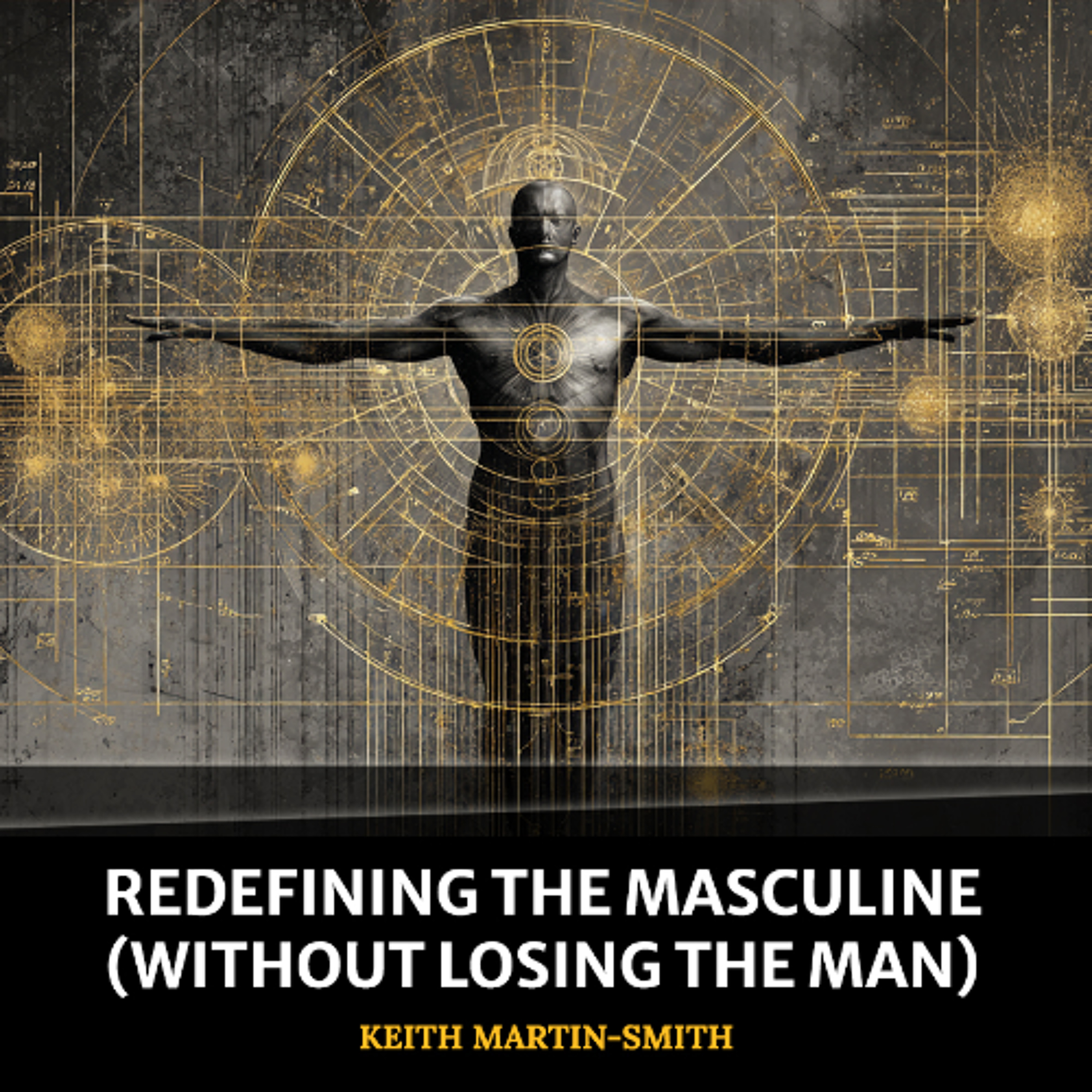
Redefining the Masculine (Without Losing the Man) episode artwork

EPISODE · Jul 18, 2025 · 54 MIN

Redefining the Masculine (Without Losing the Man)

from Everyone Is Right · host Integral Life

Keith Martin-Smith explores the contemporary crisis of masculinity through an Integral lens, challenging reductive narratives and inviting a richer, more multidimensional understanding of what it means to be a man in today’s world. Drawing on decades of men’s work, leadership coaching, and deep spiritual practice, Keith begins by naming a cultural paradox: while nearly everyone can define toxic masculinity, few can describe what healthy masculinity actually looks like. He traces this confusion to the collapse of traditional masculine scripts—stoicism, sacrifice, emotional coolness—that no longer resonate in a post-MeToo, pluralistic society. At the same time, newer ideals often leave men feeling neutered, ashamed, or adrift, with many retreating from relationships or quietly imploding under the weight of conflicting expectations. Rather than offering yet another rigid definition, Keith argues for a more integrative, developmental approach. He critiques David Deida’s popular three-stage model of masculinity—macho, nice guy, spiritual superhero—as overly idealized and psychologically naive, particularly in its neglect of trauma, shadow, and real-world complexity. Instead, Keith proposes that we recognize at least four major cultural expressions of masculinity, each with their healthy potentials and toxic distortions: Power-Based (Red) – Embodied presence, courage, and command; but prone to narcissism, domination, and emotional detachment. Traditional (Amber) – Duty, stoicism, service, and loyalty; but often repressive, rigid, and emotionally inaccessible. Modern (Orange) – Autonomy, achievement, innovation, and rational mastery; but risks burnout, detachment, and status addiction. Pluralistic (Green) – Emotional fluency, empathy, cultural humility, and relational depth; but susceptible to self-erasure, performative empathy, and ideological coercion. Rather than pitting these stages against each other, Keith calls for an integration of all four, turning masculinity from a fixed identity into a responsive, embodied capacity. A healthy man, he argues, learns to inhabit any of these modes depending on what the moment calls for—whether it’s the fierce protection of the Red warrior, the principled resolve of the Traditionalist, the clarity and execution of the Modernist, or the open-hearted presence of the Pluralist. He further warns that every level of masculinity can become domineering when it loses connection to service and heart. Whether through brute force, righteous tradition, technocratic elitism, or virtue-based moralism, each mode carries a potential for shadow—especially when weaponized in the name of power or purity. Keith closes with a spiritual invitation: that no identity—masculine, feminine, cultural, psychological—is ultimately who we are. Lasting transformation arises not from performing better roles, but from anchoring ourselves in something deeper than the constructed self. Through spiritual practice, disciplined shadow work, and developmental integration, men can begin to shed limiting scripts and show up as whole, multidimensional human beings. Not by abandoning the masculine—but by rediscovering it as an evolving, relational, and embodied art.

Keith Martin-Smith explores the contemporary crisis of masculinity through an Integral lens, challenging reductive narratives and inviting a richer, more multidimensional understanding of what it means to be a man in today’s world. Drawing on decades of men’s work, leadership coaching, and deep spiritual practice, Keith begins by naming a cultural paradox: while nearly everyone can define toxic masculinity, few can describe what healthy masculinity actually looks like. He traces this confusion to the collapse of traditional masculine scripts—stoicism, sacrifice, emotional coolness—that no longer resonate in a post-MeToo, pluralistic society. At the same time, newer ideals often leave men feeling neutered, ashamed, or adrift, with many retreating from relationships or quietly imploding under the weight of conflicting expectations. Rather than offering yet another rigid definition, Keith argues for a more integrative, developmental approach. He critiques David Deida’s popular three-stage model of masculinity—macho, nice guy, spiritual superhero—as overly idealized and psychologically naive, particularly in its neglect of trauma, shadow, and real-world complexity. Instead, Keith proposes that we recognize at least four major cultural expressions of masculinity, each with their healthy potentials and toxic distortions: Power-Based (Red) – Embodied presence, courage, and command; but prone to narcissism, domination, and emotional detachment. Traditional (Amber) – Duty, stoicism, service, and loyalty; but often repressive, rigid, and emotionally inaccessible. Modern (Orange) – Autonomy, achievement, innovation, and rational mastery; but risks burnout, detachment, and status addiction. Pluralistic (Green) – Emotional fluency, empathy, cultural humility, and relational depth; but susceptible to self-erasure, performative empathy, and ideological coercion. Rather than pitting these stages against each other, Keith calls for an integration of all four, turning masculinity from a fixed identity into a responsive, embodied capacity. A healthy man, he argues, learns to inhabit any of these modes depending on what the moment calls for—whether it’s the fierce protection of the Red warrior, the principled resolve of the Traditionalist, the clarity and execution of the Modernist, or the open-hearted presence of the Pluralist. He further warns that every level of masculinity can become domineering when it loses connection to service and heart. Whether through brute force, righteous tradition, technocratic elitism, or virtue-based moralism, each mode carries a potential for shadow—especially when weaponized in the name of power or purity. Keith closes with a spiritual invitation: that no identity—masculine, feminine, cultural, psychological—is ultimately who we are. Lasting transformation arises not from performing better roles, but from anchoring ourselves in something deeper than the constructed self. Through spiritual practice, disciplined shadow work, and developmental integration, men can begin to shed limiting scripts and show up as whole, multidimensional human beings. Not by abandoning the masculine—but by rediscovering it as an evolving, relational, and embodied art.

NOW PLAYING

Redefining the Masculine (Without Losing the Man)

0:00 54:16

No transcript for this episode yet

We transcribe on demand. Request one and we'll notify you when it's ready — usually under 10 minutes.

MG Show MG Show The MG Show, hosted by Jeffrey Pedersen and Shannon Townsend, is a leading alternative media platform dedicated to uncovering the truth behind today’s most pressing political issues. Launched in 2019, the show has grown exponentially, offering unfiltered insights, comprehensive research, and real-time analysis. With a commitment to independent journalism and factual integrity, the MG Show empowers its audience with knowledge and encourages active participation in the political discourse. Breaking News Show | eTurboNews Juergen Thomas Steinmetz News is relevant to the global travel and tourism industry, human rights and global issues.Breaking news when it happens and only from the source. Eat to Live Jenna Fuhrman, Dr. Fuhrman Our health is our most precious gift and smart nutrition can change your life. Each month, join Dr. Fuhrman and his daughter, Jenna Fuhrman as they discuss important topics in the world of nutrition. Eat to Live will change the way you eat and think about food. That Hoarder: Overcome Compulsive Hoarding That Hoarder Hoarding disorder is stigmatised and people who hoard feel vast amounts of shame. This podcast began life as an audio diary, an anonymous outlet for somebody with this weird condition. That Hoarder speaks about her experiences living with compulsive hoarding, she interviews therapists, academics, researchers, children of hoarders, professional organisers and influencers, and she shares insight and tips for others with the problem. Listened to by people who hoard as well as those who love them and those who work with them, Overcome Compulsive Hoarding with That Hoarder aims to shatter the stigma, share the truth and speak openly and honestly to improve lives.

Frequently Asked Questions

How long is this episode of Everyone Is Right?

This episode is 54 minutes long.

When was this Everyone Is Right episode published?

This episode was published on July 18, 2025.

What is this episode about?

Keith Martin-Smith explores the contemporary crisis of masculinity through an Integral lens, challenging reductive narratives and inviting a richer, more multidimensional understanding of what it means to be a man in today’s world. Drawing on...

Can I download this Everyone Is Right episode?

Yes, you can download this episode by clicking the download button on the episode player, or subscribe to the podcast in your preferred podcast app for automatic downloads.
URL copied to clipboard!