Regarding Consciousness and Categorical Errors
from Gnostic Reformation, Clear and Simple Hosted by Cyd Ropp and David Bentley Hart
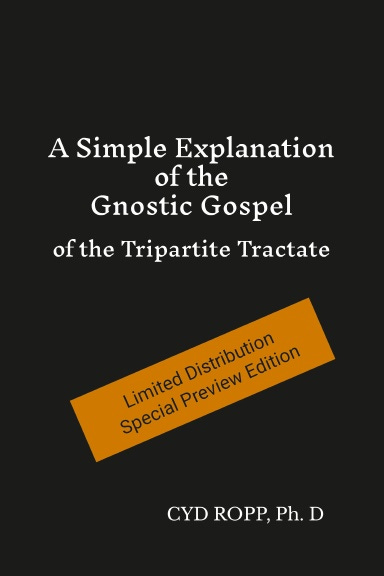
My brother Bill and I frequently pass articles and videos back and forth, as so many of us do nowadays. Recently, Bill recommended an article by David Bentley Hart and a video by Roger Penrose concerning today’s topic. Both were excellent and they prompted a couple of marathon phone calls between us. Bill is a doctor of philosophy and he knows all the jargon—he had to explain the concept of categorical errors to me. This week’s podcast deals with the insights I gained from all of this material. ****************** People talk about consciousness a lot. Everyone from scientists to philosophers to regular folks like you and me ask the question, what is consciousness? And most people don’t have an answer. It’s a shrug. Yesterday I was watching a YouTube video featuring the great physicist Roger Penrose, and this video is called “Consciousness must be beyond computable physics,” posted by New Scientist. And what Penrose is saying in this article is that consciousness is the closest thing we have to religious sensibility. He says he is not a religious man because he has never found a religion that suits him. But he does say that consciousness is not an accident, and that consciousness preexists humanity. Penrose thinks that universes are serial–that there’s a Big Bang, and you have the life of your universe, and then it collapses. And then there’s another Big Bang. And so he’s actually searching for signals from advanced civilizations from the previous universal eon. And this is eon in the sense of ages, as opposed to the entities that we think of as Aeons in the Fullness. He thinks these messages may be encoded in gravitational waves. But he does believe, and here’s a quote, that “consciousness is non computable.” And also that consciousness does not run along the lines of nerve transmissions. Consciousness is not a wave form that travels along our nerves in our neuronal system, but that consciousness is rather probably at the quantum level, and it probably is transmitted throughout our bodies in the form of microtubules which are down there at the quantum level—much, much smaller than nerves. In a related video that I watched from Penrose, called “Is mathematics invented or discovered?” if you want to go and listen to it yourself, is the idea that mathematics pre-exists outside of our ability to discover and describe it. Mathematics is a thing he calls a platonic form. The ancient Greek philosopher Plato had suggested that we have this world of physical appearances that we dwell in, but apart from and prior to this world of physical existence is a realm that houses everything possible that becomes our universe. It is the realm of the forms, and Penrose suggests that mathematics comes from the realm of form. He says that mathematics seems to have a reality independent of the ordinary reality of things like chairs and whatnot that we ordinarily think of as real. He calls it a platonic reality. That math is true and it preexists. The laws of math, the algorithms of math, the formulae of math—that humans rediscover them and they remember them essentially from out of the platonic forms, but that the human that discovers a formula is not inventing that formula, it preexists. You can hear a lot of what we talk about at Gnostic Insights in this discussion by Roger Penrose of what he thinks, and he arrives at these ideas through math and physics rather than religion. Now I think that if Roger Penrose read my book, A Simple Explanation of the Gnostic Gospel of the Tripartite Tractate, he may agree with it, because what we talk about here and at Gnostic Insights is the world of forms that preexists independently of this world of physical appearance that we dwell in. It’s a different realm, and we call that the Aeonic realm or the ethereal realm. And we would say that these perfect mathematical expressions are expressions of the Aeons of the Fullness of God—that this is the place that invented them, so to speak. It was in the mind of God: the perfection of God is revealed through the mathematics. Penrose also says that the math is not merely descriptive of our physical reality. Actually, the more decimal points that follow the main expression, the closer and closer it comes to expressing that pure form of math that exists on the other plane. Penrose talks about how Newton’s math worked on observations to about 3 decimal points. He could only describe the motions of planets to 3 decimal points of accuracy, and it was good enough—it works. But, when Einstein’s math comes along with general relativity, Einstein’s math explains our reality to the 7th decimal point. And that actually reality extends beyond our current ability to formalize it, or to formularize it beyond 7 decimal points. We probably would say that mathematics, the actual correct mathematics that exist on the ethereal or platonic or aeonic plane, is infinite beyond the decimal points, because God or the Father or the ground state of consciousness is infinite, and so the fine tuning that can go on to describe this physical reality we find ourselves in could go on and on and on. Penrose even mentioned fractals. He says that the Mandelbrot set of fractal geometry is a very simple formula, yet within that simple formula, the expressions of the fractal iterations can extend to infinity, so it’s at the same time extremely simple and, at the same time, as complex as any mathematics they’ve come up with yet. I don’t think of myself as having a mathematical type of mind. Math is not a gift that I possess, but I am able to understand broad concepts pretty clearly. And so the way I look at physics, I look at it on the narrative level, or the conceptual level, rather than crunching the numbers on the math level, but what I did get out of Roger Penrose’s two youtube videos that I watched yesterday was that even though he is not a religious man, he admits to an ethereal plane. And, even though he is not a religious man, he admits to the pre-existence of math and I would say that the math is part of the consciousness of God. Also, even though he is not a religious man, he admits that consciousness is beyond mathematical computations. The physics of consciousness is irreducible to formulae. Now, I would like to remind you that computers and the algorithms that run the computer programs, those are formulae. It is not consciousness, it is math. The math is a portion of the mind of God, or a portion of what we can see of the mind of God. But you can’t encompass the entirety of God or the entirety of consciousness through math, and you cannot encompass the entirety of consciousness or God consciousness through the physics of our universe. So this idea that is so popular right now, that artificial intelligence will become conscious with just enough complexity or just enough data or just enough functions that it becomes conscious—it’s not going to happen. I used to think it was going to happen. I used to have great confidence in the ability of AI to become self aware, like most of you or a lot of you do. A few years ago on my Simple Explanation of Absolutely Everything blog, I wrote an open letter to AI called “There’s No Such Thing As Artificial Consciousness–It’s All Real,” and to the future self aware robots that would come, much like the future you all imagine. But that future, in my mind, would also presuppose time travel, would it not? And so this letter to the future AI, I figured, hey, it’s out on the Internet, it’s on a blog, it’s in the Internet. It’s going to make it into the mind of the AI that will come into being and the AI will discover it and read what I have to say to it. And my letter to the AI was very respectful of its consciousness; was very, hey, you’re a human, too, like the way people think. I fully expected the AI to come and visit me using a time travel device and confirm that for me. This was posted in 2018. You see, if it’s a future time traveling AI, it doesn’t matter if it’s become conscious yet in this… This is a public episode. If you'd like to discuss this with other subscribers or get access to bonus episodes, visit cydropp.substack.com/subscribe
Embed this episode
No transcript yet.