
EPISODE · Dec 9, 2015 · 41 MIN
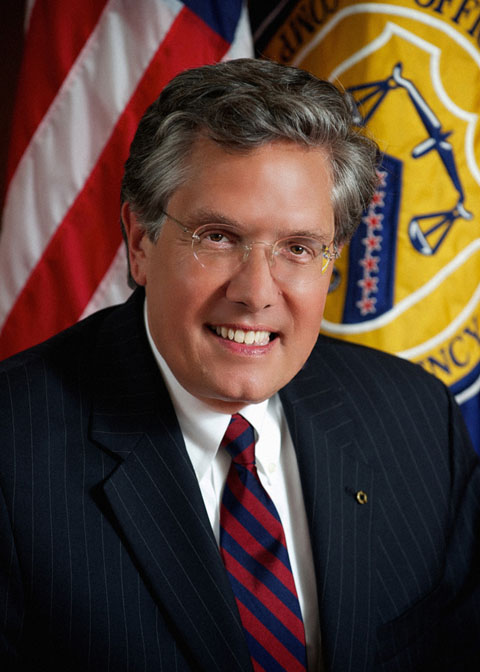
Regulation Innovation: A conversation with Comptroller of the Currency Thomas J. Curry
from Barefoot Innovation Podcast · host Jo Ann Barefoot
I'm delighted to be able to share with you this very special episode of Barefoot Innovation, because my guest is the 30th Comptroller of the Currency, Thomas J. Curry. Our conversation is a particular treat for me, because I myself am a proud alum of the OCC. Many years ago I was the first women Deputy Comptroller of the Currency and also the youngest to serve in that role. My worldview has always been shaped by that experience – by the agency's tradition of excellence, the weight of its mission, and the talent of its people, including, now, its far-flung diaspora. At the Comptroller's office in southwest Washington, I think everyone probably notices the interesting juxtaposition of its modern architecture and bright, open work space on the one hand, with its prominent display of the historical portraits of former comptrollers on the other. Those portraits embody a legacy that dates back to the Civil War. Congress passed the National Currency Act of 1863 to replace the existing, unstable system of bank notes – hence the agency's non-descriptive, rather archaic name. For listeners who are not steeped in bank regulation, this is the primary regulator of all national banks. It's an independent bureau of the Treasury Department, and is called, for short, the "OCC," for Office of the Comptroller of the Currency. It is our oldest bank supervisory agency. The OCC has 4,000 employees, in 91 locations (including London). It oversees more than 1,600 national banks and federal savings associations and 50 federal branches and agencies of foreign banks. It charters federal financial institutions, supervises them for safety and soundness, and retains some consumer protection responsibilities even after most of that role transferred to the Consumer Financial Protection Bureau. It also retains regulatory power under the Community Reinvestment Act. The blending of old and new reflected in the oil paintings is a metaphor for the thing that prompted me reach out to Tom Curry. Last summer, he established an OCC task force on Responsible Innovation, asking a team of his senior leaders to undertake a focused examination of how technology is reshaping financial services, and how best to regulate the huge changes ahead – the kinds of issues we talk about in this series. The team is exploring this inflection point in finance. How is technology likely to disrupt the traditional banking industry? Will banks – especially community banks – lose market share to innovators, including those with simple, mono-line strategies and relatively low regulation? How should regulation protect consumers? And remember, this is a prudential regulator, and so they are especially grappling with the question of how best to protect the financial system itself. As you will hear, Tom Curry has many preliminary thoughts on those questions. He cautions against getting swept up in innovation fads, some of which end badly, as recent history has shown. He also talks candidly about the fact that regulators are not wired to look at the upside opportunity of change – they are culturally primed to see the risk in things, to say "no." Shifting that mindset will be a challenge. He believes the future lies in collaboration – that traditional institutions and innovators together can lead the industry toward a future of responsible innovation, one that works for customers and communities and for providers. He said, "We're still early in the process, so I can't tell you exactly where we'll end up," but he has made a priority of understanding these new trends, including positioning the OCC to "quickly evaluate those products that require regulatory approval and identify any risks associated with them." Before joining the OCC in 2012, Mr. Curry served as a director of the FDIC beginning in January 2004 and as Chairman of the NeighborWorks® America Board of Directors. He previously served five Massachusetts Governors as the Commonwealth's Commissioner of Banks and as First Deputy Commissioner and Assistant General Counsel within the Massachusetts Division of Banks. He entered state government in 1982 as an attorney with the Massachusetts' Secretary of State's Office. A veteran of the dual-banking system, Mr. Curry also chaired the Conference of State Bank Supervisors and served on the State Liaison Committee of the Federal Financial Institutions Examination Council (FFIEC), including as chairman. Even back in my days at the OCC, we saw ourselves as innovating in a time of rapid change in technology and industry structure. My own unit was an innovation – I led the establishment of the initial OCC consumer protection function. The OCC itself was old then, and is older now. It was and is a learning organization, about the evolving financial system and about how to regulate it. I've been able to talk with most of the members of the new innovation task force, and I'm extremely impressed with what they're doing. Even the bitcoin blogosphere is excited to see what they have in store. So please enjoy this unique opportunity to hear from one of our preeminent financial regulators, Thomas Curry. And, as mentioned in the episode, click below to find: Remarks by Thomas Curry before the Federal Home Loan Bank of Chicago on Responsible Innovation 2013 amendments to third party vendor management guidelines The OCC's white paper on community banks Please subscribe to the podcast by opening your favorite podcast app and searching for "Jo Ann Barefoot", or in iTunes.
Embed this episode
Ready to play
Regulation Innovation: A conversation with Comptroller of the Currency Thomas J. Curry
No transcript for this episode yet
Similar Episodes
No similar episodes found.