
EPISODE · Oct 22, 2024 · 21 MIN
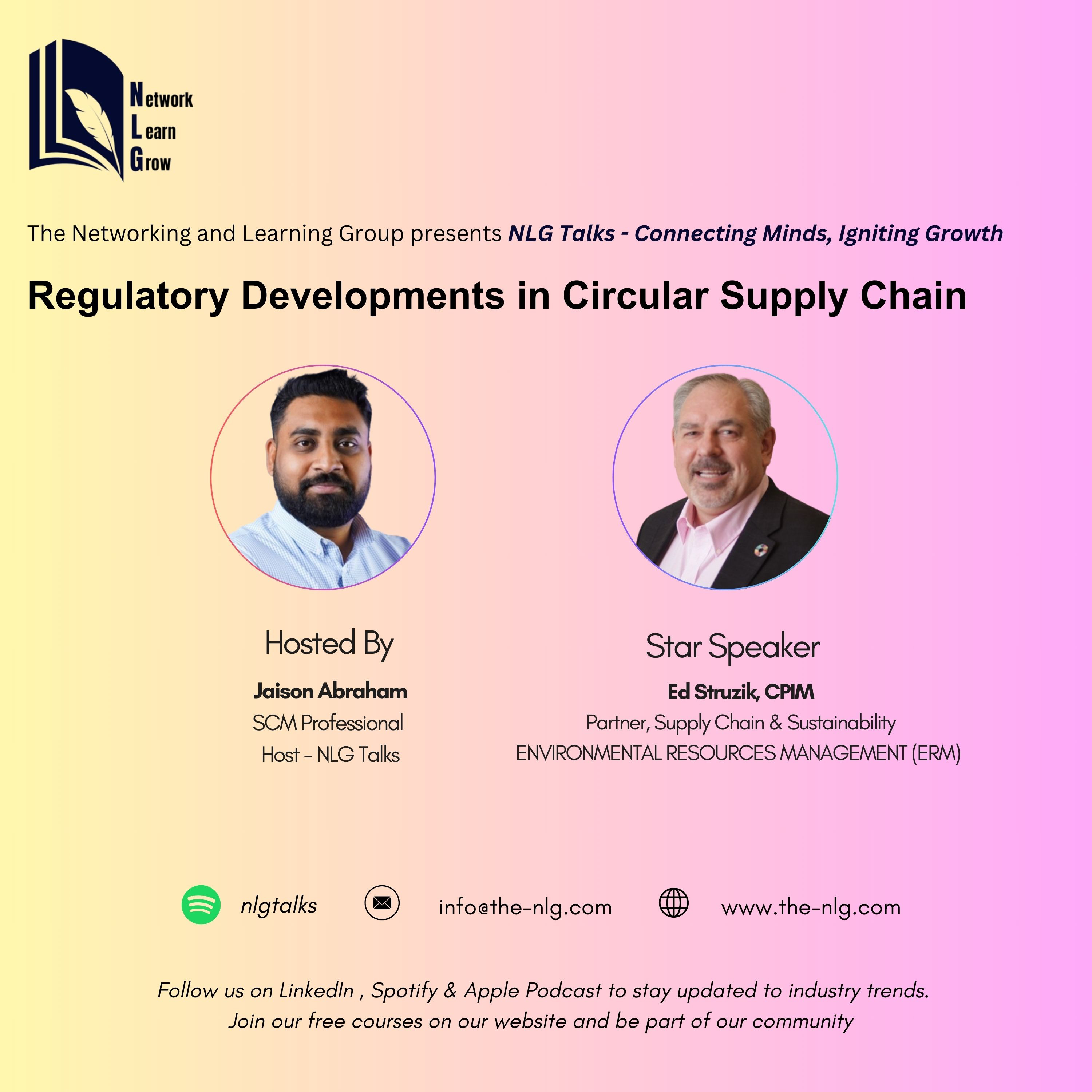
Regulatory Developments in Circular Supply Chain
from NLG Talks · host NLG Talks
In this podcast , I am speaking to ED on the regulatory and certification side of the circular supply chain function. As businesses increasingly pivot towards circular supply chain models, understanding the regulatory landscape becomes essential for success. Circular supply chains focus on sustainability through resource recovery, waste reduction, and product lifecycle extension. However, implementing these practices requires navigating a complex web of regulations and standards that differ globally. 🔑 Key Regulatory Frameworks and Standards: EU Circular Economy Action Plan: This includes directives like the Waste Framework Directive, guiding sustainable practices in the EU. US EPA's Resource Conservation and Recovery Act (RCRA): A vital framework for managing waste and promoting recycling in the U.S. International Standards: Standards such as ISO 14001 ensure effective environmental management systems are in place. Sector-Specific Regulations: Regulations like REACH (Registration, Evaluation, Authorisation, and Restriction of Chemicals) in Europe impact chemical management in products. 🌐 Impact of Regional Regulatory Differences: Waste Management Practices: Variations in local recycling infrastructures affect the adoption of circular initiatives. Compliance Costs: The financial and administrative burdens of meeting diverse regulations can hinder progress. Consistency Challenges: Maintaining uniformity across global supply chains becomes complex with differing regulations. Innovation Opportunities: Regions with supportive regulatory frameworks can drive innovation and facilitate smoother transitions to circular practices. ✅ The Role of Certifications and Labels: Certifications such as Cradle to Cradle (C2C) and ISO 14001 play crucial roles in verifying sustainable practices. C2C ensures products are designed for recyclability and safety, while ISO 14001 confirms a company's commitment to effective environmental management. Additionally, labels like Fair Trade and organic certifications significantly influence consumer perceptions of sustainability. As we navigate this evolving landscape, collaboration and adherence to these regulations and standards will be key to unlocking the full potential of circular supply chains. Let's embrace sustainability together! 💚 #CircularEconomy #Sustainability #SupplyChain #Regulations #ISO14001 #CradleToCradle #Innovation
Embed this episode
Ready to play
Regulatory Developments in Circular Supply Chain
No transcript for this episode yet
Similar Episodes
No similar episodes found.
Similar Podcasts
No similar podcasts found.