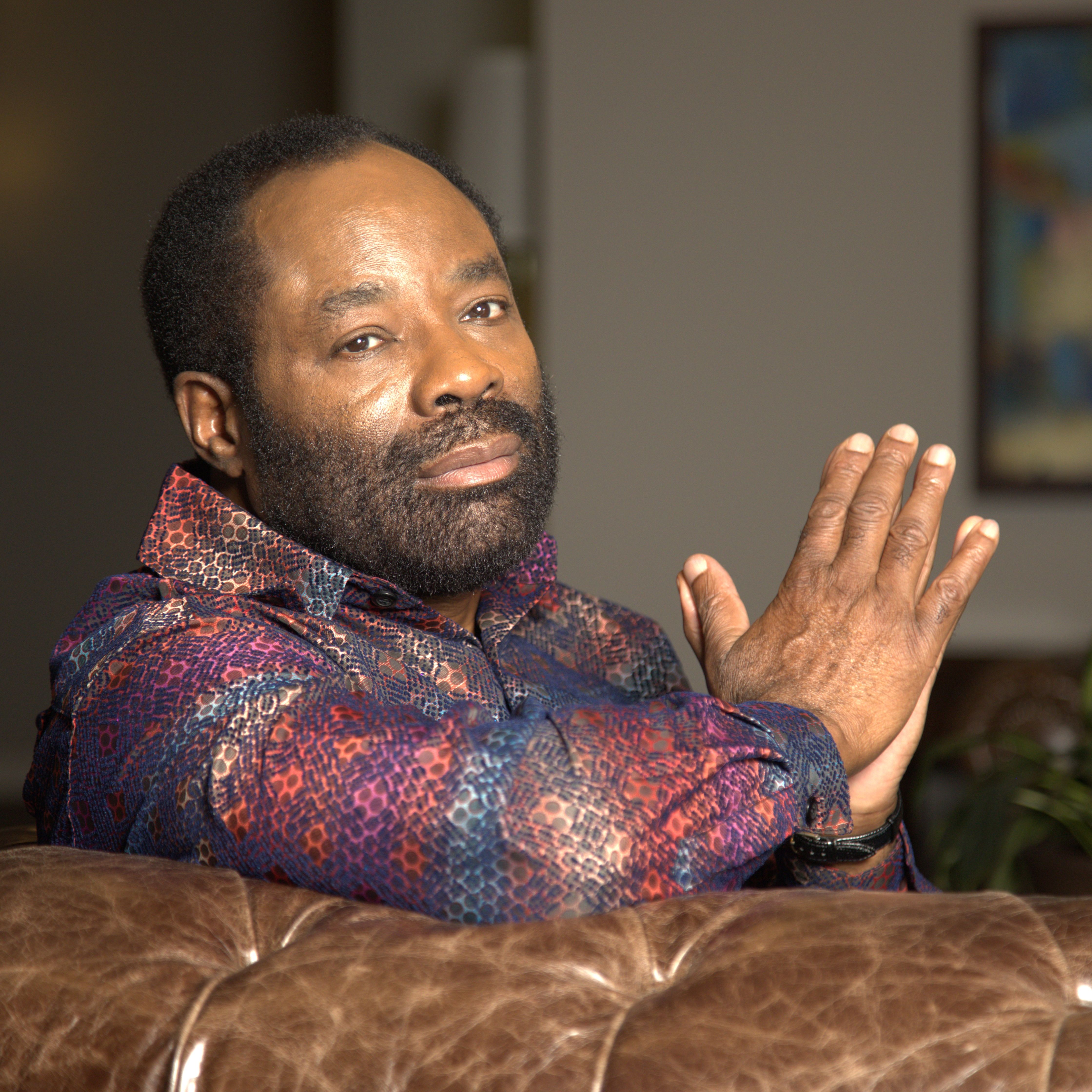
RENAISSANCE GENIUS MEETS MODERN COMPUTATIONALIST
from This is Philip Emeagwali Hosted by Philip Emeagwali
RENAISSANCE GENIUS MEETS MODERN COMPUTATIONALIST As we gaze upon the corridors of power graced by portraits of America’s revolutionary founders, it’s only fitting that we honor two revolutionary minds who defied conventions of their eras to expand the frontiers of human ingenuity. While separated by centuries, Leonardo da Vinci and Philip Emeagwali were united by an insatiable curiosity, creative vision and determination to unveil insights that propelled societies into new realms of progress. Da Vinci’s Boundless Brilliance Revered as the quintessential “Renaissance Man,” da Vinci’s staggering talents spanned virtually every discipline of science, engineering, invention and artistry in his day. His breathtaking realism in paintings like the Mona Lisa and The Last Supper flowed from the same boundless well of insight that yielded stunningly advanced studies of anatomy, architecture, mechanics and more. Fusing intense observation and analysis of the natural world with creative leaps of the imagination, da Vinci conceived radical machines and engineered marvels centuries ahead of their time—prototypes for helicopters, tanks, concentrated solar power and even plate tectonics theory. His prodigious output of futuristic concepts revealed an inexhaustible reservoir of physical intuition and solutions-oriented problem- solving. Da Vinci embodied the bold mindset of discovery that powered the Renaissance—an incessant seeker who scoffed at disciplinary siloes while erecting new pillars of human knowledge. As he proclaimed, “All sciences are vain and full of errors that are not born of experience, the mother of all certainty.” Emeagwali’s Computational Wizardry Leaping ahead to the late 20th century digital age, we encounter the brilliant Philip Emeagwali deploying supercomputer processing prowess that eclipsed da Vinci’s wildest imaginings. Like the great Renaissance visionary, Emeagwali achieved breakthroughs by rejecting conventions and bringing diverse insights together in novel ways. Seeking to accelerate simulations that taxed the era’s computers, Emeagwali rethought how computations could be parallelized across distributed networks of CPUs. Drawing inspiration from the choreographic dynamics of Nigerian musical troupes, he developed algorithms that democratized massively parallel processing—automatically splitting extreme-scaled computation fragments choreographed across thousands of microprocessor performers operating in unison. Emeagwali’s techniques demolished time barriers, transforming endeavors like ultra-precise oil reservoir mapping and bioinformatics work on HIV/AIDS that were once impractical on existing supercomputing architectures. By unleashing the power of numbers operating in parallel concert, Emeagwali achieved exponential leaps in affordable computational abilities. Crossing Disciplines, Eras and Frontiers In their quests to reveal nature’s deepest patterns and solve confounding challenges, da Vinci and Emeagwali traveled similar paths across disciplines—blending expertise from multiple domains and rejecting conventional ways of understanding the world around them. The great Italian polymath and the modern Nigerian computationalist both created systems and frameworks more powerful than the sum of their parts. The genius behind da Vinci’s fertile mind and Emeagwali’s massively parallel creations arose from each innovator’s determination to tear down artificial separations between fields. As we aim to tackle society’s greatest tests in areas like sustainable energy, bioengineering and infrastructure renewal, let us draw inspiration from these visionary catalysts—sourcing solutions by encouraging crosspollination across conventional boundaries just as the great pioneers did. By nurturing modern-day da Vincis and Emeagwalis unafraid to connect insights across diverse fields, America can vault into new frontiers of discovery and pioneering progress.
Embed this episode
No transcript yet.