
EPISODE · Mar 5, 2026 · 7 MIN
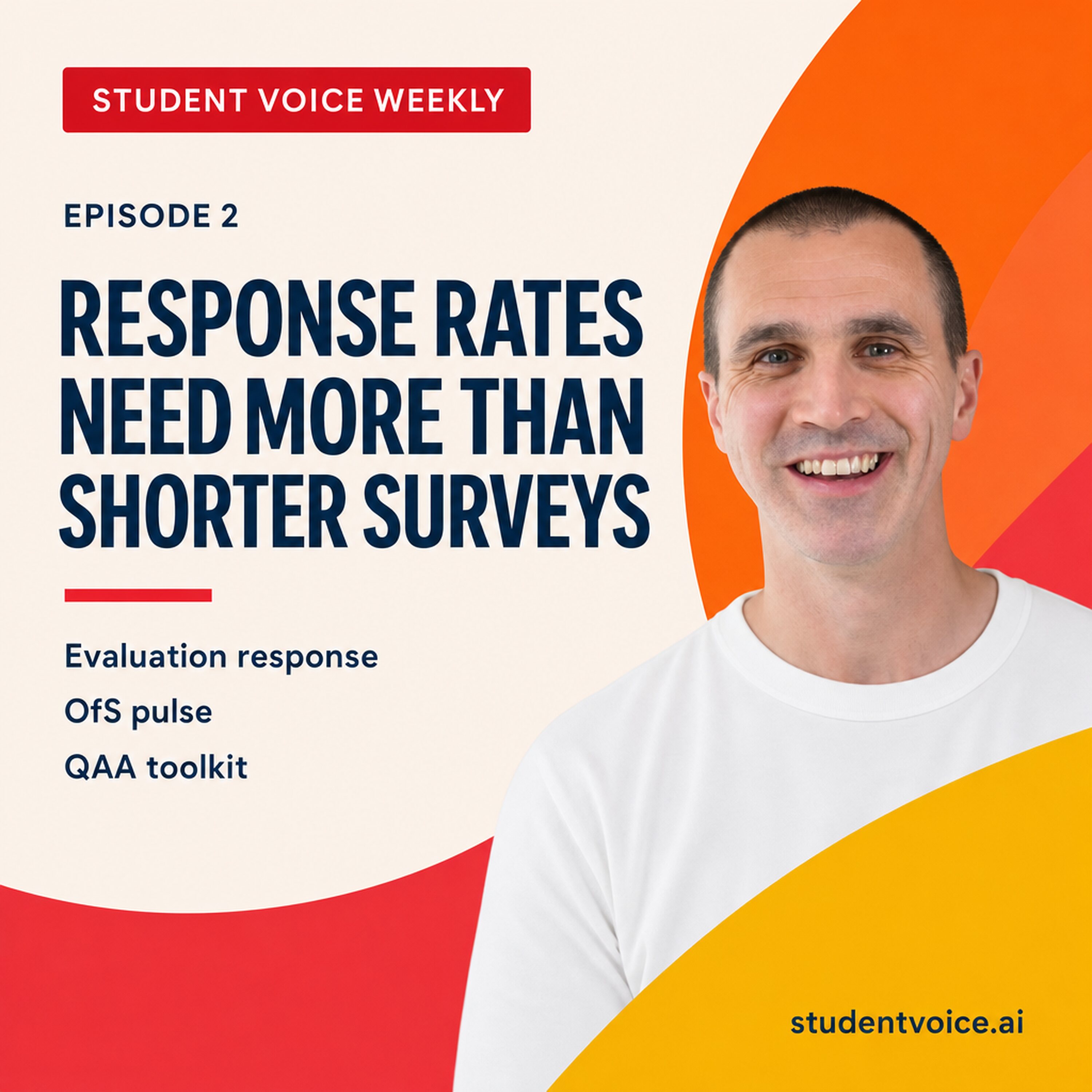
Response rates are not a shortening problem
This week, Dr Stuart Grey discusses why low response rates are not mainly a questionnaire-length problem. The real issue is whether students believe the feedback process is credible, useful and worth their time. The episode covers research on teaching evaluation participation, postgraduate feedback, OfS student pulse results and QAA assessment literacy guidance. In This Episode - Why shortening a survey is rarely enough to change student participation. - What an experiment with 1,061 undergraduates suggests about incentives and impact messaging. - How postgraduate feedback changes when students see themselves more like customers. - What OfS pulse survey findings say about current student experience pressure points. - How QAA assessment literacy guidance links expectations, assessment and feedback. - How to think about response rates as a value-exchange problem. Student Voice Practice March is when module evaluations, NSS messaging and committee evidence needs collide. The episode looks at what happens when feedback collection meets operational reality. Research Spotlight What gets students to fill in teaching evaluations? Evidence on incentives and messaging: https://www.studentvoice.ai/blog/what-gets-students-to-fill-in-teaching-evaluations/ From student to customer: what changes in postgraduate feedback: https://www.studentvoice.ai/blog/from-student-to-customer-what-changes-in-postgraduate-feedback/ Sector Watch OfS student pulse survey results, what universities should do now: https://www.studentvoice.ai/blog/ofs-student-pulse-survey-results-what-universities-should-do-now/ QAA assessment literacy toolkit, aligning expectations to improve student feedback on assessment: https://www.studentvoice.ai/blog/qaa-assessment-literacy-toolkit-student-feedback-on-assessment/ From the Archive Student voices in evaluation - motivations and perceptions: https://www.studentvoice.ai/blog/student-voices-in-evaluation-unpacking-motivations-and-perceptions-in-higher-education/ The important role of student voice in curriculum design: https://www.studentvoice.ai/blog/the-important-role-of-student-voice-in-curriculum-design/ Impacts of peer tutoring on academic performance: https://www.studentvoice.ai/blog/impacts-of-peer-tutoring-on-academic-performance/ Practical Takeaway Before shortening another questionnaire, test whether students can see what changed last time they gave feedback. If they cannot, the issue may be credibility rather than survey length. Full episode page: https://www.studentvoice.ai/podcast/episodes/002-response-rates-are-not-a-shortening-problem/ Subscribe to Student Voice Weekly: https://www.studentvoice.ai/blog/newsletter/
Embed this episode
Ready to play
Response rates are not a shortening problem
No transcript for this episode yet
Similar Episodes
No similar episodes found.
Similar Podcasts
No similar podcasts found.