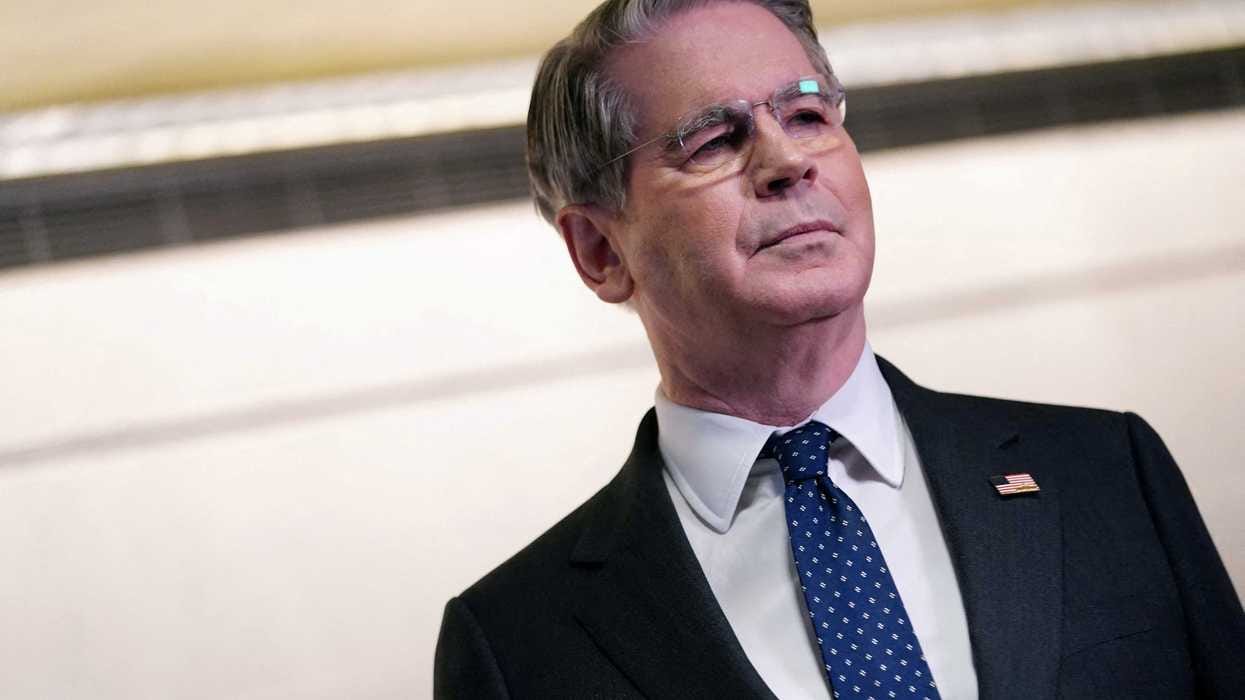
Restaurant meltdown puts Trump’s treasury chief under fire: 'He’s got a temper’
from Systemic Error Podcast Hosted by Paulo Santos
What happened Treasury Secretary Scott Bessent is the official under fire. AlterNet, citing Wall Street Journal reporting, says CodePink activists confronted him over U.S. sanctions at Reveler’s Hour in Washington in December 2025. Bessent allegedly called them “ignorant,” berated the restaurant owner for not removing them and, according to the owner, spat into his own food before leaving. The restaurant episode fits a broader account from current and former Treasury officials, who described Bessent shouting at senior and junior employees and staff trying to avoid him when angry. At a June Senate hearing, Bessent also acknowledged telling Federal Housing Finance Agency chief Bill Pulte that he would “kick his a——,” while denying that he had threatened to punch him. The White House defended Bessent’s “professionalism and accountability.” Steve Bannon offered a less sanitized assessment: Bessent, he said, has “a tripwire” and a temper. The power is at Treasury The protesters could disrupt a dinner. Bessent controls a department whose sanctions and financial-enforcement machinery can affect governments, companies and populations far beyond that restaurant. That imbalance is the political fact the personality-driven coverage risks obscuring. The consequential conduct is not that an activist embarrassed a Cabinet secretary in public. It is that a powerful official reportedly responded to opposition by demanding that a business owner remove the people confronting him—and that employees inside his department allegedly organize around avoiding his anger. Management by intimidation A Cabinet secretary shouting loudly enough to be heard outside meetings is not merely displaying a colorful temperament. When subordinates must calculate how to evade an angry superior, intimidation becomes part of the institution’s operating structure. The personnel record makes that structure more serious. The Journal reportedly found that dozens of officials lacking Senate confirmation had left or been dismissed, along with seven Senate-confirmed officials, only one of whom had been replaced. The article does not establish why every departure occurred, but widespread vacancies combined with volatile leadership create an obvious risk: decisions become concentrated around the secretary while institutional expertise and internal resistance diminish. Accountability turned upside down The White House’s invocation of “professionalism and accountability” does not answer the reported conduct. It reverses the meaning of those words. The official accused of berating workers and demanding the removal of protesters is presented as the agent of accountability, while the people subject to his authority are reduced to anonymous testimony about surviving his management. Donald Trump’s joke that Bessent had “created a monster” similarly turns a governing problem into entertainment. The administration is not powerless before Bessent’s behavior. The president appointed him, publicly praised him and, through the White House, defended him. If the reports are accurate, the conduct persists because the institution with the power to impose consequences has chosen endorsement instead. The convenient spectacle The restaurant details are vivid, especially the allegation that Bessent spat into his own food. They are also politically convenient. A bizarre scene invites readers to treat the story as gossip about an irascible man rather than scrutiny of how executive power is exercised. Even Bannon’s description narrows the issue to temperament. A “tripwire” sounds like a personal defect that unpredictably activates. But the reported targets were not peers with equal power: they included restaurant staff, junior employees and officials answerable to Bessent. Anger aimed downward is not politically neutral, whatever its psychological cause. Power without restraint This story reveals a familiar governing pattern: aggression is recast as decisiveness, staff depletion as accountability and abusive conduct as personality. The euphemisms protect the officeholder while transferring the practical burden to employees, business owners and anyone challenging policy. The central question is therefore not whether Scott Bessent has a temper. It is why an administration treats reported intimidation as evidence of strong management—and what happens to a powerful department when loyalty to the person at the top matters more than restraint, expertise or dissent. Thanks to Alter Net Source: Restaurant meltdown puts Trump’s treasury chief under fire: ‘He’s got a temper’ This is a public episode. If you would like to discuss this with other subscribers or get access to bonus episodes, visit paulstsmith.substack.com
Embed this episode
No transcript yet.