Retail investors increasingly impact public opinion as investment craze spreads episode artwork

EPISODE · May 18, 2026 · 6 MIN

Retail investors increasingly impact public opinion as investment craze spreads

from Korea JoongAng Daily - Daily News from Korea · host KIM CHANG-YONG

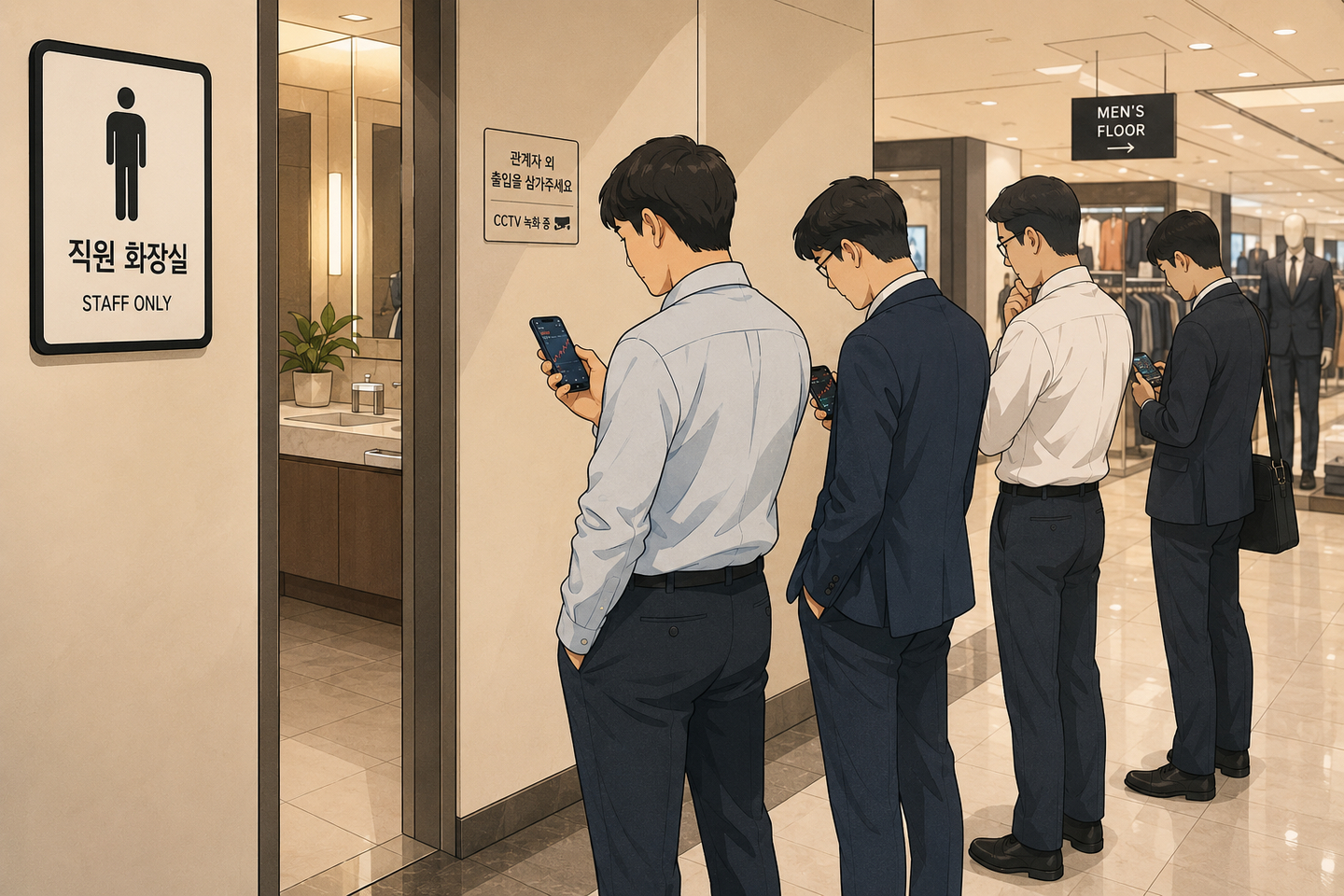
This article is by Kim Chang-yong and read by an artificial voice. An employee restroom at a department store in southern Seoul's Gangnam District fills up stall by stall every day at 3:30 p.m. They're there to do business — but not the expected kind. Instead, they're checking how their stocks did today amid the Kospi boom. "My team leader disappears every day at 3:30 p.m.," said an employee surnamed Kim, who works at the department store. "I later found out it was because they feel awkward checking the stock prices in the office, so they go to the restroom instead." "Ever since my team leader started investing in stocks recently, they've been doing it every day." Department stores are far from the only places where such scenes unfold. Choi, who works as a caregiver in a provincial city, has recently started arriving at work an hour early to participate in what workers call an "ajumma stock-reading room" in the staff lounge. Ajumma refers to a middle-aged woman, and reading rooms are private chat groups or online communities through which participants share stock tips, investment strategies and real-time trading recommendations. "It's become routine for employees on the same shift to gather before work, share returns and discuss stocks," Choi said. "As stories spread about how much money someone made in the group, I also felt compelled to participate regularly." As the stock investment craze spreads across all ages and genders, more retail investors — commonly referred to in Korea as " donghak ants," a term for individual domestic stock investors — are reacting with extreme sensitivity to anything that may affect stock prices. With such investors emerging as a major force in shaping public opinion, politicians and government officials, in turn, are becoming increasingly mindful of them. The number of people holding shares in listed companies reached 14.56 million last year, according to the Korea Securities Depository, meaning that more than one in four Koreans invested in stocks. The figure has likely surged, given that the benchmark Kospi has recently extended gains. According to the Korea Financial Investment Association, the number of active stock trading accounts stood at 105.22 million as of May 4 — up by 6.93 million from the end of last year. As the number of retail investors grows, so does the number of cases in which people grow more sensitive and link everyday government policies or policymakers' remarks directly to stock prices. Kim Yong-beom, the presidential director of national policy, proposed on May 12 a public dividend plan to redistribute excess tax revenue collected from AI companies to the public. Following his remarks, the Kospi plunged nearly 7 percent, led by major semiconductor stocks, such as SK hynix. It remains unclear whether Kim Yong-beom's comments directly affected stock prices. However, after foreign media outlets, such as Bloomberg, reported that his remarks had rattled the market, people harshly criticized him on online stock forums, with some claiming that "the policy director bet against SK hynix." The Korean Pediatric Association, which is not directly related to the financial market, even filed a complaint against him with the Seoul Central District Prosecutors' Office at 2 p.m. that day, accusing him of violating the Financial Investment Services and Capital Markets Act. "The capital market is a legitimate path for young people to build wealth, but Kim [Yong-beom]'s comments undermined trust in the market," said Lim Hyun -taek, the head of the association. There have also been cases in which people issued death threats over ordinary policy discussions by civic groups, claiming that they could affect stock prices. For instance, after it became known that some civic groups, including the People's Solidarity for Participatory Democracy, would hold an emergency forum titled "How should excess profits from semiconductors be shared?" on May 13, posts threatening to kill participants appe...

This article is by Kim Chang-yong and read by an artificial voice. An employee restroom at a department store in southern Seoul's Gangnam District fills up stall by stall every day at 3:30 p.m. They're there to do business — but not the expected kind. Instead, they're checking how their stocks did today amid the Kospi boom. "My team leader disappears every day at 3:30 p.m.," said an employee surnamed Kim, who works at the department store. "I later found out it was because they feel awkward checking the stock prices in the office, so they go to the restroom instead." "Ever since my team leader started investing in stocks recently, they've been doing it every day." Department stores are far from the only places where such scenes unfold. Choi, who works as a caregiver in a provincial city, has recently started arriving at work an hour early to participate in what workers call an "ajumma stock-reading room" in the staff lounge. Ajumma refers to a middle-aged woman, and reading rooms are private chat groups or online communities through which participants share stock tips, investment strategies and real-time trading recommendations. "It's become routine for employees on the same shift to gather before work, share returns and discuss stocks," Choi said. "As stories spread about how much money someone made in the group, I also felt compelled to participate regularly." As the stock investment craze spreads across all ages and genders, more retail investors — commonly referred to in Korea as " donghak ants," a term for individual domestic stock investors — are reacting with extreme sensitivity to anything that may affect stock prices. With such investors emerging as a major force in shaping public opinion, politicians and government officials, in turn, are becoming increasingly mindful of them. The number of people holding shares in listed companies reached 14.56 million last year, according to the Korea Securities Depository, meaning that more than one in four Koreans invested in stocks. The figure has likely surged, given that the benchmark Kospi has recently extended gains. According to the Korea Financial Investment Association, the number of active stock trading accounts stood at 105.22 million as of May 4 — up by 6.93 million from the end of last year. As the number of retail investors grows, so does the number of cases in which people grow more sensitive and link everyday government policies or policymakers' remarks directly to stock prices. Kim Yong-beom, the presidential director of national policy, proposed on May 12 a public dividend plan to redistribute excess tax revenue collected from AI companies to the public. Following his remarks, the Kospi plunged nearly 7 percent, led by major semiconductor stocks, such as SK hynix. It remains unclear whether Kim Yong-beom's comments directly affected stock prices. However, after foreign media outlets, such as Bloomberg, reported that his remarks had rattled the market, people harshly criticized him on online stock forums, with some claiming that "the policy director bet against SK hynix." The Korean Pediatric Association, which is not directly related to the financial market, even filed a complaint against him with the Seoul Central District Prosecutors' Office at 2 p.m. that day, accusing him of violating the Financial Investment Services and Capital Markets Act. "The capital market is a legitimate path for young people to build wealth, but Kim [Yong-beom]'s comments undermined trust in the market," said Lim Hyun -taek, the head of the association. There have also been cases in which people issued death threats over ordinary policy discussions by civic groups, claiming that they could affect stock prices. For instance, after it became known that some civic groups, including the People's Solidarity for Participatory Democracy, would hold an emergency forum titled "How should excess profits from semiconductors be shared?" on May 13, posts threatening to kill participants appe...

NOW PLAYING

Retail investors increasingly impact public opinion as investment craze spreads

0:00 6:47

No transcript for this episode yet

We transcribe on demand. Request one and we'll notify you when it's ready — usually under 10 minutes.

No similar episodes found.

No similar podcasts found.

Frequently Asked Questions

How long is this episode of Korea JoongAng Daily - Daily News from Korea?

This episode is 6 minutes long.

When was this Korea JoongAng Daily - Daily News from Korea episode published?

This episode was published on May 18, 2026.

What is this episode about?

This article is by Kim Chang-yong and read by an artificial voice. An employee restroom at a department store in southern Seoul's Gangnam District fills up stall by stall every day at 3:30 p.m. They're there to do business — but not the expected...

Can I download this Korea JoongAng Daily - Daily News from Korea episode?

Yes, you can download this episode by clicking the download button on the episode player, or subscribe to the podcast in your preferred podcast app for automatic downloads.
URL copied to clipboard!