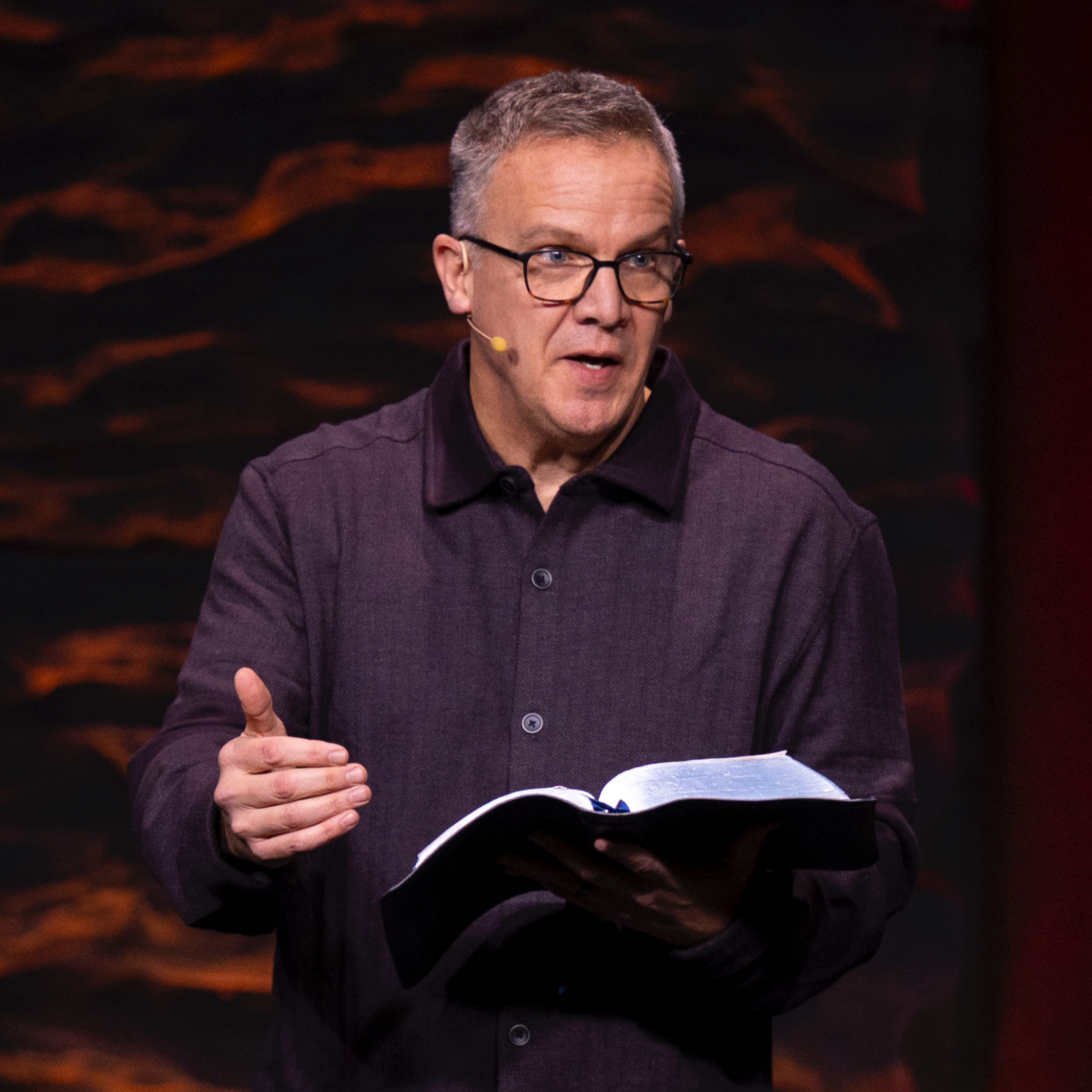
Good morning, Tabernacle. Hey, I got good news for you. Whether you're in Buckley, Manistee, Cadillac, I checked outside and the sun is shining. Yes, that's all right. We can be fired up about a little bit of sun. It's been gray forever.
Feels like it, just a little bit. I want to remind you, take your sunglasses off, let that vitamin D get inside your eyeballs. That's where it comes from. I was reminded, I think it was on Thursday. It was about seven degrees out. There's some gentlemen who've been donating their time to do some office upgrade work, you know, drywall and stuff in our other building. And I'm talking to one of the guys about the weather, like you do, right? As if we're surprised. We live in Michigan. We should know by now. And did I mention it was seven degrees outside? It's seven degrees outside. And this guy says to me, yeah, and I hear there's a cold snap coming.
It's like, where do you snap from seven degrees? What do you snap to? Anyways, if you have a Bible, if you would turn to the book of Acts chapter 22. And while you're turning there, if you are a formal member of our church, you should have received an email either on Thursday or Friday. If you didn't get it, I encourage you to look in your junk file, spam, whatever. Make sure you get it. It's very important. It has to do with our upcoming annual meeting and the board nomination process. So please take the time to read over that, participate. You have about 10 days to do it, but make a note of that.
So where we're at in our study, we're actually in part three of this particular story within the book of Acts, which is the larger story of Jesus launching a movement, launching his church by his power through his servants, this revolution. And the reason we call it part three is you'll remember Paul knew and was compelled by the spirit to go to Jerusalem. He was warned along the way by prophets and by the spirit that trouble was coming. He would be arrested, he would be bound, but he was compelled to go there despite the warnings. And in part one of this story, he shows up in Jerusalem, meets with James.
And he goes into the temple courts with some of his companions. In part two, it causes a riot. It causes a problem because they know that he's an apostle. They know that even though he's a Hebrew, he is proclaiming Jesus. He is a member of the way. And through that, he's arrested, taken into custody. At first, they try to kill him. They say he's not worthy to even live. And it's the Romans who actually, who take him into custody after letting him speak to the crowd. And that's where we pick up the story in verse 23 of Acts chapter 22. This is God's word.
And it says, as they were shouting and throwing off their cloaks and flinging dust into the air, the tribune ordered him to be brought into the barracks saying that he should be examined by flogging to find out why they were shouting against him like this. And when they had stretched him out for the whips, Paul said to the centurion who was standing by, is it lawful for you to flog a man who was a Roman citizen and uncondemned? When the centurion heard this, he went to the tribune and said to him, what are you about to do for this man is a Roman citizen? So the tribune came and said to him, tell me, are you a Roman citizen? And he said, yes.
The tribune answered, I bought this citizenship for a large sum. Paul said, but I am a citizen by birth. So those who are about to examine him withdrew from him immediately. And the tribune also was afraid, for he realized that Paul was a Roman citizen and that he had bound him. But on the next day, desiring to know the real reason why he was being accused by the Jews, he unbound him and commanded the chief priests and all the council to meet. And he brought Paul down and set him before them. Now, before we continue on, let's explain what is happening. Remember, he's in custody with the Romans. He is chained. And so because of all this trouble, some people are saying he's an Egyptian assassin, you know, and obviously the Jews that were not believers in Jesus Christ, they have their own agenda and we have a riot here. So it's typical for the Romans to bring a man in, especially, well, only if he was not a Roman citizen and they just have him flogged.
And the language is interesting here. It's kind of a formal language for something awful. This flogging could kill you. Remember, it's the cat of nine tails. It's got all the pieces of metal and bone within the cat of nine tails that they're about to take to his back. He could die from this. And that's when Paul speaks up and says, hey, is it lawful to do this to a Roman citizen? Paul's playing a card. He's appealing to the law. And it also, it's interesting that they called the flogging an examination. You're about to be examined with a whip.
And when they found out he was a Roman, they retreat. The examination speaks to, they're going to beat the truth out of you one way or another. Now I've been to a lot of exams. None of them involved a whip. I don't intend to start. I don't want to be examined. Can we agree on that church? Paul's about to be examined and they find out. Then it's the tribune, the big boss. He comes in, verifies it. And he says, whoa, that's a big deal. It costs me a large sum to become a citizen. And Paul goes, I'm a citizen by birth. So because of that, they draw away in fear and he avoids that torture. But the next day,
They bring in all of his adversaries. They bring in the council, the religious Jewish leaders. So we have Romans in the room. We've got this council within the room and we have Paul and we're gonna get to the bottom of the matter. So we pick it up in chapter 23, verse one. And looking intently at the council, Paul said, brothers, I have lived my life before God in all good conscience up to this day. And the high priest, Ananias, commanded those who stood by him to strike him on the mouth.
Then Paul said to him, that is the high priest, God is going to strike you, you whitewashed wall. Are you sitting to judge me according to the law and yet contrary to the law, you order me to be struck? Then those who stood by said, would you revile God's high priest? And Paul said, his response, I did not know brothers that he was the high priest for it is written, you shall not speak evil of a ruler of your people. Now, when Paul perceived that one part were Sadducees and the other Pharisees, he cried out in the council, brothers, I'm a Pharisee, a son of Pharisees. It is with respect to the hope and the resurrection of the dead that I am on trial. And when he had said this, a dissension arose between the Pharisees and the Sadducees and the assembly was divided. For the Sadducees say that there is no resurrection, nor angel, nor spirit, but the Pharisees acknowledge them all.
Then a great clamor arose and some of the scribes of the Pharisees party stood up and contended sharply. We find nothing wrong in this man. What if a spirit or an angel spoke to him? And when the dissension became violent, the tribune, afraid that Paul would be torn to pieces by them, commanded the soldiers to go down and take him away from among them by force and bring him into the barracks. The following night, the Lord stood by him and said, take courage for as you have testified to the facts about me in Jerusalem, so you must testify also in Rome.
Now this story has a lot of clamor. It has a lot of dissension. It has a lot of yelling and arguing and now we've got, there's violence. And the way the council goes is there were two parties represented within that council. The prominent parties were number one, Ananias the high priest. He's the boss of them all. Now according to extra biblical historian, namely Josephus, this guy Ananias was known for being violent, corrupt. He would bribe.
He had people murdered. This is not a good guy just because he's wearing a priestly robe. He's supposed to be the leader, the religious leader of the Jewish people, but this is who Ananias is. So we have him, and then we have two groups within that council. We have the Pharisees. They were Hebrews, Jewish people, following God's law, frequently in arguments with Jesus when he walked the earth.
And they believe in the resurrection and they believe in spirits and in angels. And then you have the Sadducee party who don't believe in the resurrection or spirits or angels, just like the text said. So in modern times, it would be like if you got a whole bunch of Christians together and you had a bunch of Calvinists, five-point tulips, and over here you had a bunch of Arminians, total free will. And if you don't know what that means, I'm happy for you. Because that's a great way to start an argument among Christians that, you know, they've been arguing about for 2,000 years and haven't solved yet, okay? And so we have all these parties and then Paul has to give a dissent or give an account for himself. And he begins his testimony by saying, I have done my best my whole life to live in good conscience according to the law. By which this priest, Ananias, orders someone punch him in the mouth. Bam! How was your week? Did you get punched in the mouth?
I mean, Paul's in this dark situation in part three of our story. He's already been torn, almost torn to pieces once. He's arrested to rescue him. Then he's almost flogged, barely escapes that. Now he's imprisoned and he's standing before the council. The very first words out of his mouth, he's punched in the face.
The prophecy and what the spirit had warned him is all coming true. Now what's interesting, and I don't want to make a big deal about this, but I believe it'll come up in your own study or it'll come up in your fight club or small group. Why was he punched in the mouth? Well, I told you about Ananias, but look at what happens next. Paul then calls him a whitewashed wall.
Paul says to him, essentially, you're a hypocrite. You whitewashed wall. Jesus called the Pharisees and the Sadducees whitewashed tombs, meaning they were dead on the inside and really pretty on the outside. So he insults the high priest. He says, God's going to strike you, buddy. And I don't think Paul was wrong. But what happens next is they go, how dare you insult the high priest? That was also a violation of the law. So we have two wrongs that don't make a right. The priest had Paul punched in the mouth. That was against the law. He hadn't even finished what he had to say. And then Paul insults the priest. Now this is where scholars disagree.
Because after they say to him, how dare you revile the high priest? He goes, I did not realize that you were the high priest. Now we've been debating, did Paul really know or did he not? He should have known. He was trained as a Pharisee. He was in the school of Gamaliel. You know, he'd been in that order before, persecuting Christians before he met Jesus on the Damascus Road. Maybe it was a new high priest and he didn't know, but he did call him a whitewashed wall, meaning he recognized his white high priestly garments. This is where it gives rise to the theory that Paul, you know, his thorn in the flesh might've been bad eyesight.
You know, all I see is white. I didn't realize you were the priest. You know, was he just trying to cover his tracks? There's another theory, the one I like, that says he was being sarcastic. As in, I didn't realize that a priest would have someone punch somebody in the face, right? Here's the answer. Nobody knows. Was Paul sinning? I don't know. I know Paul's not Jesus. And when we read the book of Acts, it doesn't mean that I get to call you a whitewashed wall after you punch me in the mouth. It's describing what happens. You understand?
But then what we do see, what the text is clear about is Paul understands we've got two crews here that really don't agree with one another. And so what he says next is intentional because the text says it was. Realizing that we have Pharisees and Sadducees here, he makes this defense to the Pharisees. The only reason I'm here is because I'm with you and I believe in the resurrection because Pharisees believed in the resurrection and Sadducees didn't. This is the equivalent of Paul pulling the pin on a flashbang and go and have fun. Boom, right? Because then they start arguing with one another.
And it's just mayhem to the point where the Pharisees are now defending the guy that came to attack against the Sadducees. Like the enemy of my enemy is my friend because the only thing they hated more than Paul was the Sadducees because they were always arguing for power. Is anyone confused? Paul, I believe in this moment, was following what Jesus mentioned when he said to his disciples in the book of Matthew, I am sending you into the world as sheep among wolves. Therefore, be innocent as doves, but shrewd as snakes. What he's saying is have a pure motive.
but be shrewd. And that's what Paul did. I know how to fix this. They're not going to listen to me. Flashbang, boom, resurrection. What happens next? They're about to tear him to pieces because of it. So much so the tribune calls the soldiers, get this guy, put him back in the barracks. And where that section ended is Paul is in a really, really, really dark place, a really dark moment. But before we get there,
There's really two things I want us to focus on in this passage, things that apply to us. Here's the first thing, is this argument or this discussion, this conversation about citizenship. Now, I don't want anybody to be triggered, okay? We're not talking about American politics, but isn't it interesting that this week, of all weeks, there's a huge argument in our country about citizenship. Who has citizenship? Who doesn't? Who should stay? Who should go? And we're very much like them as we see violence and mayhem.
Paul says, as a citizen, I have certain rights, privileges, and protections, namely not being flogged without due process. To which case the tribune comes down and says, wait, you're a citizen? He says, yeah, I'm a Roman citizen. Now it's interesting because the tribune goes, I bought my citizenship at a massive price. Well, how would that happen? Well, you could buy your way into Roman citizenship. You could bribe. We don't know how he got it, but he was not a citizen by birth, but he was a citizen because he paid for it. It was costly, cost him a lot of money.
Paul says, I'm a citizen by birth. Now, Paul has at least two passports at this time. He's a Jew, right? It says in the scripture at one time, Paul gives testimony, I was a Pharisee among Pharisees. I have my Jewish passport. But because of his birth through his family, he was a special case. He was also a Roman by birth. This other guy only has one. So the reason that I couldn't help but draw your attention to this is neither Jewish citizenship or Roman citizenship can save Paul because there's a higher citizenship.
There's a kingdom citizenship. And my fear, as I see our church that grows, it just grows larger and larger and larger. That's awesome. It's something to celebrate. We praise God, but I don't know everybody. And I see a lot of people that wave their little, I'm an American citizen, but there's a greater citizenship that matters. Are you with me, church? It's a kingdom citizenship. So if you're taking notes or following along in the little note guide, first thing I want us to make sure that we understand is that Jesus grants citizenship by grace through faith.
I'm gonna say it again until it registers. Jesus grants citizenship, kingdom citizenship by grace through faith. You can't buy it. You can't bribe for it. You can't earn it. You can't even be born into it because of your family, because you've always been in church or you went to church as a child. You can't just kind of by osmosis get this citizenship. And it's the only citizenship that matters. No matter what you think of what's going on in this country, your first allegiance, if you are a citizen of heaven, is to Christ the King.
You're not with me yet. We get super distracted by this stuff. The Tribune, he bought it. There's Christians all the time that think, well, because I'm a good person, I've cleaned up. I got sober. You know, I'm coming to church. I'm in the group. I'm just kind of around the thing. You know, I do the service project, help with the food pantry. I haven't put something in the red box. It doesn't matter. That won't save you. It will not save you. And then we've got others that were like, well, I've always been in the church. I can't even remember when. It's just I'm kind of always believing God and kind of here. You know what Jesus said in John chapter three to be a citizen of heaven? He said, you must be born again.
And the man he was talking to is the most religious guy you can imagine. Knew more Bible than all of us put together. Was more holy than all of us put together. And he came and said, what must I do to be saved? And he said, you must be born again. So it's not your earthly family you're born into. Have you been born into his family? That's the second birth. And that only happens by grace through faith. The only way that you can have the protection and the rights and the privilege of being adopted as a son or daughter of God Almighty is citizenship granted by Jesus. By grace through faith. If you flip over to Ephesians chapter two.
These first verses, I quote quite often. They're my favorite verses in Ephesians, maybe even in all the Bible. But I want us to look all through this chapter real quick. So you can look it up on your screen if you want. Just don't play Candy Crush. Because I don't want you to miss it. Because church, I'm not naive. Some of us are not born again. Some of us have false passports. It says in verse 8 of Ephesians 2, for by grace you have been saved through faith. And this is not your own doing, it's a gift of God. That means Jesus did the work. He lived the perfect life that you couldn't live. He died on a cross, shed his own blood, was the ultimate sacrifice.
and he offers his grace. It's as a gift, so that none of us can boast. Can't earn it, can't buy it. It's not because you're family. It's not because how good you are. It's by grace through faith. In verse 10, it says, for we are his workmanship, created in Christ Jesus for good works, which God prepared beforehand that we should walk in them. That's clarifying that, yeah, someone who is born again is going to live differently. Not perfectly, but they'll live differently. These good works, though, they happen after you receive God's grace through faith. They're a response to what Christ did, not in order that he'll do something. He's already done it. You receive it.
But then he goes on in verse 12, he explains it. Remember that you were at that time separated from Christ, alienated from the commonwealth of Israel and strangers to the covenants of promise, having no hope and without God in the world. But now in Christ Jesus, you who were once far off have been brought near by the blood of Christ. This is the gospel. And then in verses 18 and 19, in case you think I'm crazy, then it says this, for through him, we both have access in one spirit to the father. So then you are no longer strangers and aliens, but you are fellow citizens.
with the saints and members of the household of God. Church, do you believe that? The only way you can be a citizen of the kingdom is by grace through faith. And that only comes through Jesus. Are you born again? Have you asked Christ to forgive you of your sins and come into your life? Have you said yes? Have you surrendered to him? If you don't do it, you are not saved. You are not saved. And I fear for you and I'm a fool if I don't call your attention to it. It's your highest allegiance. The second thing I wanna draw our attention to is the very last verse.
So that was the fire. Here's the encouragement. Paul's in a dark place. You know, I already said he wasn't perfect. I don't know about all that back and forth with the priests. I don't know what all that means. I know that they were trying to tear him to pieces. That means he's been punched in the mouth, been violent, been almost whipped. His own people have turned on him. Pharisees were his brothers, the same guys from the same university he came from, were his enemies. And then they go to war. It's mayhem. It's chaos. It can't get any darker. And he finds himself in the barracks or the jail. He's bound. And for whatever reason, God sees his servant and he does something special. And it's for Paul. Paul knows where he's headed.
Verse 11 says, the following night, the Lord stood by him. He stood by him. He showed up not just in the spirit presence, I believe in a physical presence. Now the Lord had appeared to him on the road to Damascus, the shining light, but this is different. This is the good shepherd seeing one of his sheep in trouble. And there's something about that phrase, the Lord stood by him, his presence. And then he promised him, said, take courage. For as you've testified to the facts about me in Jerusalem, you must testify also in Rome. What's for us there?
Don't ever forget this. Jesus stands with you in your darkest moments. Jesus stands with you in your darkest moments. Whatever that dark is. It could be darkness of your own making. It could be when the darkness of the world seems to overpower you. It could be the diagnosis. He might've said he's leaving. It could be, you know, the kids won't forgive or you can't forgive or they won't receive forgiveness. It could be the depression. It could be the addiction. It could be the sin that you keep coming back to over and over as the scripture says, like a dog returns to its vomit. Jesus stands with you in your darkest moments.
If you're a citizen of heaven, if you've got that passport, you're a child of God, you've been saved. His Holy Spirit lives in you. He always stands with you. And yeah, it's special that Paul had a manifestation of the physical Lord standing by him. And I love that the Lord stood by him. But how has that changed your perspective or mind to know that whatever darkness you face, Jesus stands by you? You know, we tend to believe that, well, you know, I've been far from God, but now I came back to God. If you were a child of God that went running away, the scripture says that the shepherd left the 99 to find the one.
Where can you go? Where can you flee from his presence? The Bible says. He didn't leave you. You know, that classic thing that says, you know, God feels really far away. I always tell people like, God didn't move. It's you that went far away. But I'm not even sure that's accurate because if you're a child of God, he still stands by you. Someone needs to be encouraged by that today. In John chapter 10, Jesus said, I know my sheep by name. And in this case, he also knows his sheep by name. And other scriptures say he knows the number of hairs on our head. We can imply that he knows his sheep by their need.
Paul needed some encouragement. And that gives me a little bit of encouragement because I'm not Paul. So if Paul needed to know that, for daggone sure this cat did too. In Hebrews 13, Jesus not only knows you, it says he's with you. It says in Hebrews 13, five, never will I leave you or forsake you. He doesn't leave you when you're too busy. He doesn't leave you when you forgot. He doesn't forsake you when you fail. He's not that kind of God. He's the for real God. He knows you. He cares. He's with you and he's for you.
Romans chapter eight reminds us in verse 31, if God is for us, some of us know it. Let's try it again. If God is for us, who can be against us? That's a promise, but it's preceded by his presence. And if the presence of God has never been in your life, that promise is not for you. Oh, we're all God's children. No, we're not. No, we're not. You must be born again as a child of God. But as a citizen of heaven, the Lord stands by you in your darkest moments, even, and I know this might hurt somebody's feelings, even in your sin.
You know, you might think, well, I was in a gutter or my life was in the gutter. I did this and this and this and God just felt so far away. He did. But do you know that even in the gutter, he stands by you? I couldn't help but remind you of the story. You probably remember this story. Remember in the 70s and the 80s, like the face of televangelists in this country was a man named Jim Baker and his sidekick, you know, the bleeding mascara tears, Tammy Faye, Jimmy Tammy Faye, the PTL network. And they were shysters. You could tell from a distance, you know, maybe it started good, but somewhere along the way, it all became about money and power and amusement parks. It was crazy.
In fact, I would go as far as to say he was one of the reasons I never wanted to be a preacher because everybody in this country just associated preachers with him. And then it all exploded with adultery, sexual misconduct, sin, theft, embezzlement, millions of dollars. It was exposed. It was a huge trial that went on in, I think it was the early 90s. And of course, all of America's like, Christians are corrupt, especially pastors, especially ones on TV. That's Jim Baker. And the court agreed. And so they threw the book at him to make an example for the rest of us. He was sentenced to 45 years in federal prison. 45 years, the man was gonna die there. His life was over.
He was depressed. He was alone. His wife divorced him. His friends left him. He's penniless. He's in prison. He was suicidal. Insult to injury. The guards made him clean the toilets. And the way the story is told is that he was unkempt, hadn't shaved, hair a mess, covered in filth, hands and knees, scrubbing toilets. The bottom of the barrel. It doesn't get in. It's a dark moment. Are you with me? And then the guards, you've got a visitor, a special visitor. It's not visiting day. It doesn't matter. He comes in the room and who's standing there? Billy Graham. The most prominent preacher to make it to the grave without a scandal.
was a face for grace. He took a risk to expose himself and to be seen with this guy. And the way Baker tells the story is he was standing with arms open. He said, Jim, I love you. That's a powerful story of being Jesus with skin on to someone who's in the dark moment. A face for grace. What does that have to do with this? As powerful as it is that Billy Graham would show up in your filth. Of course, he can't now. He's gone on to be with the Lord. But to know that Jesus himself, that's better than Billy Graham.
stands with you in your darkest moments. Whatever you're facing, whatever you're carrying, whatever you just can't seem to pray through, Jesus stands with you. I got you. It's like he's saying, I'm here. I'm here. I'm with you. Never will I leave you or forsake you. Do you believe that? If you're a citizen of heaven, you ought to. And it also brings us to the last implication. Jesus' presence with me has an implication. Jesus' presence means he's not done with me. He's not done with me.
If he took the time to show up and stand by Paul and his word says, he'll never leave us or forsake us. If his word says, if God is for us, who can possibly be against us? If he knows his sheep by name and by need, and he's always with us, that means he's not done with us. Let that sink in. His presence mean he's not done with you. He's saying, I'm here. You see, we have this idea.
maybe not everybody, but if your life is a movie or if your life is a story, we think somehow that we're the authors of the story or worse yet, we think we're the star of our story. My life is a movie and I'm the star. Let me relieve you of that. You're not the star of your story. You're not the star of your movie. He's the star. He's also the author. And until he puts his pen down, he's not done with you. And he leaves no stories half written. He leaves nothing undone.
It says in the book of Philippians chapter one, he who began a good work in you will be faithful to complete it until the day of Christ Jesus. Until he says cut, until he puts the pen down, until the lights go out, he's not done with you. He's not done working in you and on you and through you. He's got more for you. And it's just a beautiful picture of Paul showing up. Well, Paul's in prison, he's bound, but the Lord's showing up and he stands by him and he says, you know, if I could rephrase it, he goes, hey, buck up little camper. Buck up, buddy.
The same way you've testified about me here in Jerusalem, you're gonna go and do that. His presence shows up and then he receives the promise. And it's always been that way. God's presence in your life precedes the promise. We wanna think, you know, or expect that we get the promise and then we'll find his presence along the way. No, his presence is all along the way. And it's been this way all throughout the Old Testament.
When God showed up at Abraham Sarah's tent, right? To tell them that they would have a child, even in their old age, the presence, he was there. And then he promised him, I'm gonna make you a great nation. The same thing with Moses. He met him at the burning bush with his presence. And then he promised, I'm gonna be with you when you go back to Egypt to set my people free. The promise through all the Old Testament, with Elijah, with Hagar, the slave girl, under the bush, the angel of the Lord appeared to him, presence. And then the promise, I'm gonna make your son into a great nation. Do you believe the promises of God? You must experience his presence first.
And when his presence precedes his promise, it's this proof of his commitment that he's not done with you. He's working on you. He's working in you. He's working through you. And it's always the same way. It's some form of I will be with you. Or what he said to Mary, the Lord is with you. He stands with you and he's not done with you. So as we close, I got really two questions. The first one, are you a citizen of heaven? Have you been born again?
If you haven't, it's not just my job. It's the plea of my heart. Receive Christ and his grace by placing your faith and trust in him. Surrender your life to him. Confess with your mouth that Jesus is Lord. Choose to believe that God raised him from the dead. Say, take my life. Put it in your own words. I don't care. But don't spend a season within our church and not be challenged with that question, have you been born again? Because you can do it. You can live your whole life in church and not be saved. Second question. Or, you know, with me, there's always several layers to the question.
Are you in a dark place? Do you realize that he stands with you, that he knows you, he promised to never leave you, he sees, he cares, and that he's not done with you? Would you bow your heads with me? Lord, I believe that we have people that are on the sidelines because they think they've gone too far or everything's too dark or they're too young or most likely they're too old. God, would your spirit take these words and drop them 18 inches from our heads to our hearts? Would you help us to believe that you stand by us?
and have stood by your children through every circumstance. You didn't go to sleep. You didn't run out of story to write. God, would you help us to see that it's your story, not ours. God, would you help all of us to say yes to you again, to say yes to you daily. Lord, write your story in my life, whatever it is. Would you help us to believe that you're not done with us? Thank you for your word. God, I thank you for your spirit, who I believe is working even right now. And most of all, we thank you for Jesus, our great God and King, the victor.
It's in his name we pray. Amen.