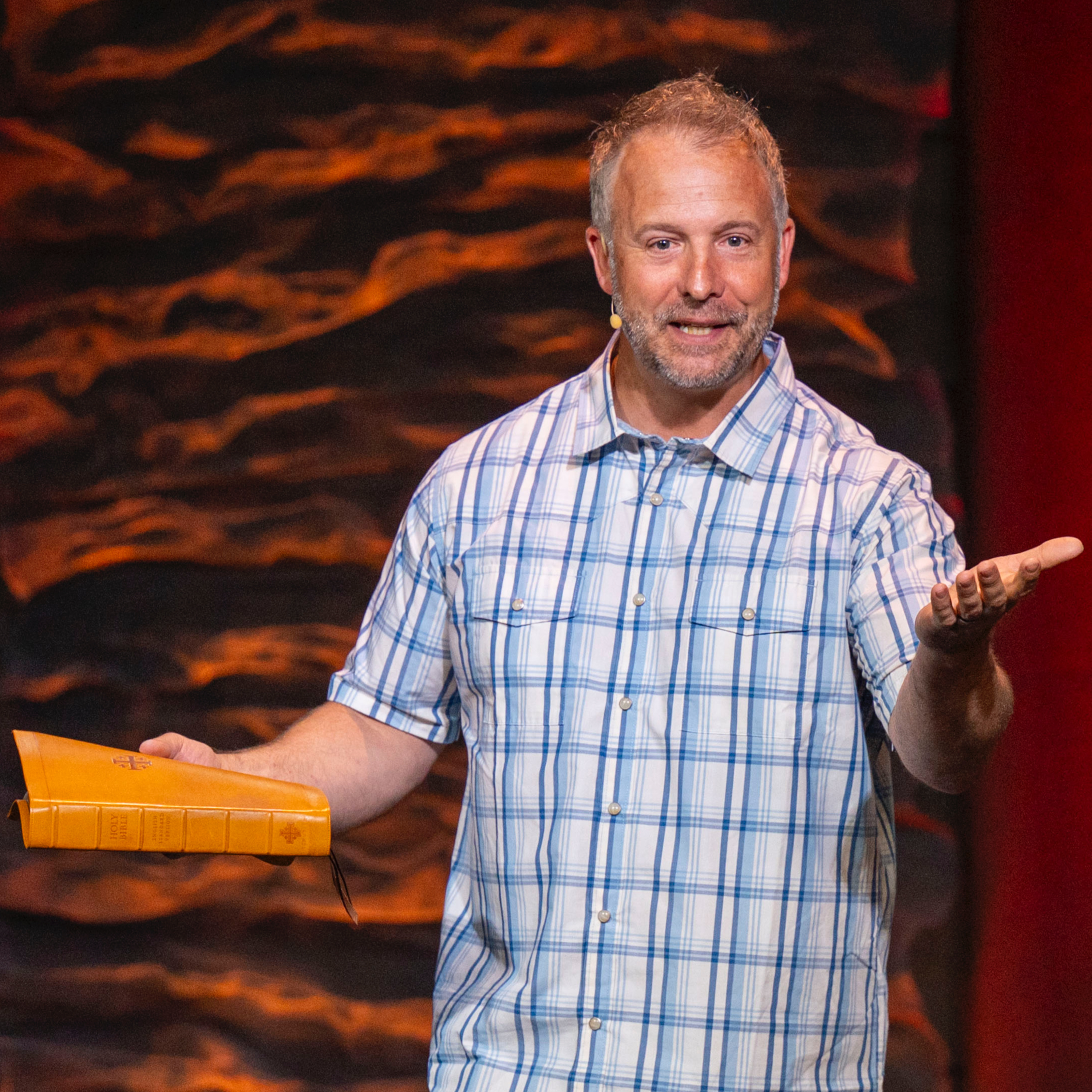
Good morning. It's great to be with you this morning. I'd like to welcome those that are joining with us in Manistee and in Cadillac as we have been working through the first few chapters of the book of Acts over these past few weeks. It has caused me to kind of compare and contrast. How do we as a church in 2025 line up with the church, the early church, this foundational church that God establishes that we're learning through in the book of Acts? So we could begin by just asking ourselves a few questions. How are we meeting the needs of those that have needs?
How are we doing as it relates to our giving and our generosity? As it relates to boldness and the boldness that we see in the apostles in the book of Acts and the establishment of the early church, how do we relate to them? Are we showing the same kind of boldness? Do we have the same passion to share the love of Jesus Christ with others, to see him through the power of the gospel transform lives? Do we live in a space of unity and peace centered around the word of God as it's being the foundational principle of our lives? As I look at...
our church, the tabernacle here in Buckley and in Manistee and in Cadillac. And I begin to wonder how much more do we have to grow? How much more do we need to put the pedal down? I read a quote just the other day that said this, the most costly thing you can do on your journey is stop and camp in your comfort zone. You know, so many things that we do are very commendable.
We meet the needs of people. We love well. We care well. Of all the churches that I've ever been a part of, there's a unity and a peace here centered around the gospel like I've never seen before. This is certainly not a time that I would stand up here and be critical at all. Please don't mishear me. But we need to put the pedal down.
And as we go into this fall with so many opportunities, would you consider maybe God is calling you on August 17th to be baptized? You've put your faith and trust in Jesus, but you've never had a public profession of that testimony of what God has done. And so you've never been baptized. If you haven't been a part of a tabernacle baptism, it's pretty incredible. All three campuses, August 17th, different locations. Here's what I can assure you. We're gonna praise. We're gonna rejoice. We're gonna hear testimonies. Of course, we're gonna eat, right? And in all of the time that we've been doing baptisms, everyone that's been dunked has come back from the water surface just fine. But an opportunity again.
to take that next step in obedience to what God has called you to. We have Merge coming up this fall, an opportunity to lay a claim to this church. This is my church. I want to be a part of this church long-term and I will do whatever it takes to help God be glorified through this church, whether it's through my worship, through the way that I attend services and serving and learning and giving, all of those aspects. Maybe it's time for you to put down your stake here at this church and become a member of this church. Just a couple of weeks ago, we were at FCA sports camp.
Got to see tons of teenagers, 560 teenagers. Got to see a bunch of students make decisions for Christ. It was awesome. But on the very last day, we gathered everyone together that's from the northern Michigan region. So the Buckley area, the Kingsley area. And as they're all there, I was blown away by how many kids are there. And as you start to ask each of them, what church do you go to? Where are you plugged in at? So many of them have no home church.
I got thinking about our student ministry camps that are coming up here in just a couple of weeks. What an incredible opportunity for them to get plugged in. We got a brand new youth pastor. He's ready to roll. This would be a great time for them to get to know him and his wife and sweet little Harper, of course. And so that opportunity is there. And I encourage you to please sign up, make that a priority. If your kids are on the fence about whether they're going or not, maybe it's finances that are holding you back. Please reach out. We would love to see your students go, see them invite and make this an awesome opportunity for them to take those next steps of discipleship. Love God, love people, make disciples.
In our text today, both in chapter six and in chapter seven, we bring back this man, Stephen, that we just began to learn about last week. Stephen, one that was raised up with the other deacons to help care and facilitate the needs of the early church. As the apostles are preaching, they're seeing the needs of the widows, seeing the needs of those that had a great desire for help and they didn't have the capacity to meet them. So they raise up these men and the first one that is mentioned is Stephen. And he answers the call to wait tables.
And we don't know all that happened between verse seven and verse eight, how much time has passed, but we see in Stephen's life an incredible working of the Holy Spirit. And Stephen is now on fire, preaching and proclaiming so much so that when we find him in verse eight, the Bible says that Stephen, full of grace and power, a power only made possible by the work of the Holy Spirit. Let's jump into our text today, beginning in verse eight of chapter six. It says there, and Stephen, full of grace and power, was doing great wonders and signs among the people. Then some of those who belonged to the synagogue of the freedmen, as it was called, there's an estimation that there's about 60 million slaves at this time in history. The freedmen would have been those that were released or freed as slaves or relatives of those that were released as slaves. And so they are the ones that are gathered here and referred to as the freedmen. And of the Cyrenians and of the Alexandrians and of those from Cilicia and Asia rose up and disputed with Stephen.
But they could not withstand the wisdom and the spirit with which he was speaking. So they go from attempting to dispute and debate him to recognizing that they're outwitted because of the wisdom given to Stephen through the power of the Holy Spirit. And so they begin to delve into being mischievous. Look what it says. Then they secretly instigated men who said, we've heard him speak blasphemous words about Moses and God, against Moses and God. And they stirred up the people and the elders and the scribes and they came upon him and seized him and brought him before the council.
And they set up false witnesses who said, this man never ceases to speak words against the holy place and the law. Now taken out of context, of course he's speaking against the law because he's telling them of something that is a brand new covenant that has taken place because of the work of Jesus Christ. Because Christ has died on the cross of Calvary and paid the penalty for sin, he's also paid the debt of the law. And so everything has transitioned from this strict adherence to Mosaic law to a brand new covenant firmly rooted in grace. And as they're looking, they're seeing Stephen and they just distort his words.
to try to make it look like he is doing something nefarious. Stephen's just preaching truth as the Holy Spirit leads him, continuing on. For we have heard him say that this Jesus of Nazareth will destroy this place and will change the customs Moses delivered to us. And gazing at him, all who sat in the council saw that his face was like the face of an angel. Just like when Moses is in the mountain receiving the Ten Commandments and the Spirit of God passes by him, it says when he comes down from the mountain, the people saw his face glowing like that of an angel.
We go all the way back to Acts chapter four in verse 13. They were saying that these men are unlearned and they're uneducated. How is it that they have this confidence? And the end of the statement there in verse 13 is, it is apparent that they have been with Jesus. And Stephen filled with grace and power made possible through the work of the Holy Spirit is now representing the Holy Spirit to these men. And it says that his face is like the face of an angel. Now in chapter seven, there are 60 verses. And because I love you, I'm not gonna read all 60 verses, but I need you to promise me that you'll read all 60 verses.
Take the time to work through this passage. It is lengthy. There's tons of information. What basically happens is the high priest in chapter seven, verse one, asks, he says, are these things so? And as we're gonna look just at a few verses from this passage, Peter, excuse me, Stephen, begins to speak, and the way that he speaks is to go all the way back through 1,100 years of history.
Stephen, a Greek Jew, Hellenist, begins to prove to them that there is a pattern, a presence all the way through the Old Testament, and this is part of God's ultimate redemption plan for mankind. And so he takes them all the way back to Abraham. Let's look together there at these first three verses. And the high priest said, are these things so? And Stephen said, brothers and fathers, hear me.
The God of glory appeared to our father Abraham when he was in Mesopotamia before he lived in Haran and said to him, go out from your land and from your kindred and go into the land that I will show you. Turn over quickly to verse 17. We'll continue reading there. But as the time of the promise drew near, which God had granted to Abraham, the people increased and multiplied in Egypt until there rose over Egypt another king who did not know Joseph. He dealt shrewdly with our race and forced our fathers to expose their infants so that they would not be kept alive. At this time, Moses was born and he was beautiful in God's sight and he was brought up.
for three months in his father's house. And when he was exposed, Pharaoh's daughter adopted him and brought him up as her own son. And Moses was instructed in all the wisdom of the Egyptians and was mighty in words and deeds. And so in these first few verses, verses one through 22, Stephen takes them from Abraham to Isaac to Jacob, all the way to Joseph into Egypt and to Moses as Moses leads them out of the wilderness. We'll move over to verse 44.
He begins to speak of the tabernacle and this temporary dwelling place of God as they are led across the desert. He says, our fathers had the tents of witness in the wilderness, just as he who spoke to Moses directed him to make it according to the pattern that he had seen. Our fathers in turn brought it in with Joshua when they dispossessed the nations that God drove out before our fathers. So it was until the days of David who found favor in the sight of God and asked to find a dwelling place for the God of Jacob. David unable to build the temple, but Solomon able. It says, but it was Solomon who built the house for him. Yet the most high.
Does not dwell in houses made by hands, as the prophet says. Heaven is my throne and the earth is my footstool. What kind of house will you build for me, says the Lord? Or what is the place of my rest? Did not my hand make all these things? God is sovereign. He is ruler over all, not to be contained by walls of a building. The spirit is present, omnipresent everywhere. And so as Stephen is teaching and preaching at this point, we would say that if he was just to wrap it up in verse 50, everything would have been okay. They probably still would have been angry. Stephen has a choice in this moment.
to recant, to take his foot off the pedal. But as we're gonna see in verse 51, because of the conviction that Stephen had to produce the truth, as God through the Holy Spirit is relaying it to him, he begins with a phrase that likely ensures his death. Now, I gotta be honest with you, as a student ministry guy for 20 some years, I've felt like saying these exact same words a few times. Look what he says. You stiff-necked people and uncircumcised in heart and ear. He's saying your body bears the marks of circumcision.
There is an obvious and apparent relationship with God that you desire, but it never made it to your heart and to your ears. And we need to be aware that we can say, God, I believe you and never have an effect and change our hearts and never have our ears open to the truth of the gospel and never have our ears open to the truth that God has for us. As he continues, he says, you always resist the Holy Spirit as your fathers did, so do you. Which of the prophets did your fathers not persecute? And they killed those who announced beforehand the coming of the righteous one whom you have now betrayed and murdered.
Just like Peter in chapter two and in chapter five begins to point out the truth. This is the one that you have murdered. Stephen does the same. You who received the law as delivered by angels and did not keep it. And what we see in the next few verses is the response often when a heart is not ready to change. It turns to violence. It says in this verse 54, now when they had heard these things, they were enraged and they ground their teeth at him. I don't know exactly what this looks like.
But I have an idea. A few years ago, I had the opportunity to be in New York City and minister with a group called Friends of Israel. And they were hosting a large banquet where they were inviting Orthodox Jews from New York City. That community is massive there. And so we were there on the ground. We had these three by five cards with invitations. And we're going to go and just invite people from the older gentleman sitting in the square playing chess all the way to these communities that were just mainly inhabited by Orthodox Jews. And so we would invite. And for the most part, everyone was cordial and kind.
And then we came into a community where they had clearly been warned that we were coming. And a man meets me halfway down his sidewalk between the road and his home, fully adorned in all of the apparel that the Orthodox Jews wear. And he said, how dare you? How dare you present this as something for us? This has nothing to do with the Jews. And I said, well, in fact, it actually does. Because the Old Testament is leading to the story of redemption through Jesus and the Messiah.
And I'm sorry, sir, that you haven't met him yet, but when you do, it'll transform your life. And his whole body began to shake with anger. And he made the weirdest statement after this. He goes, I bet you don't even eat kosher food. The sarcastic mouthy side of me wanted to start talking about bacon, but I didn't. I tried to hand him the card and I told him to have a nice day.
I didn't see gnashing of teeth, but I could see that when a people is so steeped in what has now become spiritual idolatry that they're missing the Messiah, that anger and that rage that seethed is the same anger and rage that's seething here from the high priest and those from the synagogues that Stephen is preaching in front of. And look what it says as we continue. He, full of the Holy Spirit, under complete control of the Holy Spirit, gazed into heaven and saw the glory of God and Jesus standing.
at the right hand of the throne of God. Every other place that we see this in scripture, Jesus is sitting. He is seated at the right hand of the throne of the Father. In this moment, he is standing as if to say, not only welcome home to Stephen, but also to say, I applaud you. Thank you for your faithfulness. What an incredible moment. And Stephen sees him standing at the right hand of God and he said, behold, I see the heavens open and the son of man is standing at the right hand of God. But they cried out with a loud voice and stopped their ears and rushed together at him. I don't know what this looked like. Is this them just simply plugging their ears because they don't want to hear anymore?
Then they cast him out of the city and stoned him. And the witnesses laid down their garments at the feet of a young man named Saul. And so much of the book of Acts is about Peter and Paul. And Stephen is this bridge that takes us from Peter into the life of Paul, as we'll learn to know him here in a few weeks. And as they were stoning Stephen, he called out, Lord Jesus, receive my spirit. And falling to his knees, he cried out with a loud voice, Lord, do not hold this sin against them. And when he had said this, he fell asleep. There's so much here for us this morning.
I was telling someone in the parking lot on the way in that I truly believe that there's about 30 sermons that could be preached from this passage. I'm gonna ask you three questions today as my three points as we work through this and the moments that we have remaining. And as we talk through those three questions, I want you to be pondering, God, what are you calling me to next? I don't want to camp out in my comfort zone. I wanna take the next step of obedience and living faithfully for what God has called me to.
As we begin to look at someone's life like Stephen, we see that the Bible says that he was of good repute. He's a man of good character. If Stephen said something, he did it. He followed through. And there's also this understanding that sometimes we limit the power of the Holy Spirit by saying that we believe something and then living completely contradictory. We say that we believe in the love of Jesus Christ and yet we don't portray a love of Jesus Christ. We say that we believe in unity and yet we don't portray a unity foundationally built in the gospel. We say we believe that God instills within us peace and yet the peace that passes all understanding is not found there because we get our lives so caught up in all of the trivial things.
not believing in one thing and living contradictory. But I think there's a promise here too that God uses ordinary people to accomplish his purposes. Stephen, in verses one through seven, is waiting tables. He's caring and serving for people, serving people. It's an extraordinary act of service. Yet in verse seven, it says that many of the high priests or many of the priests are coming to a saving knowledge of Jesus, all being led by this man, Stephen, who is filled with the Holy Spirit, preaching the truth of the gospel. Sometimes we can,
look at small tasks as being too trivial for us. DL Moody once said that there are many of us that are willing to do great things for the Lord, but few of us that are willing to do the little things. Did you know that on many occasions on a Saturday service here at the Tabernacle, Sunday morning services at all three campuses, there's a need every single week to help care for our kids, every week. Those little ones that Jesus said, suffer the little ones to come unto me. Why? Because of his deep desire and care for them. Little children will have a 80% more likelihood to put their faith in Christ than a grown adult does. And so we place high emphasis on letting them hear the truth of the gospel, letting them see Jesus through the stories as they're even learning today about David and Goliath and hearing about God's faithfulness. Sometimes we can look at it and go, well, you know, I don't want to hold babies. Rach and I with our sweet little bonus baby, we crave.
just sitting in the service and holding her hand and listening to Jesus being proclaimed. And I know that's many parents here. Never be too big to serve small. That's what God's calling us to. Stephen probably, as he was waiting tables, already knew in his own heart that there was a capacity greater than this, but he just wanted to be faithful and God called him to something greater. You know, if Stephen would have complained about the little task, we wouldn't even know his name, but he was faithful. Sometimes in that faithfulness, God gives difficult tasks.
to accomplish his purposes, the transformation that's already happening, the way that the persecution is allowing this church to spread and the name of Jesus to be proclaimed. Stephen, full of grace and power, is doing mighty signs and wonders, and we're seeing a working through him, but God is assigning to him something that is incredibly difficult. I think that it's wild, the parallels between Stephen and Christ in this passage. He had false accusations leveled against him. There were those that in their mischievousness are testifying falsities about him. There's a secret plot.
both had to answer to the high priest. Brings me to our first question. Do I love God more than my own life? Do I love God more than my own life? Would I be faithful? Am I prepared to die for my faith? I think if we were to hand out a three-by-five card throughout the auditorium here in Manistee and in Cadillac, and on that card it says, are you willing to die for your faith? With a little box underneath it, yes or no, and you just had to check one of the boxes. I think that for the most part, we would all go, yeah, of course I am. And yet there's a truth.
about how we would die that is directly related to how we live. You say, I would die courageously for my faith. And yet right now across America, there are people that would say that very statement that aren't living courageously for their faith. And somehow there's an expectation that I'll just flip a switch when it comes to dying courageously. And of course I would die for my faith, but are you living your faith right now? Faithful in death, but not in life. Martyrdom, as is portrayed in the modern era that we're in, is often referred to as someone who takes their own life in order to take other people's lives to promote some agenda.
But true martyrdom is what we see in the life of Stephen, that because of his faith and his convictions will not recant his belief in Jesus. And there's a boldness that is there. And he said, no matter what, I'll be faithful even if it is unto death. Tertullian said that the blood of the martyr is the seat of the church. And in fact, as we watch the disciples and the apostles and different ones martyred with beheadings, with being boiled in oil, with being hung on the crosses upside down, all the things that happened to them, it's just another verification of the truth of the resurrection.
You can watch them and you can say, well, how long will they perpetuate this hoax of Jesus resurrecting from the dead? But when it comes to the way that each of them were killed, eventually they would just say, enough's enough. Okay, that was a great story. We had a fun ride, but that wasn't true. And yet every one of them willing, one after the next, to go to their death because of what they had witnessed. We see his conviction. Howard Hendricks said this, a belief is something you will argue about. A conviction is something that you will die for.
And God often assigns these difficult tasks in order to accomplish his purposes and history is filled with all of these examples. We could look at Abraham offering his son Isaac. The Bible tells him to take your son Isaac to a place that I will show you of. And Abraham, so rich in his faith, believed that when he raised the knife that God would bring Isaac back to life if he was to bring the knife to his son. And God in his faithfulness provides the ram in the thicket. Moses, when he was asked to go before Pharaoh, Noah, in the midst of misunderstanding and constant barrage of insults, build a boat.
Daniel, keep praying when you're commanded to. Mary, this young teenager giving birth to the Messiah, Peter and John, as we've talked about, standing firmly and boldly in front of the Sanhedrin, Stephen, and giving a defense of Christ to the high priest. Back in 1517, we see a man, Martin Luther, that stands against the Catholic Church and posts 95 theses on the door of the Wittenberg Castle Church, challenging the Catholic Church's authority. In 1521, he stands before a council asking him to recant. of the condemnation that he has brought to the Catholic Church. And here's his response. He says, unless I am convinced by the testimony of the scriptures or by clear reason, for I do not trust either in the Pope or in the councils alone, since it is well known that they have often erred and contradicted themselves, I am bound by the scriptures I have quoted and my conscience is captive to the word of God. I cannot and will not recant anything since it is neither safe nor right to go against conscience. May God help me. Amen. And as you know, this conviction sparked the Protestant Reformation.
and churches built and growing all across the land, even spreading into the United States of America over time. There's another thing that I see in this text. It brings us to this question. Do I forgive those who wrong me? Do I forgive those who wrong me? You're like, out of this text, this is what you get? Yes, because at the very moment of the absolute persecution of Stephen, standing there being under a barrage of stones, and I don't even know what this looks like. I can't even fathom how painful this had to be. I can't fathom all of the scenario that's there, but Saul is witnessing.
Stephen, in his fleeting moments of his life, and Stephen says, Lord, do not count this to their account. Do not put this to their account. Man, you look at how we live in the space of forgiveness. Ephesians 4.32 tells us, be kind one to another, tenderhearted, forgiving one another, even as God in Christ. He forgave you. He gives us this testimony, just like Stephen is pleading with God not to hold it to their account. Jesus on the cross, fighting for every breath, said, Father, forgive them, for they know not what they do. And he gives us this command throughout Scripture, even in the Lord's prayer, forgive our trespasses as we forgive those who trespass against us. It's relatable, and we have to see that God has not given us a clause in Scripture to say yes, except for in this occurrence. We preached on forgiveness back before Easter. So many questions came from that sermon. All of the what-ifs.
And I will tell you that unforgiveness causes you to live boxed into your pain. Instead of saying, God, I don't understand. I can't do anything about this. And so I give it to you. And God, would you take care of him? Remember Romans chapter 12 and verse nine says that he is the ultimate one that avenges.
In Psalm, it says that every one of us has reason to be forgiven. We're all sinners. We've fallen short as we see in Romans three. There's so many aspects of this. When we begin to step back and look at what God has forgiven us of and the grace that he has shown us, why wouldn't we forgive? We see the parable that is told in scripture of the man that is owed over $6 billion in today's money. And he sees the man and he forgives the man and the man immediately runs out and grabs a guy that owes him a thousand bucks and pins him to the wall by holding onto his garment.
And God is using this to teach us to say simply, if you recognize how much you have been forgiven, then live in that grace. Stephen, as he is preaching and proclaiming, he's showing them there is a new era, a new covenant, and it is a covenant of grace. Jesus Christ forgave, and so I choose to forgive. And here's what happens oftentimes. If we don't forgive, then we take all of the things that are the hurts and the wrongs, and it's like we put them, you remember the old cartoon when they have the little staff over their shoulder with the handkerchief, the little knapsack? Just nod like you have a clue what I'm talking about. Thank you, okay, sweet.
And it's like we put all of those things in that knapsack and we're marching around with it. And we march into the next relationship and the next relationship. And every time something comes up that brings a similarity of hurt, we open up that knapsack and we relive all of those things. And it's just a that comes out. And you're like, where did that come from? It's because I haven't forgiven.
and I'm just carrying it along with me one step after the next, and it's destroying one relationship after the next relationship after the next relationship. God wants you to live in a space of grace as he has bestowed upon you through Jesus Christ. Stephen, and I don't even know the posture that he's in at this moment, likely he is on the ground because it's his last couple of words before it says he falls asleep, which is he dies. So I can see him looking up and asking God to forgive them. What he sees is there are people whose eternal destiny is in the balance.
And he's saying, God, they're not hearing my words as I proclaim you. Please don't hold this to their account. What faith and confidence in the word of God do we have to have to be able to look at people that way? Instead, we're always looking at them with this giant chip on our shoulder and we're judging them. And instead of saying, God, this is a child that you love and they're in need of you. The last question this morning is this, am I ready to meet the Lord when I die? Am I ready? Stephen, as he beholds Jesus standing at the right hand of the throne of the father,
He says, Lord, receive my spirit. I'm paraphrasing, obviously, but he's completely, absolutely aware that he is about to be in the presence of Jesus. He has that confidence. And my question for you this morning is, do you have that confidence? Do you know Jesus? So that if something were to happen today, you know you'd be in the presence of Almighty God. If you don't have that confidence, don't leave today without knowing for sure. The Bible says that we transfer our trust from all of the things that we've been relying on to the person of Jesus Christ. I put my faith alone in the finished work of the cross.
And God says that you will be forgiven. He wipes that slate clean and sees you now through the finished work of the cross. He sees you now through the righteousness of Jesus and does not see you in your sin any longer. He sees you as forgiven. You too can have that confidence just like Stephen did. Lord, receive my spirit and Jesus is standing ready to receive him. Let's pray together. Father, we're so grateful for your love for us this morning. Lord, I pray that nothing that has been said this morning would distract from the truth and the power of your word. God, as we evaluate our lives,
If we're not living courageously for you, God, would you instill in us a freshness and a newness as it relates to your word? Would you give us a desire to give the Holy Spirit control of our lives so that you could be seen in us? Lord, if I'm harboring unforgiveness, would I trust you enough to relinquish that bitterness and that hurt into your hands? Lord, if I'm not ready to meet you, would I settle that today? God, forgive me for my sin. Thank you for Jesus who died for me. Come into my life, into my heart. Lord, save me. It's not about me.
It's not about religion. It's about relationship with Jesus. And I accept this today. Lord, we love you. It's in your precious name we pray. Amen.