
EPISODE · Jun 11, 2026 · 56 MIN
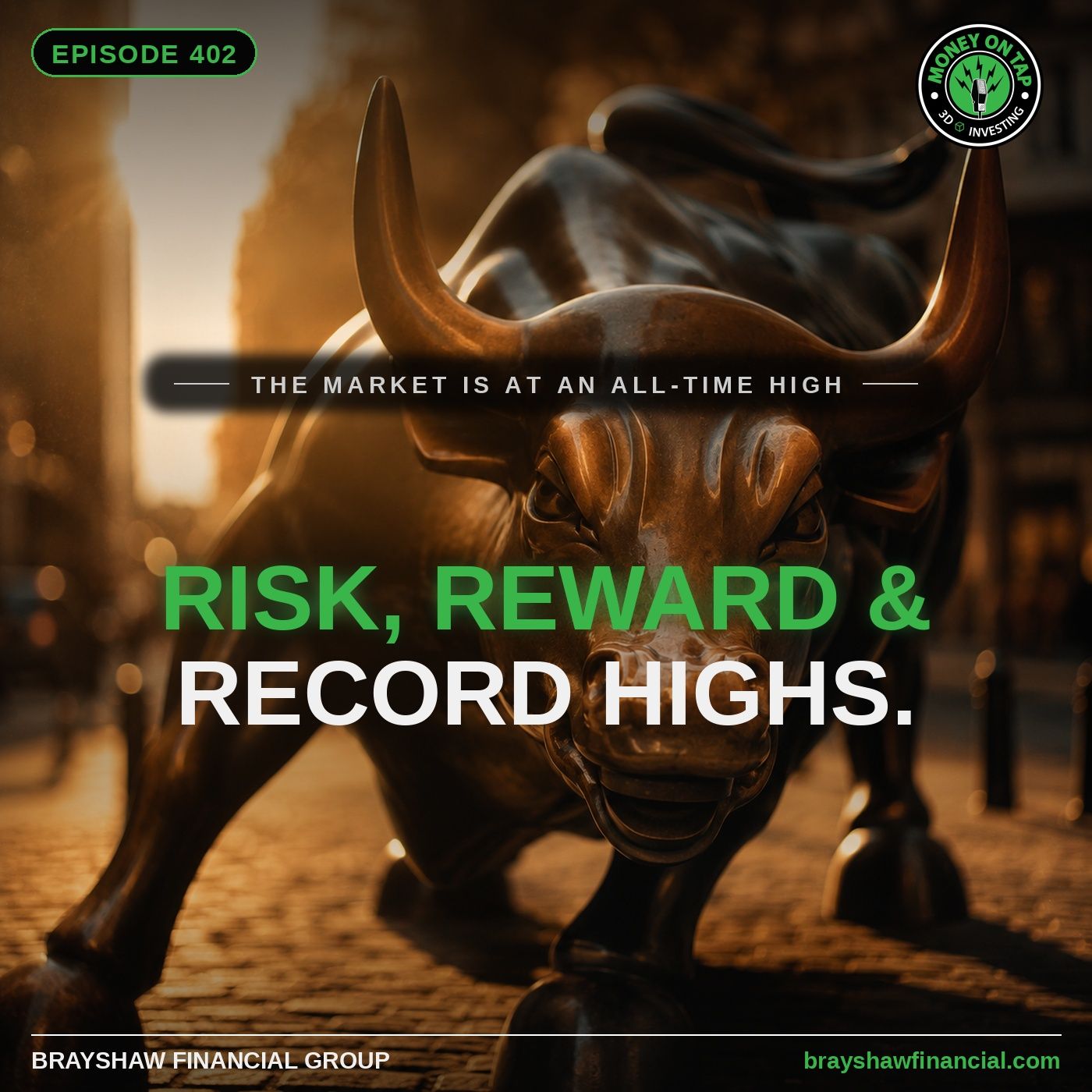
Risk, Reward, & Record Highs
from Money On Tap · host Ben Brayshaw & Seth Krussman
Nearly every major index is at a record high — and everyone’s asking the same question: is this the beginning of something great, or the end of something that’s gone too far?This week on Money On Tap, Ben Brayshaw and Dan Michelon take that question apart with 75 years of market history, a few statistics that genuinely surprised them, and a clear look at what a record high means for you — whether you’re decades from retirement or already drawing income.What you’ll learn:The Fidelity data showing investing at an all-time high beats investing on a random dayWhy a record high is usually a signal of a healthy economy, not a topA walk through 1982, 1987, 1995–1999, 2000, 2009, and 2020Why today’s AI market looks more like 1995 than the 2000 dot-com bubbleWhy timing the market is a loser’s game — and why taking profits isn’t fearSequence-of-returns risk — why the first years of retirement decide everythingBuffered ETFs — staying in the market with downside guardrailsAnnuities with lifetime income and long-term-care ridersPlus Money In The News:American financial literacy hits a 10-year low — U.S. adults answered just 47% of the TIAA Institute’s 2026 questions correctly (Yahoo Finance, Kerry Hannon)America’s data-center build-out falls behind schedule — Google’s $80B equity raise and what it signals about AI’s real cost (WSJ, Katherine Blunt)Exxon chief warns oil could spike to $160–$170 a barrel as strategic reserves run thin (Fox Business, Robert McGreevy)Mentioned on air: Our short sequence-of-returns risk video — watch it at brayshawfinancial.com.Read the companion blog: brayshawfinancial.com/blogSchedule a free consultation: app.greminders.com/t/9f3ce72e/initialconsultaFull Money On Tap episode library: brayshawfinancial.com/money-on-tapContact UsPhone: 855-226-8551Email: [email protected]: 116 South River Road, Bedford, NH 03110Web: brayshawfinancial.comWhy doesn't inflation feel like the official 3%?Because inflation is the rate at which prices rise, while affordability is the level of prices you have to live with — and that level never resets. Retirees also buy a different basket than the CPI emphasizes: shelter costs, insurance, property taxes, healthcare, prescriptions, food, and fuel, several of which run far hotter than headline inflation. Oil compounds it, touching every leg of the delivery chain. A resilient retirement plan stress-tests income needs well above the Fed's target and fights back with pricing-power equities, reasonable bond yields, guaranteed lifetime income for core expenses, and tax mitigation that lets you keep more of every distribution.
Embed this episode
Ready to play
Risk, Reward, & Record Highs
No transcript for this episode yet
Similar Episodes
No similar episodes found.
Similar Podcasts
No similar podcasts found.