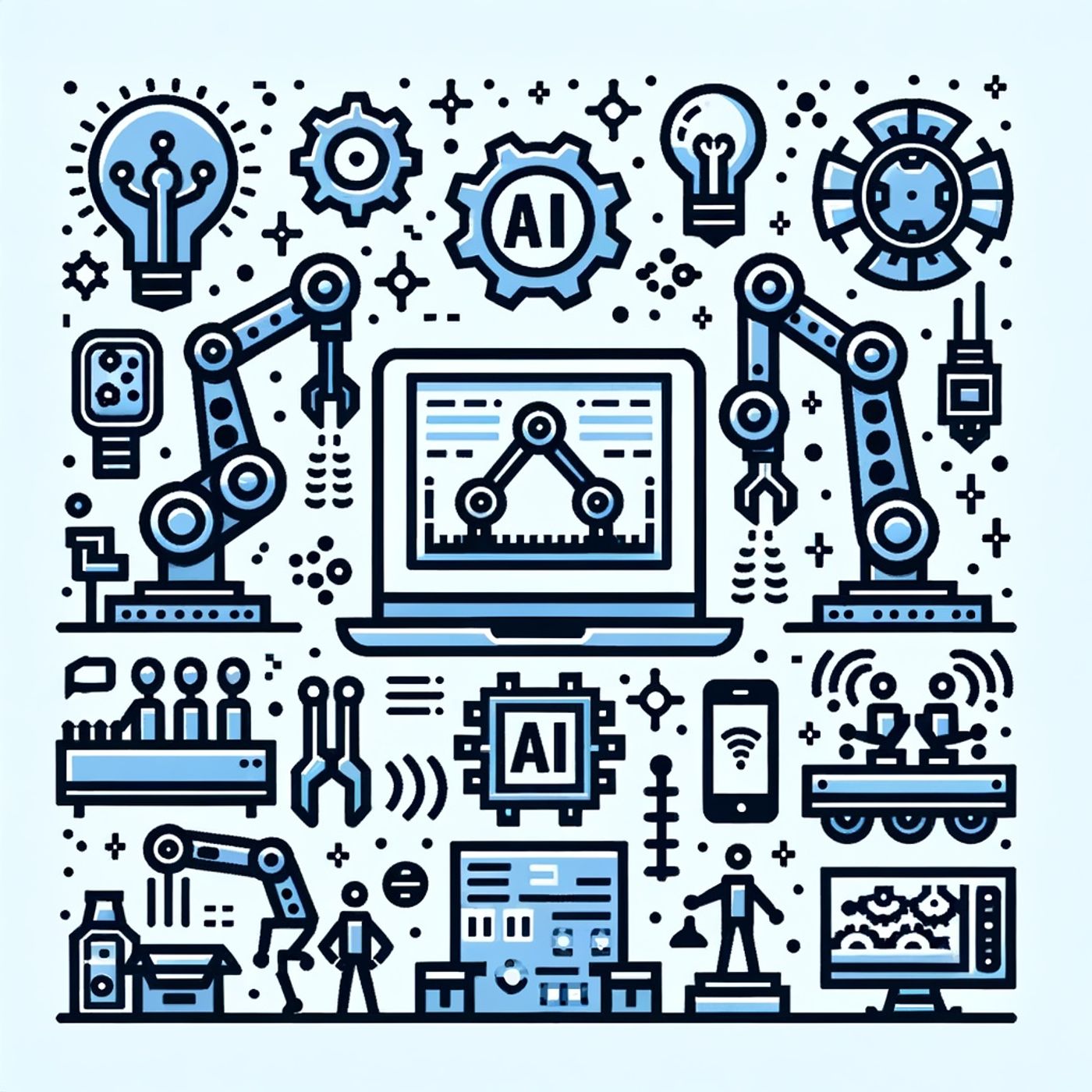
Robots Gone Wild: 5 Million Bots Taking Over Factories and the Juicy Drama Behind the AI Takeover episode artwork

EPISODE · Apr 21, 2026 · 2 MIN

Robots Gone Wild: 5 Million Bots Taking Over Factories and the Juicy Drama Behind the AI Takeover

from Industrial Robotics Weekly: Manufacturing & AI Updates · host Inception Point AI

This is you Industrial Robotics Weekly: Manufacturing & AI Updates podcast. Welcome to Industrial Robotics Weekly: Manufacturing and AI Updates. Manufacturing automation is surging forward, with Deloitte reporting that global installed capacity for industrial robots will hit 5.5 million units by the end of this year, up from over 5 million in 2025, driven by AI integration that enables smarter factories and warehouse optimization. Fanuc's latest move exemplifies this trend, partnering with Nvidia to embed advanced simulation technology into next-generation robots, boosting process precision and reducing deployment times in plastics manufacturing. Another highlight from National Robotics Week previews AI-driven automation at upcoming events like MD&M South on April 22 and 23, showcasing physical AI's role in enhancing productivity metrics—studies show up to 30 percent efficiency gains in automated assembly lines. Case studies from recent deployments reveal humanoid robots entering warehouses, with annual shipments projected at 15,000 units this year at prices around 14,000 to 18,000 dollars each, yielding markets worth 210 to 270 million dollars. These systems improve worker safety through collaborative designs that detect human proximity, cutting accident rates by 40 percent per International Federation of Robotics data, while ROI analyses indicate payback periods under two years via 25 percent labor cost savings. Technical standards are evolving too, emphasizing data quality and cybersecurity to unlock doubled annual shipments to one million units by 2030. For practical takeaways, manufacturers should pilot open-innovation ecosystems for robot coordination and standardize data platforms to accelerate integration. Looking ahead, humanoid robotics could explode to a five trillion dollar industry by 2050, transforming warehouses into fully autonomous hubs. Thank you for tuning in, listeners—come back next week for more. This has been a Quiet Please production, and for me, check out Quiet Please Dot A I. For more http://www.quietplease.ai Get the best deals https://amzn.to/3ODvOta This content was created in partnership and with the help of Artificial Intelligence AI.

This is you Industrial Robotics Weekly: Manufacturing & AI Updates podcast. Welcome to Industrial Robotics Weekly: Manufacturing and AI Updates. Manufacturing automation is surging forward, with Deloitte reporting that global installed capacity for industrial robots will hit 5.5 million units by the end of this year, up from over 5 million in 2025, driven by AI integration that enables smarter factories and warehouse optimization. Fanuc's latest move exemplifies this trend, partnering with Nvidia to embed advanced simulation technology into next-generation robots, boosting process precision and reducing deployment times in plastics manufacturing. Another highlight from National Robotics Week previews AI-driven automation at upcoming events like MD&M South on April 22 and 23, showcasing physical AI's role in enhancing productivity metrics—studies show up to 30 percent efficiency gains in automated assembly lines. Case studies from recent deployments reveal humanoid robots entering warehouses, with annual shipments projected at 15,000 units this year at prices around 14,000 to 18,000 dollars each, yielding markets worth 210 to 270 million dollars. These systems improve worker safety through collaborative designs that detect human proximity, cutting accident rates by 40 percent per International Federation of Robotics data, while ROI analyses indicate payback periods under two years via 25 percent labor cost savings. Technical standards are evolving too, emphasizing data quality and cybersecurity to unlock doubled annual shipments to one million units by 2030. For practical takeaways, manufacturers should pilot open-innovation ecosystems for robot coordination and standardize data platforms to accelerate integration. Looking ahead, humanoid robotics could explode to a five trillion dollar industry by 2050, transforming warehouses into fully autonomous hubs. Thank you for tuning in, listeners—come back next week for more. This has been a Quiet Please production, and for me, check out Quiet Please Dot A I. For more http://www.quietplease.ai Get the best deals https://amzn.to/3ODvOta This content was created in partnership and with the help of Artificial Intelligence AI.

NOW PLAYING

Robots Gone Wild: 5 Million Bots Taking Over Factories and the Juicy Drama Behind the AI Takeover

0:00 2:11

No transcript for this episode yet

We transcribe on demand. Request one and we'll notify you when it's ready — usually under 10 minutes.

No similar episodes found.

No similar podcasts found.

Frequently Asked Questions

How long is this episode of Industrial Robotics Weekly: Manufacturing & AI Updates?

This episode is 2 minutes long.

When was this Industrial Robotics Weekly: Manufacturing & AI Updates episode published?

This episode was published on April 21, 2026.

What is this episode about?

This is you Industrial Robotics Weekly: Manufacturing & AI Updates podcast. Welcome to Industrial Robotics Weekly: Manufacturing and AI Updates. Manufacturing automation is surging forward, with Deloitte reporting that global installed capacity for...

Can I download this Industrial Robotics Weekly: Manufacturing & AI Updates episode?

Yes, you can download this episode by clicking the download button on the episode player, or subscribe to the podcast in your preferred podcast app for automatic downloads.
URL copied to clipboard!