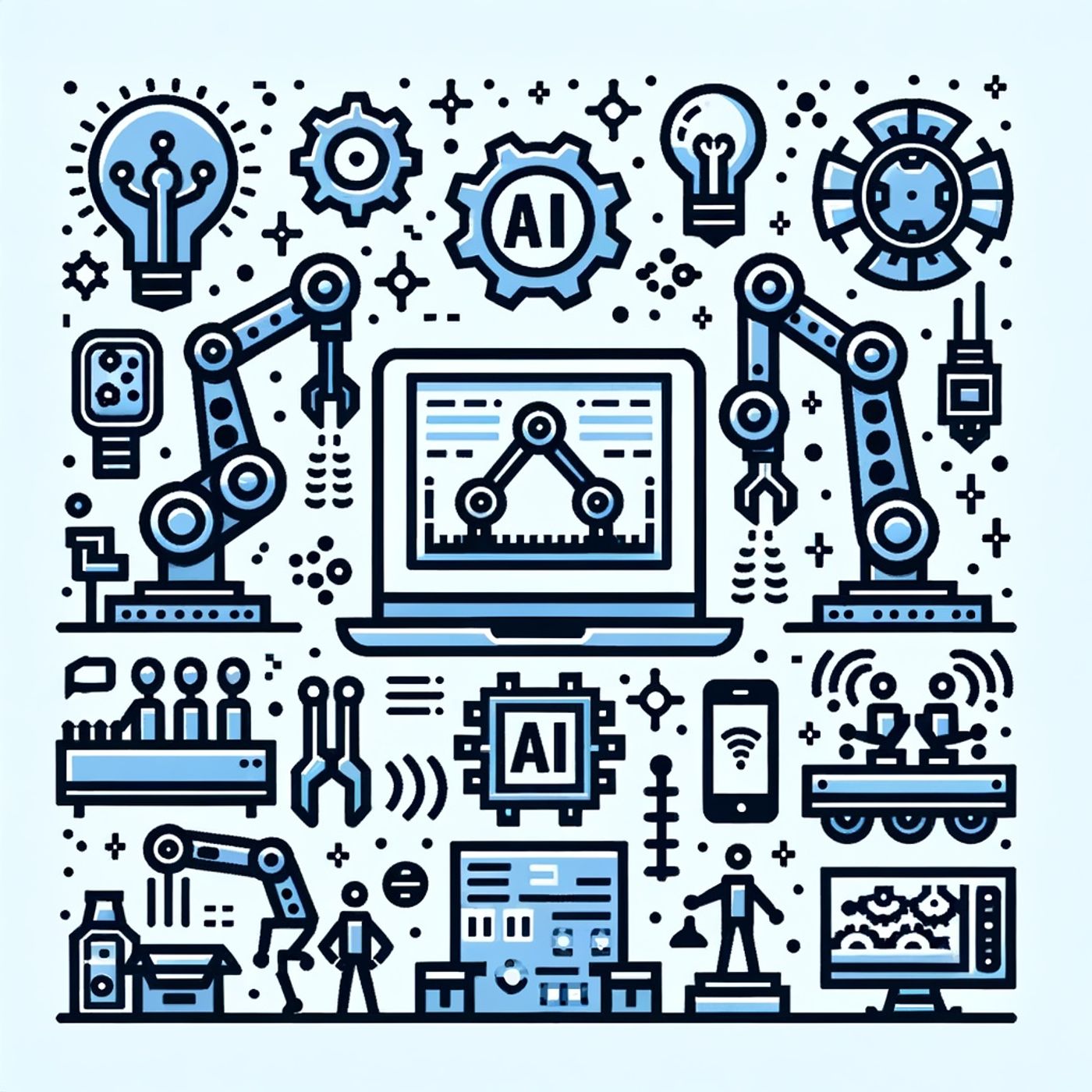
Robots Invade Factories: Tesla's AI Triumph, Amazon's Mobile Marvels, and Siemens' Psychic Machines! episode artwork

EPISODE · Mar 30, 2025 · 3 MIN

Robots Invade Factories: Tesla's AI Triumph, Amazon's Mobile Marvels, and Siemens' Psychic Machines!

from Industrial Robotics Weekly: Manufacturing & AI Updates · host Inception Point AI

This is you Industrial Robotics Weekly: Manufacturing & AI Updates podcast. In the fast-paced world of industrial robotics, the past week has seen significant advancements in manufacturing automation and AI integration. As we enter April 2025, the industry continues to evolve rapidly, with new technologies reshaping factory floors worldwide. Recent data from the International Federation of Robotics reveals a 15% increase in industrial robot installations globally compared to the previous year. This surge is driven by the growing demand for automation in various sectors, including automotive, electronics, and food processing. A standout case study comes from Tesla's Gigafactory in Texas, where the implementation of AI-powered robotic arms has resulted in a 30% increase in production efficiency for their latest electric vehicle model. The factory's smart system uses machine learning algorithms to optimize assembly line processes in real-time, reducing downtime and improving overall productivity. In warehouse automation, Amazon has unveiled its next-generation fulfillment centers, featuring advanced mobile robots capable of navigating complex environments and collaborating seamlessly with human workers. These robots, equipped with computer vision and natural language processing capabilities, have improved order processing times by 40% while enhancing worker safety. On the AI front, Siemens has introduced a groundbreaking predictive maintenance system for industrial equipment. By analyzing vast amounts of sensor data, the AI can predict potential failures with 95% accuracy, allowing manufacturers to schedule maintenance proactively and minimize costly downtime. A recent study by McKinsey & Company highlights the impressive return on investment for companies adopting industrial robotics and AI. On average, manufacturers are seeing a 20% reduction in operational costs and a 25% increase in output quality within the first year of implementation. As the industry moves forward, experts predict a growing focus on human-robot collaboration. The development of more intuitive interfaces and safety protocols is making it easier for workers to interact with robotic systems, leading to improved efficiency and job satisfaction. Looking ahead, the integration of 5G networks and edge computing is expected to revolutionize industrial robotics further. These technologies will enable faster data processing and real-time decision-making, paving the way for even more sophisticated automation solutions. For manufacturers considering robotics adoption, conducting a thorough assessment of current processes and identifying areas where automation can add the most value is crucial. Additionally, investing in workforce training and upskilling programs will be essential to ensure a smooth transition and maximize the benefits of these advanced technologies. As we navigate this rapidly changing landscape, staying informed about the latest developments and best practices This content was created in partnership and with the help of Artificial Intelligence AI.

This is you Industrial Robotics Weekly: Manufacturing & AI Updates podcast. In the fast-paced world of industrial robotics, the past week has seen significant advancements in manufacturing automation and AI integration. As we enter April 2025, the industry continues to evolve rapidly, with new technologies reshaping factory floors worldwide. Recent data from the International Federation of Robotics reveals a 15% increase in industrial robot installations globally compared to the previous year. This surge is driven by the growing demand for automation in various sectors, including automotive, electronics, and food processing. A standout case study comes from Tesla's Gigafactory in Texas, where the implementation of AI-powered robotic arms has resulted in a 30% increase in production efficiency for their latest electric vehicle model. The factory's smart system uses machine learning algorithms to optimize assembly line processes in real-time, reducing downtime and improving overall productivity. In warehouse automation, Amazon has unveiled its next-generation fulfillment centers, featuring advanced mobile robots capable of navigating complex environments and collaborating seamlessly with human workers. These robots, equipped with computer vision and natural language processing capabilities, have improved order processing times by 40% while enhancing worker safety. On the AI front, Siemens has introduced a groundbreaking predictive maintenance system for industrial equipment. By analyzing vast amounts of sensor data, the AI can predict potential failures with 95% accuracy, allowing manufacturers to schedule maintenance proactively and minimize costly downtime. A recent study by McKinsey & Company highlights the impressive return on investment for companies adopting industrial robotics and AI. On average, manufacturers are seeing a 20% reduction in operational costs and a 25% increase in output quality within the first year of implementation. As the industry moves forward, experts predict a growing focus on human-robot collaboration. The development of more intuitive interfaces and safety protocols is making it easier for workers to interact with robotic systems, leading to improved efficiency and job satisfaction. Looking ahead, the integration of 5G networks and edge computing is expected to revolutionize industrial robotics further. These technologies will enable faster data processing and real-time decision-making, paving the way for even more sophisticated automation solutions. For manufacturers considering robotics adoption, conducting a thorough assessment of current processes and identifying areas where automation can add the most value is crucial. Additionally, investing in workforce training and upskilling programs will be essential to ensure a smooth transition and maximize the benefits of these advanced technologies. As we navigate this rapidly changing landscape, staying informed about the latest developments and best practices This content was created in partnership and with the help of Artificial Intelligence AI.

NOW PLAYING

Robots Invade Factories: Tesla's AI Triumph, Amazon's Mobile Marvels, and Siemens' Psychic Machines!

0:00 3:24

No transcript for this episode yet

We transcribe on demand. Request one and we'll notify you when it's ready — usually under 10 minutes.

No similar episodes found.

No similar podcasts found.

Frequently Asked Questions

How long is this episode of Industrial Robotics Weekly: Manufacturing & AI Updates?

This episode is 3 minutes long.

When was this Industrial Robotics Weekly: Manufacturing & AI Updates episode published?

This episode was published on March 30, 2025.

What is this episode about?

This is you Industrial Robotics Weekly: Manufacturing & AI Updates podcast. In the fast-paced world of industrial robotics, the past week has seen significant advancements in manufacturing automation and AI integration. As we enter April 2025, the...

Can I download this Industrial Robotics Weekly: Manufacturing & AI Updates episode?

Yes, you can download this episode by clicking the download button on the episode player, or subscribe to the podcast in your preferred podcast app for automatic downloads.
URL copied to clipboard!