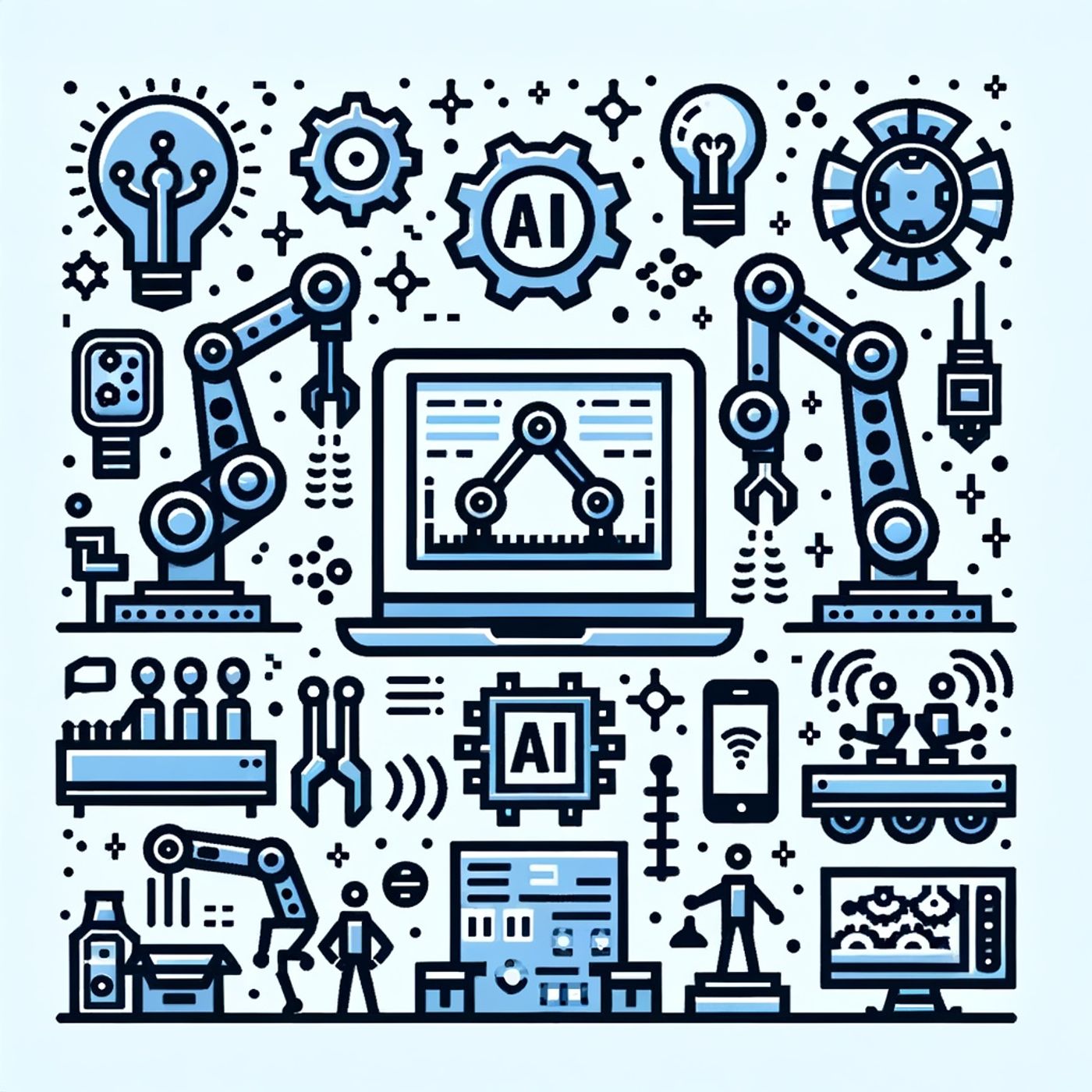
Robots Invade Factories: Tesla's Humanoid Army Leads the Charge! episode artwork

EPISODE · Nov 9, 2025 · 3 MIN

Robots Invade Factories: Tesla's Humanoid Army Leads the Charge!

from Industrial Robotics Weekly: Manufacturing & AI Updates · host Inception Point AI

This is you Industrial Robotics Weekly: Manufacturing & AI Updates podcast. Industrial robotics is redefining modern manufacturing as 2025 draws to a close, moving rapidly from traditional automation to adaptive, autonomous operations. Companies such as BMW and Mercedes-Benz are piloting humanoid robots not just in isolated test environments but across active production lines and logistics centers, while others like ABB and KUKA are rolling out smarter collaborative robots—cobots—capable of working safely alongside human teams. Tesla has pushed the frontier further by integrating humanoids into assembly and warehousing, demonstrating the viability of intelligent robotic labor at scale. ResearchAndMarkets.com highlights that these deployments are now supported by powerful advances in artificial intelligence, machine vision, digital twins, and connectivity, creating flexible operations that learn, self-optimize, and react to shifts in production with unprecedented agility. A key trend emerging this year is the mainstream adoption of AI-powered adaptability and the industrial internet of things, enabling self-operating systems that cut downtime and accelerate output. The Standard Bots platform exemplifies this, offering robots like the RO1, which can jump from CNC tending to pick-and-place operations without advanced programming. WiredWorkers observes that plug-and-produce packages lower technology barriers for manufacturers of all sizes, and vision-driven AI is drastically improving quality control while reducing costs. These integrated solutions are driving the industrial robotics market towards a projected value of thirty-nine billion US dollars by 2035, according to IIOT World, as companies seek competitive advantages in speed, precision, and scalability while maintaining production resilience. Factories are achieving round-the-clock operations, shifting hazardous and repetitive jobs onto machines and thereby elevating worker safety. Enhanced human-cobot collaboration has not only lowered injury risk, but increased employee satisfaction as routine tasks are automated and people focus on strategic roles. Roland Berger notes that after the surges of recent years, the sector's growth rate is stabilizing, but annual global robot installations are still expected to reach five hundred seventy-five thousand units in 2025, as reported by the International Federation of Robotics. This continued expansion is underpinned by falling hardware costs and robust returns on investment, particularly given the growing adoption among small and medium enterprises. Listeners should keep in mind three practical actions: evaluate plug-and-produce solutions for fast returns and easy integration, upskill workers for efficient human-machine collaboration, and embrace AI-driven data analytics to maximize equipment utilization and product quality. Looking ahead, the role of humanoid and mobile robotics will only grow, driving greater personalization, operational flexibi This content was created in partnership and with the help of Artificial Intelligence AI.

This is you Industrial Robotics Weekly: Manufacturing & AI Updates podcast. Industrial robotics is redefining modern manufacturing as 2025 draws to a close, moving rapidly from traditional automation to adaptive, autonomous operations. Companies such as BMW and Mercedes-Benz are piloting humanoid robots not just in isolated test environments but across active production lines and logistics centers, while others like ABB and KUKA are rolling out smarter collaborative robots—cobots—capable of working safely alongside human teams. Tesla has pushed the frontier further by integrating humanoids into assembly and warehousing, demonstrating the viability of intelligent robotic labor at scale. ResearchAndMarkets.com highlights that these deployments are now supported by powerful advances in artificial intelligence, machine vision, digital twins, and connectivity, creating flexible operations that learn, self-optimize, and react to shifts in production with unprecedented agility. A key trend emerging this year is the mainstream adoption of AI-powered adaptability and the industrial internet of things, enabling self-operating systems that cut downtime and accelerate output. The Standard Bots platform exemplifies this, offering robots like the RO1, which can jump from CNC tending to pick-and-place operations without advanced programming. WiredWorkers observes that plug-and-produce packages lower technology barriers for manufacturers of all sizes, and vision-driven AI is drastically improving quality control while reducing costs. These integrated solutions are driving the industrial robotics market towards a projected value of thirty-nine billion US dollars by 2035, according to IIOT World, as companies seek competitive advantages in speed, precision, and scalability while maintaining production resilience. Factories are achieving round-the-clock operations, shifting hazardous and repetitive jobs onto machines and thereby elevating worker safety. Enhanced human-cobot collaboration has not only lowered injury risk, but increased employee satisfaction as routine tasks are automated and people focus on strategic roles. Roland Berger notes that after the surges of recent years, the sector's growth rate is stabilizing, but annual global robot installations are still expected to reach five hundred seventy-five thousand units in 2025, as reported by the International Federation of Robotics. This continued expansion is underpinned by falling hardware costs and robust returns on investment, particularly given the growing adoption among small and medium enterprises. Listeners should keep in mind three practical actions: evaluate plug-and-produce solutions for fast returns and easy integration, upskill workers for efficient human-machine collaboration, and embrace AI-driven data analytics to maximize equipment utilization and product quality. Looking ahead, the role of humanoid and mobile robotics will only grow, driving greater personalization, operational flexibi This content was created in partnership and with the help of Artificial Intelligence AI.

NOW PLAYING

Robots Invade Factories: Tesla's Humanoid Army Leads the Charge!

0:00 3:32

No transcript for this episode yet

We transcribe on demand. Request one and we'll notify you when it's ready — usually under 10 minutes.

No similar episodes found.

No similar podcasts found.

Frequently Asked Questions

How long is this episode of Industrial Robotics Weekly: Manufacturing & AI Updates?

This episode is 3 minutes long.

When was this Industrial Robotics Weekly: Manufacturing & AI Updates episode published?

This episode was published on November 9, 2025.

What is this episode about?

This is you Industrial Robotics Weekly: Manufacturing & AI Updates podcast. Industrial robotics is redefining modern manufacturing as 2025 draws to a close, moving rapidly from traditional automation to adaptive, autonomous operations. Companies...

Can I download this Industrial Robotics Weekly: Manufacturing & AI Updates episode?

Yes, you can download this episode by clicking the download button on the episode player, or subscribe to the podcast in your preferred podcast app for automatic downloads.
URL copied to clipboard!