
EPISODE · Jul 23, 2025 · 3 MIN
Robots Rule! AI Reigns Supreme in Manufacturing Makeover
from Industrial Robotics Weekly: Manufacturing & AI Updates · host Inception Point AI
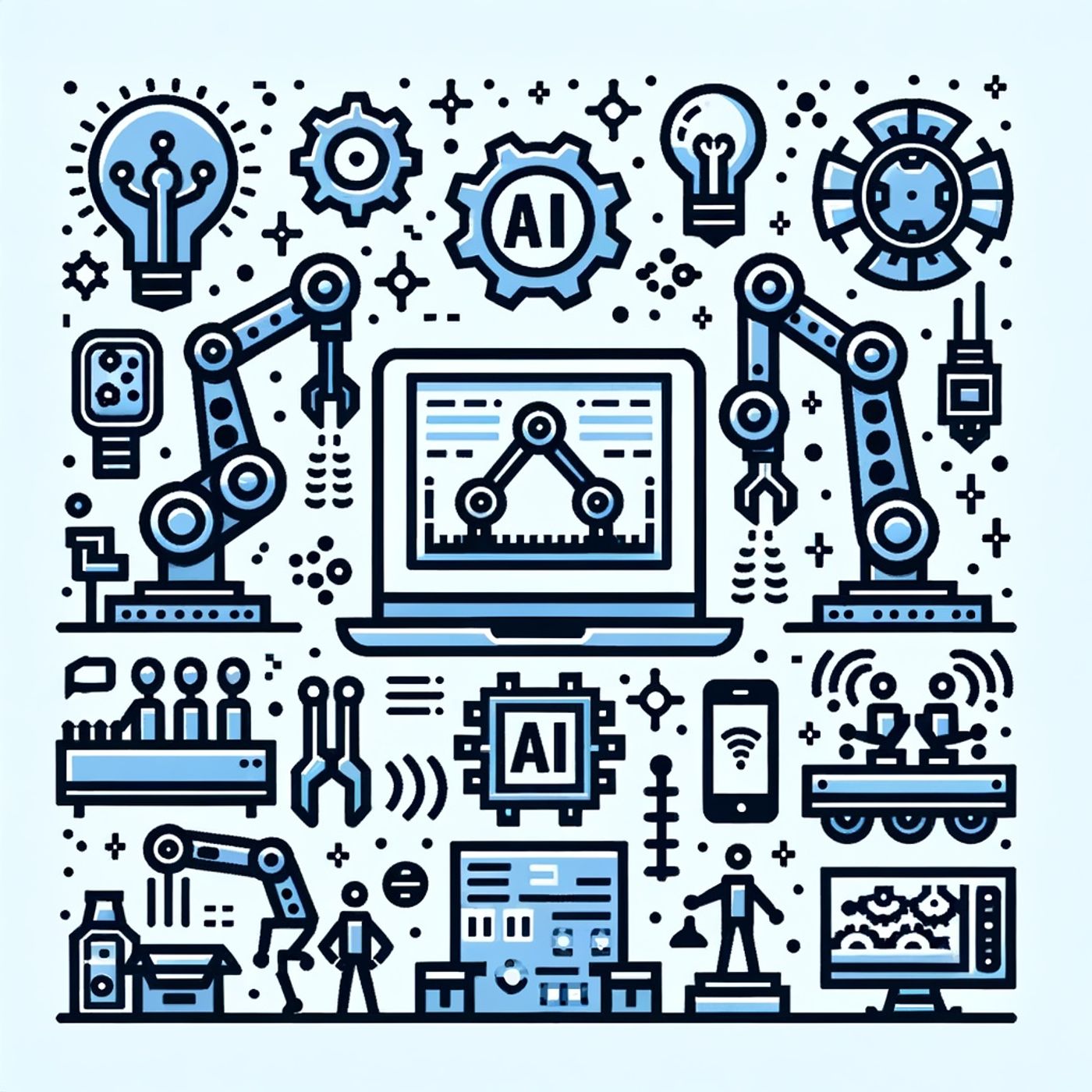
This is you Industrial Robotics Weekly: Manufacturing & AI Updates podcast. Welcome to Industrial Robotics Weekly for July 24, 2025. The industrial robotics sector continues to accelerate, intertwined with groundbreaking advances in manufacturing automation and artificial intelligence. According to Hanwha Group, nearly ninety percent of manufacturers now plan to weave AI into their production operations this year, underscoring AI’s pivotal role as a new backbone for factories. AI-powered vision systems are particularly reshaping quality control, catching defects in real time and before products ever leave the production floor, radically reducing waste and raising product reliability. Predictive maintenance is another area where AI is slashing costs by shifting from reactive repairs to data-driven machine monitoring—less downtime, longer equipment life, and greater efficiency. This surge in smart manufacturing is characterized by highly connected environments. Industry 4.0 technologies like the Industrial Internet of Things and plug-and-produce automation solutions allow plants to quickly adapt to shifting demand, integrate palletizers and material handling robots with minimal disruption, and analyze productivity metrics in real time. WiredWorkers reports that these easy-to-deploy, modular systems are bringing automation within reach for even small and medium-sized manufacturers, with faster returns on investment and scalability that responds to marketplace pressures. Collaboration between humans and cobots is becoming foundational on the line. As sensor technology and software algorithms mature, cobots safely work alongside people, taking over boring or dangerous tasks and letting human workers focus on creative problem-solving and process improvement. According to Deloitte’s 2025 manufacturing outlook, digital technology investments now make up nearly a third of manufacturing operating budgets, and priorities are shifting to leverage automation hardware, advanced sensors, and cloud-connected infrastructures. In the news, major Asian electronics manufacturers this week announced a planned rollout of autonomous mobile robots to manage warehouse logistics during peak demand cycles, Reuters reports. In the US, a Tier-One automotive supplier revealed a thirty percent productivity boost from the deployment of new AI-driven assembly robots. Meanwhile, the International Organization for Standardization has updated safety guidelines for human-robot collaboration, expected to encourage broader adoption in mid-tier factories. For listeners navigating this fast-changing landscape, practical takeaways include: Analyze your process for repetitive, error-prone, or labor-intensive tasks where automation delivers quick wins; pilot human-cobot collaboration cells to optimize task allocation; and invest in AI-powered quality control for near-instant error detection. Tracking total cost of ownership, time-to-ROI, and workforce engagement metrics will be crucia This content was created in partnership and with the help of Artificial Intelligence AI.
Embed this episode
NOW PLAYING
Robots Rule! AI Reigns Supreme in Manufacturing Makeover
No transcript for this episode yet
Similar Episodes
No similar episodes found.