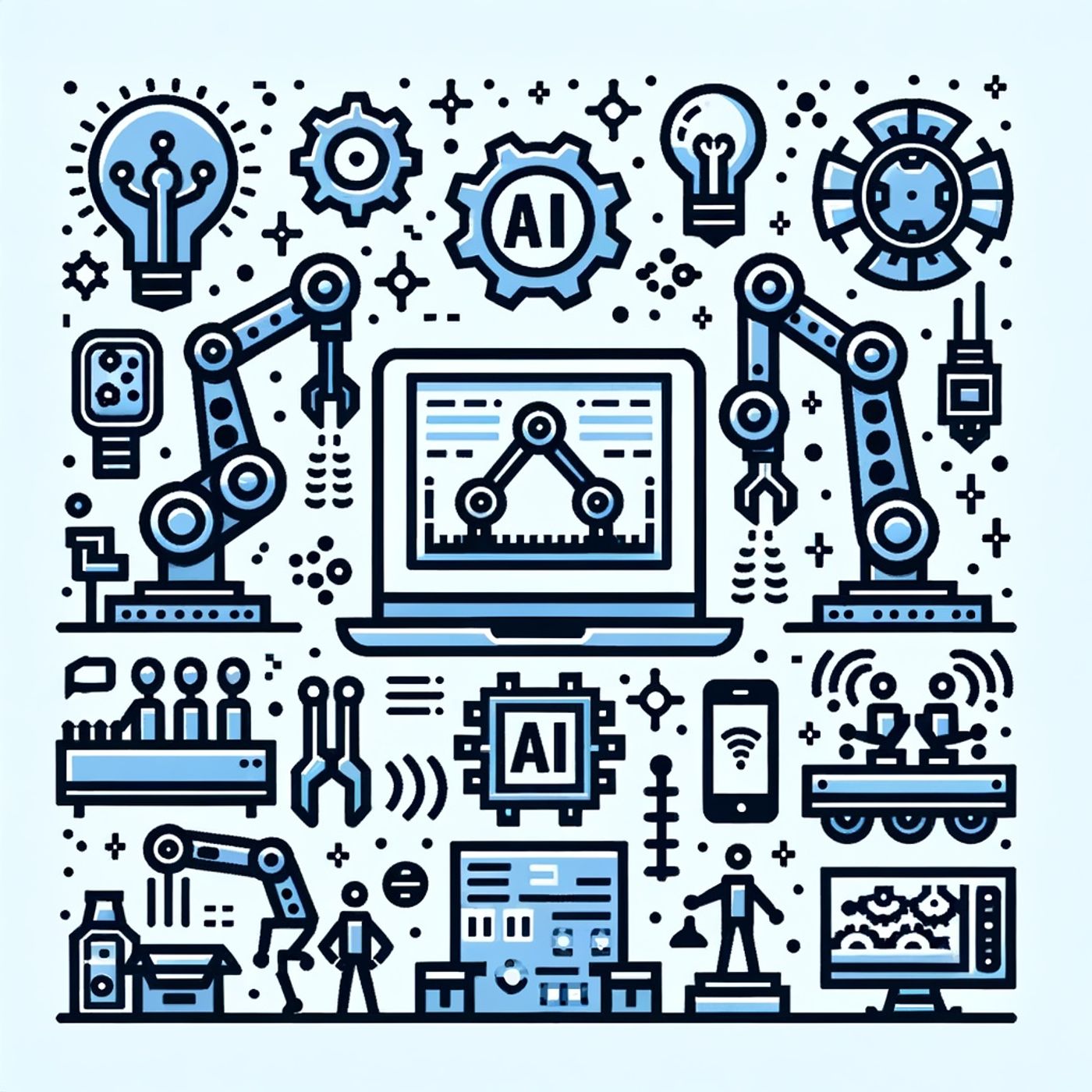
Robots Steal Jobs? AI's Shocking Impact on Manufacturing Efficiency and Worker Safety in 2025! episode artwork

EPISODE · Dec 21, 2024 · 3 MIN

Robots Steal Jobs? AI's Shocking Impact on Manufacturing Efficiency and Worker Safety in 2025!

from Industrial Robotics Weekly: Manufacturing & AI Updates · host Inception Point AI

This is you Industrial Robotics Weekly: Manufacturing & AI Updates podcast. As we approach the end of 2024, the landscape of industrial robotics and manufacturing continues to evolve rapidly. The integration of artificial intelligence (AI) into industrial processes has been a game-changer, driving efficiency, reducing costs, and enabling unprecedented levels of customization. Manufacturing automation trends are increasingly shaped by emerging technologies such as 5G, AI, Edge Computing, IIoT, and Big Data. These advancements are boosting the level of innovation and the rise of multiple applications of robotics in all industry sectors and verticals. In manufacturing, robots can be implemented to improve quality, safety, and accuracy, significantly increasing productivity and efficiency[1]. AI algorithms can analyze vast amounts of data to identify patterns, optimize processes, and predict future outcomes with remarkable accuracy. This enables smarter factories where machines can autonomously adjust operations in real time. Companies like General Electric (GE) have integrated AI algorithms into their manufacturing processes to analyze massive volumes of data from sensors and historical records, spotting trends, predicting probable equipment issues, and streamlining processes[3]. The deployment of robotics in manufacturing is also enhancing worker safety and collaboration. Technical standards and specifications, such as ISO/TS 15066:2016, provide safety requirements for collaborative industrial robot systems, ensuring effective use and compliance with international standards[4]. In terms of productivity and efficiency metrics, AI-driven robots and predictive maintenance systems are transforming production lines. Robots equipped with AI can work alongside humans, performing tasks such as assembly, welding, and painting with precision and speed. Predictive maintenance uses AI to monitor equipment health and predict failures before they occur, preventing downtime and ensuring continuous production[5]. Looking at cost analysis and ROI studies, the integration of AI in manufacturing is proving to be a cost-effective solution. By reducing downtime, improving quality control, and increasing overall equipment effectiveness, companies can achieve significant cost savings and return on investment. Recent news items highlight the ongoing advancements in industrial robotics. For instance, the integration of AI in manufacturing is becoming more sophisticated, enabling smarter factories where machines can autonomously adjust operations in real time[2]. Additionally, companies are leveraging AI-based connected factories to build intelligent, networked ecosystems that enhance decision-making and ensure seamless operations[3]. Practical takeaways include identifying key functionalities that make manufacturing systems advanced and integrating AI into these areas, such as predictive maintenance and quality control. Future implications and trends suggest a cont This content was created in partnership and with the help of Artificial Intelligence AI.

This is you Industrial Robotics Weekly: Manufacturing & AI Updates podcast. As we approach the end of 2024, the landscape of industrial robotics and manufacturing continues to evolve rapidly. The integration of artificial intelligence (AI) into industrial processes has been a game-changer, driving efficiency, reducing costs, and enabling unprecedented levels of customization. Manufacturing automation trends are increasingly shaped by emerging technologies such as 5G, AI, Edge Computing, IIoT, and Big Data. These advancements are boosting the level of innovation and the rise of multiple applications of robotics in all industry sectors and verticals. In manufacturing, robots can be implemented to improve quality, safety, and accuracy, significantly increasing productivity and efficiency[1]. AI algorithms can analyze vast amounts of data to identify patterns, optimize processes, and predict future outcomes with remarkable accuracy. This enables smarter factories where machines can autonomously adjust operations in real time. Companies like General Electric (GE) have integrated AI algorithms into their manufacturing processes to analyze massive volumes of data from sensors and historical records, spotting trends, predicting probable equipment issues, and streamlining processes[3]. The deployment of robotics in manufacturing is also enhancing worker safety and collaboration. Technical standards and specifications, such as ISO/TS 15066:2016, provide safety requirements for collaborative industrial robot systems, ensuring effective use and compliance with international standards[4]. In terms of productivity and efficiency metrics, AI-driven robots and predictive maintenance systems are transforming production lines. Robots equipped with AI can work alongside humans, performing tasks such as assembly, welding, and painting with precision and speed. Predictive maintenance uses AI to monitor equipment health and predict failures before they occur, preventing downtime and ensuring continuous production[5]. Looking at cost analysis and ROI studies, the integration of AI in manufacturing is proving to be a cost-effective solution. By reducing downtime, improving quality control, and increasing overall equipment effectiveness, companies can achieve significant cost savings and return on investment. Recent news items highlight the ongoing advancements in industrial robotics. For instance, the integration of AI in manufacturing is becoming more sophisticated, enabling smarter factories where machines can autonomously adjust operations in real time[2]. Additionally, companies are leveraging AI-based connected factories to build intelligent, networked ecosystems that enhance decision-making and ensure seamless operations[3]. Practical takeaways include identifying key functionalities that make manufacturing systems advanced and integrating AI into these areas, such as predictive maintenance and quality control. Future implications and trends suggest a cont This content was created in partnership and with the help of Artificial Intelligence AI.

NOW PLAYING

Robots Steal Jobs? AI's Shocking Impact on Manufacturing Efficiency and Worker Safety in 2025!

0:00 3:48

No transcript for this episode yet

We transcribe on demand. Request one and we'll notify you when it's ready — usually under 10 minutes.

No similar episodes found.

No similar podcasts found.

Frequently Asked Questions

How long is this episode of Industrial Robotics Weekly: Manufacturing & AI Updates?

This episode is 3 minutes long.

When was this Industrial Robotics Weekly: Manufacturing & AI Updates episode published?

This episode was published on December 21, 2024.

What is this episode about?

This is you Industrial Robotics Weekly: Manufacturing & AI Updates podcast. As we approach the end of 2024, the landscape of industrial robotics and manufacturing continues to evolve rapidly. The integration of artificial intelligence (AI) into...

Can I download this Industrial Robotics Weekly: Manufacturing & AI Updates episode?

Yes, you can download this episode by clicking the download button on the episode player, or subscribe to the podcast in your preferred podcast app for automatic downloads.
URL copied to clipboard!