
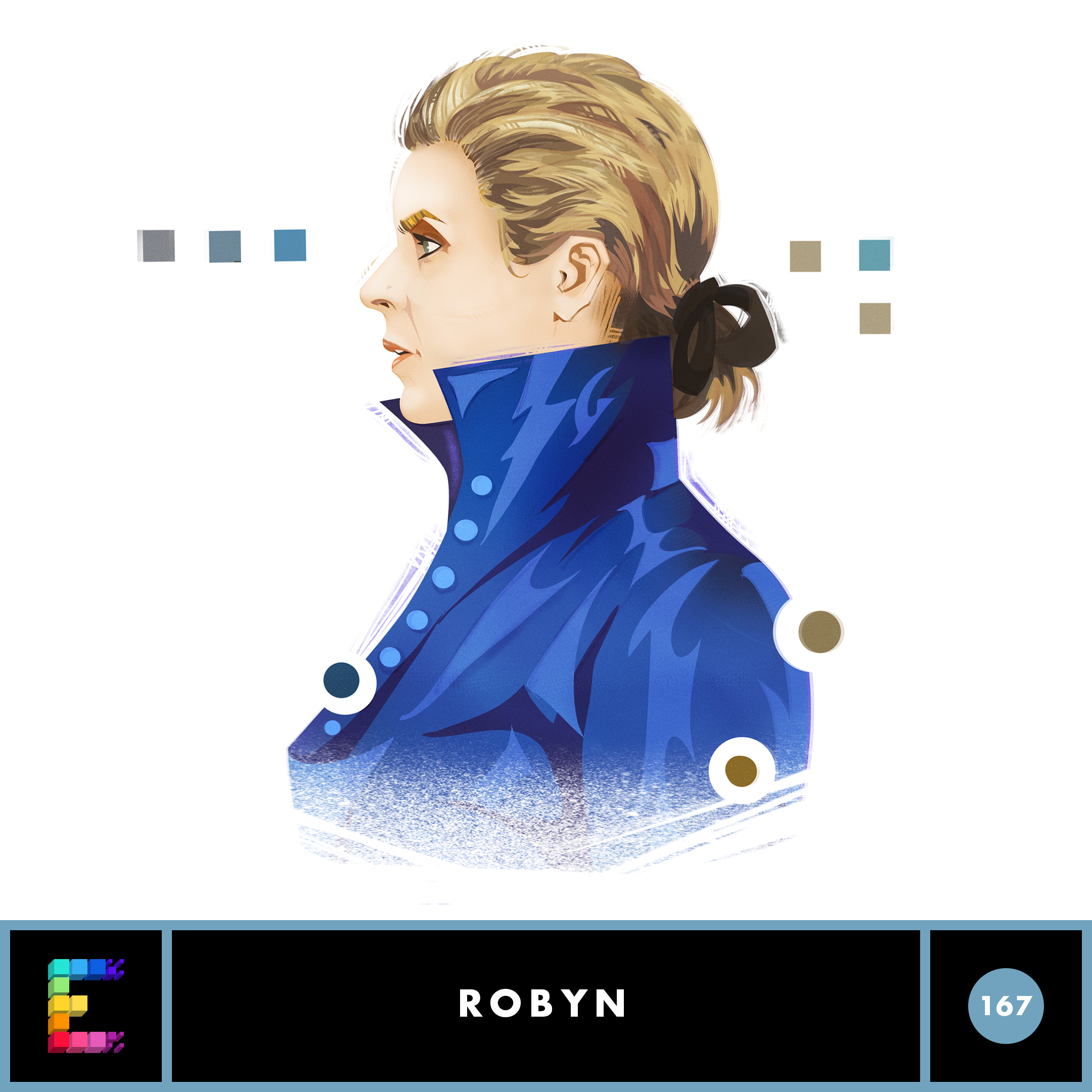
You're listening to Song Exploder, where musicians take apart their songs and piece by piece tell the story of how they were made. My name is Brishikey Shirway, and is a Swedish singer and songwriter. Her first album came out in 1995, when she was just 16 years old. It went platinum in the US and double platinum in Sweden.
Since then she's been nominated for 5 Grammys and started her own record label. But there was an 8 year gap between Robin's album Body Talk, which came out in 2010, and her most recent album, Honey, which came out last October. Time, Rolling Stone, and Pitchfork all named Honey one of the best albums of 2018. For Song Exploder, Robin breaks down the song Honey, the title track right now.
The first time the public heard the song was in a 2017 episode of The HBO Show Girls. But that's not the final version that was eventually released on the album. In this episode, Robin traces the long history of how she made Honey, a song that The New York Times called her masterpiece. My name is Robin, me and Marcus who's in my band.
We had a song check and he had brought this little Casio synthesizer that I was messing around with. I don't know if you've heard those little Casios, but they sound amazing. They sound like video games. And so he showed me this thing.
We could hold two buttons and there was something wrong with that particular Casio. So that when you held these two buttons, it would glitch so that you could like separate the bass line out of this pre-recorded little beats that were in the synthesizer. And I did that with a wall speed. It sounds really cool just on its own.
It sounds like this. It's not an even bass line because it's a wall. And something about that just felt really groovy to me. I always love when music does that, when it does something unexpected and changes the way you think about rhythm.
And then I just kept that. We recorded it and I kept it and we started making songs with it. Me and Marcus just tried different things. And I didn't feel like it was exactly what I wanted it to be.
And I just kept it. This was like maybe 2013 maybe. And then when I started writing again for this album in 2015, maybe, I brought the beat out again. I was looking for new ways to sing rhythmically because I was feeling kind of claustrophobic coming out of the music I had done before.
I love the music. That wasn't the problem. It was more like rhythmically. I wanted to feel freer.
I guess that was what I was working out during those months when I was in the studio of myself. Just like rewired my own way of relating to rhythm. So I was in my studio in my house in the basement of the building where I live in Stockholm. And I was trying like, also different sounds and rhythms freestyling on this beat.
And I did for like two months or something. I would do it as an exercise because I knew there was a song in there. But it was almost like I was breaking it down. Like trying to disintegrate or maybe get to the core or something.
And then I remember one day I just found my way into a melody that felt much more natural than anything I had written on it before. Which was, And I was writing this song. I think the feeling that I was going for was to find some kind of healing for myself. A place where I could calm myself down.
And that felt really good when I sang it. So I kept it. I recorded it and I kept it. And then I took it with me to the studio where I was writing with Klaus when I started writing together with other people.
Klaus is my longtime collaborator. He's almost like the second member of the band, Robyn. The person that I made music with more than anyone in the last 10 years. I knew I was going to work with him for this album but it took a while until I was ready to collaborate again.
It was really exciting to collaborate on something that I had already put together. It gave me a lot of freedom to kind of describe my ideas in this more like protected way. Yeah so me and Klaus we wrote the chorus together. And we wrote the words for the verse together as well.
I knew that I wanted the verse to be this abstract description of a feeling. It's not me saying I feel sad and happy at the same time. And I feel happy and I want to have sex with you. It's not that it's like I wanted to feel free but also I wanted the person listening to the music to find that own space where they could associate more freely about pleasure, sensuality, peace of mind, those kind of things.
And then this whole other process started where we started working on the production. And me and Klaus made a version of Honey that was used in the last episode of Girls, the TV series. Because basically Lana Dunham asked me for music and I sent her these demos and she wanted to use the honey. And I was very happy that she wanted to use it but I also knew that it was not finished.
And so I went back to the demo and I started arranging it again with you know the song already written with me in class. And I went back and I took out his production and I started working on that. And then I asked Joseph Mount to come in and work on the production. He has a band called Mitronomy that is one of my favorite bands.
And I've listened to his music for a long time and I got in touch with him if he wanted to work with me and we spent a week or so in the studio very early on. And he started playing around with these strings and he kind of stripped a lot of other things away as well. So he kept the vocal and the Casio Josephus so sparse and minimalist in a way. And that for a long time was like going to be the finished version.
And then Joseph changed his mind. He was like I don't think this is what we should do. And then we went back into the studio together, me and Joseph and Claus. Basically Joseph took all the things that we had done.
The strings and the chords from Marcus all the things that we had done and he created this sample that we started calling the sauce. We used this filter, this really fun but stupid house filter and he kind of made like this underwater feeling you know of all those things. I think we wanted it to feel like you're underwater but then you look down and you're like there's thousands of meters down to the bottom of the sea. You know this feeling like something opening underneath.
But I feel like you know the sauce was amazing but it's so undefined. And so I just wanted there to be more hints of like the actual chord structure. We just needed more melody. We needed like a hook in there.
This like really simple melody that leaves a lot of space and like a lot up to the imagination. Really inspired by all this dance music that I've grown up listening to. Basically music made for clubs and that kind of music. It doesn't really have a beginning and an end and you know a chorus and and the normal song structure the way a lot of pop music does.
It relates to the dramaturgy of a song in a totally different way. I think that's what dance music is about. It's about putting you in a place where you're in your body dancing without thinking about when it's going to end. That it's like more about the moment and and how it makes you feel.
So the demo that I made doesn't sound like the thing we released that much at all. But there's a rhythm in the bass line that's still there. That has a little bit of that first cassio. The cassio goes dah dah dah dah dah dah dah dah dah dah dah dah dah dah dah dah dah dah dah dah.
So we kind of kept that kind of thing. And the other one that's more like an arpeggio was a way to create this like galloping rhythm together with a kick drum. And it's kind of nice with the bass line as well. I think on this record I started to sing in a different way than I had done before.
I didn't wanted to feel pushed or pressured in any way. I wanted it to just feel relaxed and soft and I started singing differently and I started like discovering new kind of things that I could do when I just relaxed. Mmm in the sun, sits on the water, put down in the deep, the curve and stronger. So me and Klaus recorded the vocals for this song like three times.
You know I thought I had relaxed as much as I should have and then I kind of tickled even one step further. And I relaxed even more and I was like wow it's sounding even better. And then we did it a third time because I knew that like oh I can take this even further. It was really interesting I think to discover that a lot of times it's not about pushing harder, it's about going softer.
Mmm, he's coming in the golden, put down in the deep, the honey sweet. When I listen to the song even though I've heard it so many times and I sung it so many times, the line that still gets me is the line but down in the deep, the honey sweeter. Because there's something about that that talks about for me at least like how when you kind of face yourself or if you you know dig deep into yourself, there's like a sweetness that comes with that digging or the depth or the pain sometimes like going deep into things. Not saying that it's an reward because you know when you go through difficult things in life like you don't always feel like it makes sense or that it's necessary or that you want to do it.
But I think when I was writing this song I was coming out of something that had been quite painful and I knew that I had learned things from that and that I had maybe also been able to kind of come closer to something that felt like me, something that felt honest. I think anyone who has gone through difficult things maybe can understand what I mean. And so the singing also was a part of like the healing process for me. When it was time to mix I had this idea that I wanted to give the mix to Philip Bissadar.
Philip Bissadar was one half of the hugely influential French dance duo Cassius and a Grammy winning mixer and producer. Because I just felt like this song needs to be mixed as a club track. And Philip is and was known for doing these amazing tape delay takes where he would put the vocals through a tape delay. And that's what you can hear there in the mix.
I think it's the first time in my life that I got a mix back that was good from the first time I heard it. No way you met with your new year. Baby I had you but you won't come get your honey baby. I remember just getting stuck on the word honey.
I don't know why I was so obsessed with that word. I thought it was funny that it meant honey the way you call your lover and this weird kind of interesting but a little bit disgusting substance that bees make. Is there an image in your head of who a song is being sung to? Yeah.
Is that a specific person? Does that person know that you're thinking of them? I think the intention of honey is like really good. Something I feel really happy about you know.
Happy that I found the space and that I explored it. I think my perspective on it has changed like several times you know but that's how it should be I think. I still think that it's a healing song and I also think that when Philip Zadar who mixed the song died a month ago that also changed it for me. Like right now the song is like very emotional again because he's not here anymore.
And you know I'm sure it's going to change again you know it's like that's how it works with music and I think the experience of making this song you know all the way from me like starting these early demos with Marcus and then on my own and then spending all this time writing it and really trying to define this feeling and then working with Joseph and Claus and like re-doing the vocals and the production like letting it really take the time it needed to get where I wanted to be. It was really amazing. I'm really happy that I was able to follow that through the whole way. Just being able to record this freedom that I felt that the song was trying to describe.
Thank you. And now here's Honey by Robin and its entirety. Visit SongExploder.net for more information about Robin, her music and her collaborators on honey. You'll also find a link to buy or stream this song.
SongExploder is made by me, Rishikeshia Kishirwe, along with producer Christian Koon's. Sitting in for me as guest host this year has been Tao Win. She'll be back next episode. Carlos Larma is our illustrator and Nick Song is our production assistant.
SongExploder is a proud member of RadioTopia from PRX, a curated collective of independent creative podcasts. You can learn about all our shows at RadioTopia.fm. You can also find SongExploder on Facebook, Instagram and Twitter at SongExploder. My name is Rishikeshia here way.
Thanks for listening. RadioTopia. You've probably heard me say at the end of every episode that SongExploder is a proud member of RadioTopia, a network of independent, artist-owned, listener-supported podcasts. Well, this is the time where the listener-supported part comes in.
We're trying to reach 2024 donors before the year 2024 ends, and I really hope you'll be one of them. This show takes a lot of work to make, but that work is made possible thanks to monthly donations from listeners like you. If SongExploder has meant anything to you, if you feel like you've learned something about a song that you've loved, or maybe you've learned something about creativity that you've been able to apply to your own practice, or maybe you just heard something from somebody's story that's inspired you, I hope you'll consider donating today at RadioTopia.fm slash Donate. That's RadioTopia.fm slash Donate.
Every gift makes a difference, no matter how small. A dollar a month, or five dollars a month, whatever you feel like, you can contribute. To keep shows like this going, we'll be very appreciated. In fact, all the people who produce RadioTopia podcasts have put together a list of all of our favorite things, and everyone who donates will get a link to the list as a token of our thanks.
A bunch of great recommendations. So again, it's RadioTopia.fm slash Donate. Thank you so much.