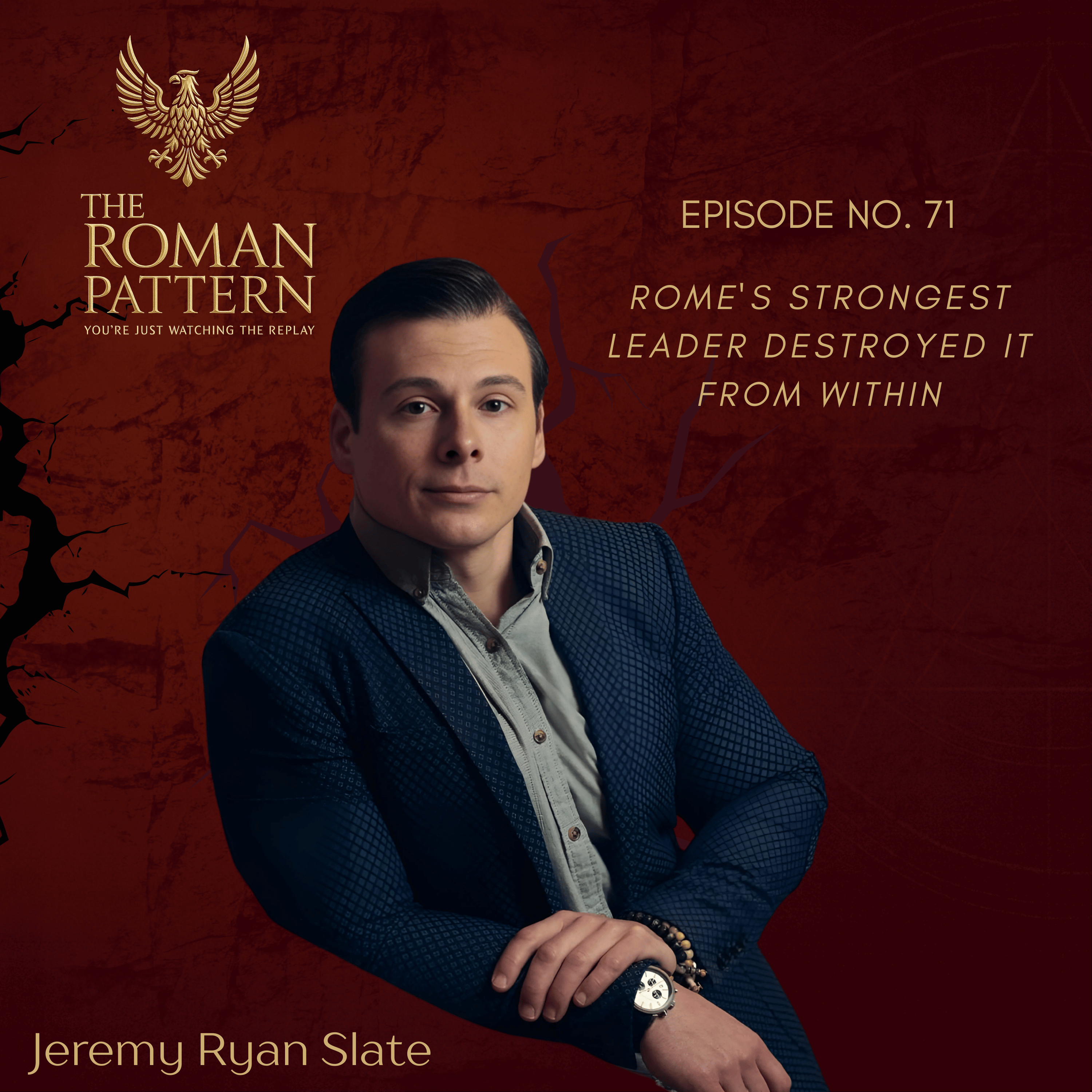
Rome's Strongest Leader Destroyed It From Within episode artwork

EPISODE · Mar 16, 2026 · 34 MIN

Rome's Strongest Leader Destroyed It From Within

from CYOL with Jeremy Ryan Slate Archive 1 · host Jeremy Ryan Slate

Rome did not collapse because barbarians stormed the gates.It collapsed because the men strong enough to defend it no longer believed the center was worth saving.By 260 AD, the Roman Empire was already hollow.The money was broken.The borders were failing.The emperors were cycling through civil wars faster than the system could absorb them.And then a frontier general made the decision that revealed the truth.Postumus didn’t march on Rome to seize the whole empire.He did something more dangerous.He walked away.He took Gaul, Britain, and Hispania and built a rival Roman state — the Gallic Empire — with its own army, its own senate, and better money than Rome itself.This is the Roman Pattern:Empires rarely die from one final blow.They die when the strongest people inside the system decide the center is no longer legitimate.In this episode:• Why the Crisis of the Third Century shattered Roman authority  • How currency debasement destroyed trust in the empire  • Why the Rhine frontier stopped believing in Rome  • How Postumus built the Gallic Empire  • Why strong leaders can accelerate collapse instead of stopping it  • How Aurelian reunited the empire — but never restored what Rome had been  History doesn’t repeat.But it does rhyme.Subscribe for more episodes on Rome’s collapse signals and the patterns repeating right now.CHAPTERS:00:00 Rome Didn’t Die From the Outside00:25 The Empire Was Already Hollow00:51 The General Who Walked Away01:40 The Body, Not the Mythology02:28 235 AD: The Murder That Starts the Spiral03:23 The First Fault Line: Power04:20 When Succession Becomes Violence04:51 The Second Fault Line: Money05:42 How Rome Destroyed Its Own Currency07:02 Why the Edges Felt It First08:24 The Third Fault Line: Borders09:19 Why Gaul Stopped Believing in Rome10:42 Enter Postumus12:14 260 AD: The Illusion Dies13:35 Why Rome Couldn’t Even Save Its Emperor14:27 The Trigger in Cologne16:02 Rome Breaks Into Three17:00 The Gallic Empire Works Better18:30 Postumus and Better Money19:35 Why Breakaway States Claim Legitimacy20:56 Palmyra and Zenobia22:11 How Empires Fragment23:03 Why Even the Alternative Still Fails25:31 Aurelian Reunites the Empire28:47 What the Gallic Empire Really Proved31:04 The Meaning of Rome Changes31:33 Where the Pattern Appears Today33:15 When the Center Can Be Replaced

Rome did not collapse because barbarians stormed the gates. It collapsed because the men strong enough to defend it no longer believed the center was worth saving. By 260 AD, the Roman Empire was already hollow. The money was broken. The borders were failing. The emperors were cycling through civil wars faster than the system could absorb them. And then a frontier general made the decision that revealed the truth. Postumus didn’t march on Rome to seize the whole empire. He did something more dangerous. He walked away. He took Gaul, Britain, and Hispania and built a rival Roman state — the Gallic Empire — with its own army, its own senate, and better money than Rome itself. This is the Roman Pattern: Empires rarely die from one final blow. They die when the strongest people inside the system decide the center is no longer legitimate. In this episode: • Why the Crisis of the Third Century shattered Roman authority   • How currency debasement destroyed trust in the empire   • Why the Rhine frontier stopped believing in Rome   • How Postumus built the Gallic Empire   • Why strong leaders can accelerate collapse instead of stopping it   • How Aurelian reunited the empire — but never restored what Rome had been   History doesn’t repeat. But it does rhyme. Subscribe for more episodes on Rome’s collapse signals and the patterns repeating right now. CHAPTERS: 00:00 Rome Didn’t Die From the Outside 00:25 The Empire Was Already Hollow 00:51 The General Who Walked Away 01:40 The Body, Not the Mythology 02:28 235 AD: The Murder That Starts the Spiral 03:23 The First Fault Line: Power 04:20 When Succession Becomes Violence 04:51 The Second Fault Line: Money 05:42 How Rome Destroyed Its Own Currency 07:02 Why the Edges Felt It First 08:24 The Third Fault Line: Borders 09:19 Why Gaul Stopped Believing in Rome 10:42 Enter Postumus 12:14 260 AD: The Illusion Dies 13:35 Why Rome Couldn’t Even Save Its Emperor 14:27 The Trigger in Cologne 16:02 Rome Breaks Into Three 17:00 The Gallic Empire Works Better 18:30 Postumus and Better Money 19:35 Why Breakaway States Claim Legitimacy 20:56 Palmyra and Zenobia 22:11 How Empires Fragment 23:03 Why Even the Alternative Still Fails 25:31 Aurelian Reunites the Empire 28:47 What the Gallic Empire Really Proved 31:04 The Meaning of Rome Changes 31:33 Where the Pattern Appears Today 33:15 When the Center Can Be Replaced

NOW PLAYING

Rome's Strongest Leader Destroyed It From Within

0:00 34:05

No transcript for this episode yet

We transcribe on demand. Request one and we'll notify you when it's ready — usually under 10 minutes.

No similar episodes found.

Tales Of A Superstar DJ The Insomniac Spun seemingly out of nowhere from her complacent life in the corporate world, turned seemingly overnight from 16-Hour shift work and into the life of a literally starving artist and working musician, The Protagonist navigates her supposed rise to fame and superstardom on a journey through spiritual awakening, coming-of-age, and intimate self-realization--guided by an omnipresent force and equipped with the power of love, magic, and music. {Enter The Multiverse.} [The Festival Project] The Festival Project, Inc.™ is a multidimensional multimedia platform which encompasses exploratory and artistic social personifications and expressions on cosmic theory, spirituality, growth, health & wellness, philosophy and theoretic dynamics in entertainment such as music, design, film, television, radio, dance and festival culture, art, fashion, literature, and science. The Festival Project™ and its subsidiary Non-Profit, The Collective Complex © aims to challenge modern artistic and philosop Explicit Bitcoin Is Dead Trey Carson Welcome to Bitcoin is Dead, the ultimate Bitcoin variety show where host Trey takes you on a journey through the ever-evolving world of Bitcoin. Each episode brings new personalities, fascinating locations, and insightful conversations with politicians, educators, and innovators shaping the future of Bitcoin. Whether you're a seasoned Bitcoiner or just starting your journey, tune in for thought-provoking discussions, unique perspectives, and a deep dive into the ideas and people driving the Bitcoin revolution. Explicit Northern Sass and Southern Class Tay and Ani Come sit in on girl talk with Tay and Ani as we discuss life in Texas, girl math, food, wine and roasting each other. Explicit Never Time to Give Up Shadoe Lass A nod to the classics with a note from the future. A project meant to encompass every call I wanted to make but never went through. Seriously, it's just me, calling you. Pick up the phone? :) Hosted on Acast. See acast.com/privacy for more information. Explicit

Frequently Asked Questions

How long is this episode of CYOL with Jeremy Ryan Slate Archive 1?

This episode is 34 minutes long.

When was this CYOL with Jeremy Ryan Slate Archive 1 episode published?

This episode was published on March 16, 2026.

What is this episode about?

Rome did not collapse because barbarians stormed the gates.It collapsed because the men strong enough to defend it no longer believed the center was worth saving.By 260 AD, the Roman Empire was already hollow.The money was broken.The borders were...

Can I download this CYOL with Jeremy Ryan Slate Archive 1 episode?

Yes, you can download this episode by clicking the download button on the episode player, or subscribe to the podcast in your preferred podcast app for automatic downloads.
URL copied to clipboard!