PodParley PodParley

RT2 - James Reynolds - Legitimising Transit Priority

Transit priority is controversial and its potenti…

An episode of the Researching Transit podcast, hosted by Public Transport Research Group, titled "RT2 - James Reynolds - Legitimising Transit Priority" was published on February 25, 2020 and runs 35 minutes.

February 25, 2020 ·35m · Researching Transit

0:00 / 0:00

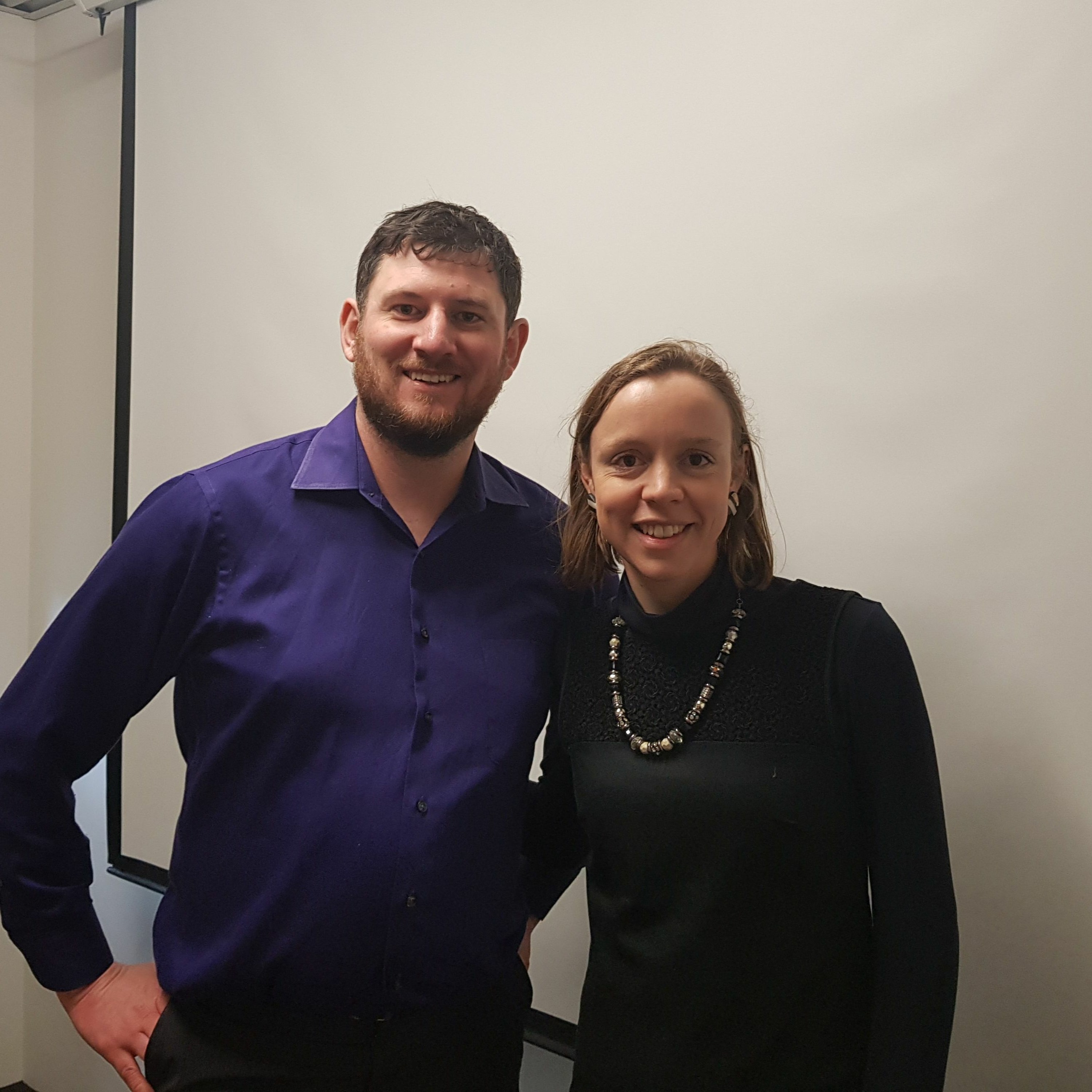
Transit priority is controversial and its potential to unclog congested roads often goes overlooked. How can cities gain support for implementing priority measures aimed at improving the operation of transit and the efficiency of the road network? In this episode of Researching Transit, James Reynolds of Monash University’s Public Transport Research Group explains the notion of incrementalism in the context of transport planning. Mixing engineering with public policy has allowed James to recognise that technical solutions without political will are destined to languish. “It’s not just the amount of [transit] priority that matters, but the legitimacy, and how much is legitimate”. James offers three main approaches – and some pragmatic strategies – to achieve legitimacy in transit priority. Drawing on case studies from Toronto, Melbourne and Curitiba, James explains how transport planners are already achieving success by using these pragmatic strategies to implement transit priority, and that the missing element has largely been a lack of links to public policy analysis and legitimacy theory, which provide the formal language and understanding to describe these types of approaches in transport planning. For more on transit priority and related public policy research, James recommends: • Marsden and Reardon (2017) Questions of governance: rethinking the study of transportation policy, discussion to much techno-rationalism, and a lack of engagement with social sciences and politics, in transport research; • Lindblom (1959) The science of "muddling through", on incrementalism • Lindblom (1979) Still muddling, not yet through, refining incrementalism into three types • Reynolds et al. (2017) Moving beyond techno-rationalism: new models of transit priority implementation, applying public policy analysis to transit priority • Reynolds et al. (2018) Top-down versus bottom-up perspectives on streetcar priority, comparing the effectiveness of different policy implementation approaches in Melbourne Videos of presentations about the research: o PTRG Transport Research Series: on pragmatic strategies for practitioners. https://www.youtube.com/playlist?list=PLdKZm70C8JtUhxmdHtdcc_gZ0n6xsP68G o PhD project final review seminar: on three main approaches: (1) building legitimacy before implementation; (2) avoiding impacts on other road users; and (3) building legitimacy through implementation; and eight pragmatic strategies https://www.youtube.com/playlist?list=PLdKZm70C8JtUkhuBkq5Jt4pvRYIQitfpi Learn more about the three different roles for public transport in a city’s transport policy of: 1) providing for social transport needs, 2) peak-period congestion relief, and/or 3) as a replacement for the car; in a chapter by Professor Graham Currie (2016) in Handbook on transport and urban planning in the developed world. Theme music for this episode is from https://www.purple-planet.com

Transit priority is controversial and its potential to unclog congested roads often goes overlooked. How can cities gain support for implementing priority measures aimed at improving the operation of transit and the efficiency of the road network? In this episode of Researching Transit, James Reynolds of Monash University’s Public Transport Research Group explains the notion of incrementalism in the context of transport planning. Mixing engineering with public policy has allowed James to recognise that technical solutions without political will are destined to languish. “It’s not just the amount of [transit] priority that matters, but the legitimacy, and how much is legitimate”. James offers three main approaches – and some pragmatic strategies – to achieve legitimacy in transit priority. Drawing on case studies from Toronto, Melbourne and Curitiba, James explains how transport planners are already achieving success by using these pragmatic strategies to implement transit priority, and that the missing element has largely been a lack of links to public policy analysis and legitimacy theory, which provide the formal language and understanding to describe these types of approaches in transport planning. For more on transit priority and related public policy research, James recommends: • Marsden and Reardon (2017) Questions of governance: rethinking the study of transportation policy, discussion to much techno-rationalism, and a lack of engagement with social sciences and politics, in transport research; • Lindblom (1959) The science of "muddling through", on incrementalism • Lindblom (1979) Still muddling, not yet through, refining incrementalism into three types • Reynolds et al. (2017) Moving beyond techno-rationalism: new models of transit priority implementation, applying public policy analysis to transit priority • Reynolds et al. (2018) Top-down versus bottom-up perspectives on streetcar priority, comparing the effectiveness of different policy implementation approaches in Melbourne Videos of presentations about the research: o PTRG Transport Research Series: on pragmatic strategies for practitioners. https://www.youtube.com/playlist?list=PLdKZm70C8JtUhxmdHtdcc_gZ0n6xsP68G o PhD project final review seminar: on three main approaches: (1) building legitimacy before implementation; (2) avoiding impacts on other road users; and (3) building legitimacy through implementation; and eight pragmatic strategies https://www.youtube.com/playlist?list=PLdKZm70C8JtUkhuBkq5Jt4pvRYIQitfpi Learn more about the three different roles for public transport in a city’s transport policy of: 1) providing for social transport needs, 2) peak-period congestion relief, and/or 3) as a replacement for the car; in a chapter by Professor Graham Currie (2016) in Handbook on transport and urban planning in the developed world. Theme music for this episode is from https://www.purple-planet.com
Shawn Blackwood - Becoming A Business Owner Shawn Blackwood This podcast is about finding and creating a business. It is for people who are looking to become first time business owners and or looking to transition from the corporate world to becoming a business owner. Here we share tips for researching and building solid infrastructure to create and scale your business. Interchange Recharged Wood Mackenzie Clean tech, green finance and energy innovation are the three lanes on the road to a successful global energy transition. At the intersection of these lanes is a place where ideas on finance, technology and policy are shared and debated. That intersection is Interchange Recharged.While Sylvia Leyva Martinez, principal analyst at Wood Mackenzie, is on maternity leave, Bridget van Dorsten, a principal analyst on Wood Mackenzie's hydrogen team, will be hosting this podcast, Interchange Recharged. When Bridget is not researching global market dynamics to craft near and long-term forecasts for low-carbon hydrogen and its derivatives she is speaking with visionaries, entrepreneurs, policy-makers and energy analysts to explore the newest developments in renewable technology, explain the ideas on global energy policy that could accelerate the energy transition, and identify new funding and financial models that could solve the biggest challenges we face on the way t Autism Resource Podcast autismresourcepodcast Gilda Evans has spent over 20 years researching and seeking answers for how to get her son with special needs the things he requires for his education, health, and life in general. She became her son’s self-taught advocate and is the creator of the Autism Resource Podcast. Designed for the special needs community and those who support it, the podcast deals with a myriad of topics; from education, to government benefits to housing and almost everything in-between. One of the biggest problems this community faces as a group is not only a lack of certain resources, but also the lack of a singular place to go to discover how to access and use the resources that are out there. Her podcast offers one solution to that dilemma, by providing a one-stop knowledge base for autism and much more. Herbivorize Predators Herbivorize Predators Herbivorize Predators is an organization dedicated to (1) researching how to herbivorize and (2) promoting dialogue about all aspects of this proposal.
URL copied to clipboard!