Rubella: A Preventable Virus With Lifelong Consequences
from The Outbreak Brief
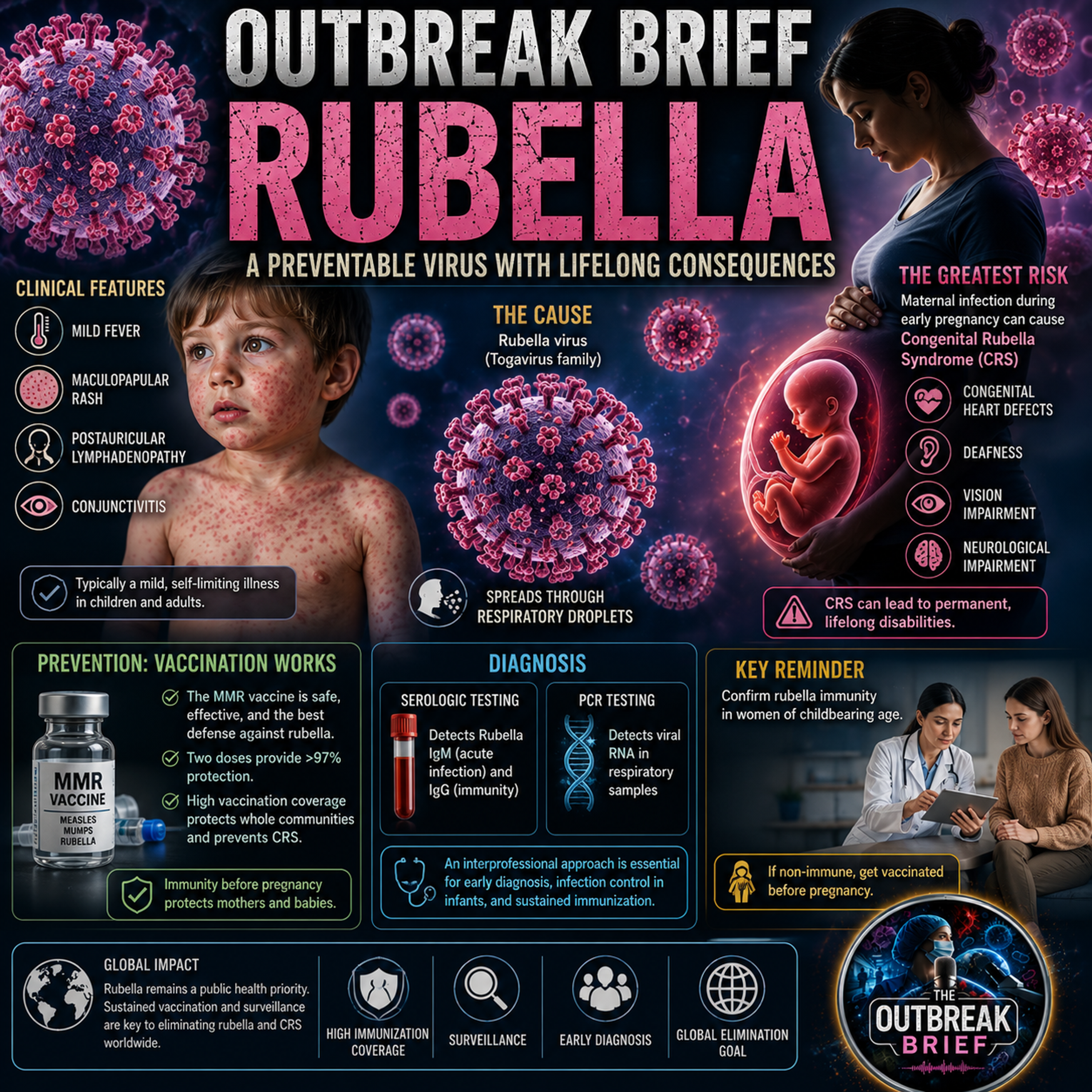
In this episode of Outbreak Brief, we explore rubella, also known as German measles, a highly contagious viral infection that is often mild in children and adults but can become devastating when it occurs during pregnancy. Although infection may cause only a low-grade fever, rash, and swollen lymph nodes, exposure during early pregnancy can result in congenital rubella syndrome (CRS), causing permanent complications such as hearing loss, congenital heart defects, vision problems, and neurological impairment. We examine how rubella spreads, how laboratory testing confirms infection and immunity, and why vaccination remains the most powerful tool for prevention. Beyond the individual patient, rubella highlights the importance of maintaining high immunization coverage and protecting pregnant individuals and their unborn children through effective public health surveillance and global vaccination programs.
Embed this episode
No transcript yet.