
EPISODE · Dec 31, 2024 · 19 MIN
Rumi in the Metaverse: The Mystic Poet Meets the Virtual Frontier
from The Cogitating Ceviché Podcast · host Conrad T Hannon
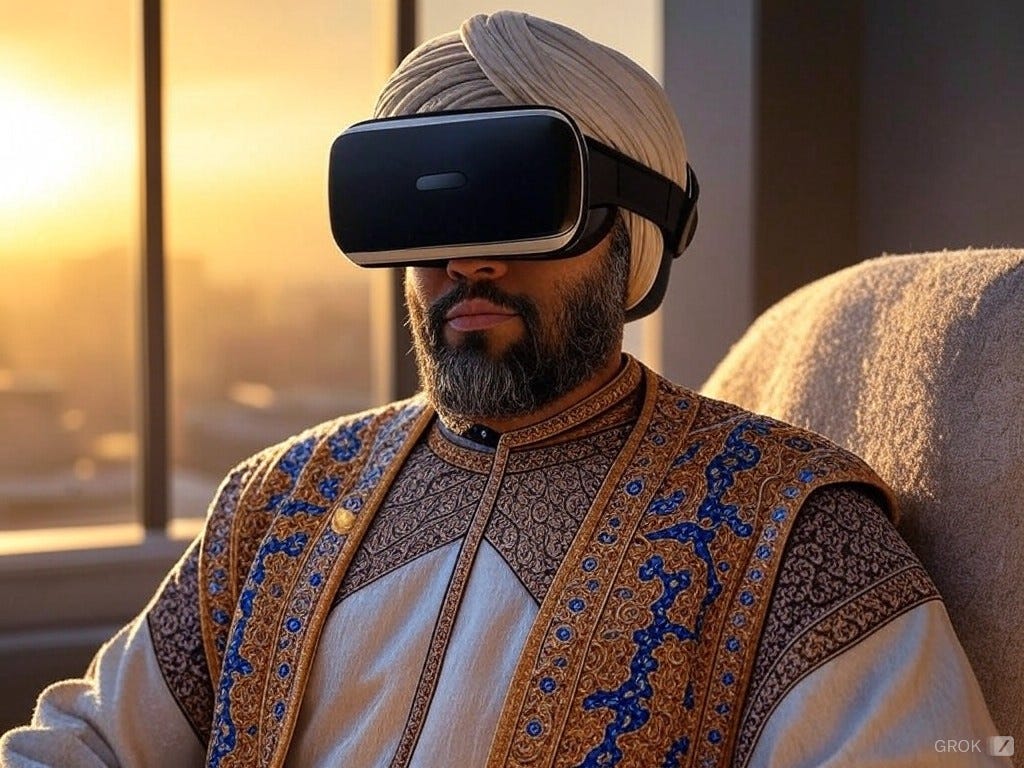
The Cogitating CevichéPresentsRumi in the Metaverse: The Mystic Poet Meets the Virtual FrontierPast Forward: Historical Icons in the Digital Frontier #40By Conrad HannonNarration by Amazon PollyPrefaceIn the 13th century, Jalal ad-Din Muhammad Rumi crafted poetry that delved into the universal human experience, transcending cultural and temporal boundaries. His verses, a blend of mysticism and profound insight, continue to inspire people around the globe. But what if Rumi found himself in today’s world—a time where the quest for connection and transcendence isn’t limited to spiritual practices but extends into the digital frontier, manifesting in technologies like virtual reality and the metaverse? How would Rumi perceive this burgeoning realm, where physical and virtual realities blur? Could his spiritual insights illuminate the ethics and potential of this digital age, or would he challenge its assumptions about connection and fulfillment? This journey through the eyes of a mystic poet offers an expansive perspective on the modern metaverse and its role in human connection.Arrival in a Digital UniverseRumi’s first encounter with the 21st century is like stepping into a new dimension. The hum of machinery, the glow of screens, and the cacophony of voices speaking in tongues unknown fill his senses. Each sound and sight feels simultaneously alien and oddly familiar, echoing the chaos and harmony he often described in his poetry. His gaze falls on a sleek, minimalist device handed to him—a VR headset. At first, he turns it over in his hands, marveling at its simplicity yet sensing its profound possibilities. The smooth contours of the headset catch the light, casting subtle reflections that remind him of polished stones used in ancient meditation practices. Placing it hesitantly on his face, he feels a rush of anticipation mingled with curiosity, a sensation akin to stepping into the unknown realms he once described in his poetry. The moment the device activates, his breath catches; he is transported into a world that feels both alien and familiar, an ethereal expanse that seems to echo the boundless landscapes of his imagination. Tentatively placing it over his eyes, the world transforms. No longer confined by walls, Rumi finds himself floating through luminous skies and ethereal landscapes. Fields of stars stretch infinitely, while rivers of data flow beneath his feet.The poet moves through these unearthly terrains with an open heart. Colors shift and swirl around him, embodying emotions he recognizes but cannot name. In awe, he murmurs, “What is this, if not the manifestation of an unseen dream?” Around him, developers and technologists explain the metaverse, a virtual space where people from all over the world gather to work, play, and connect. To Rumi, this concept feels familiar. “In my time, we spoke of dissolving the self to unite with the divine. Here, you dissolve the physical self to unite with the imagined.” The poet’s curiosity is piqued. He decides to explore this digital world, seeking its parallels to the mystic realms he once traversed.Rumi’s questions come alive as he delves further. What does this dissolution mean for the soul? He reflects on the parallels between this digital shedding of the physical and his spiritual practice of dissolving the ego. In his time, Rumi sought unity with the divine by stripping away the layers of the self—pride, fear, and worldly attachments—to reveal the essence within. He sees a similar dissolution in the metaverse but wonders if it leads to the same enlightenment. Does this digital transformation serve as a path toward connection and understanding, or does it risk fragmenting the soul into illusions of endless avatars and identities? The metaverse, he muses, is both a reflection and a departure from the spiritual dissolutions he once embraced, holding promise and peril in equal measure. What are the consequences of building connections through intangible threads of data? For the poet, the metaverse becomes a mirror reflecting the ancient quest for transcendence—but with distinctly modern challenges.Rumi’s Timeless Teachings Meet Modern TechRumi’s poetry emerged from a life marked by upheaval and transformation. Born in the medieval Persian Empire, he witnessed displacement, political strife, and profound loss—events that deepened his introspection and spiritual journey. From these trials, he articulated teachings that emphasized the unity of all beings, the dissolution of the ego, and the boundless power of love to transcend human divisions.In the metaverse, Rumi encounters a modern parallel to the dissolution of self: the shedding of physical limitations. He explores virtual spaces where individuals adopt avatars, reshaping their identities and environments at will. At first, he marvels at the creativity and fluidity. He observes avatars adorned in fantastical costumes, others styled with painstaking accuracy to resemble their real-world selves. “This is an expression of longing,” he muses, “for freedom, for transformation, for becoming something more than the ordinary.” Yet, he soon wonders aloud, “Does this freedom bring you closer to your essence or farther from it? Do these masks reveal the soul or obscure it?”Rumi’s reflections deepen as he witnesses the diverse uses of these virtual realms. In one space, he sees reunions between family members separated by oceans, avatars hugging where physical arms cannot reach. In another, he watches users crafting digital art, their creations limited only by imagination and coding skill. But he also observes users consumed by endless cycles of simulation—scrolling through landscapes they will never touch, building monuments that will vanish with a server reboot. “The ephemeral can inspire or deceive,” he remarks. “It is the intention that determines its truth. I saw one user create a virtual sunrise that moved an entire audience to tears, a fleeting moment of shared beauty that lingered in their hearts. Yet, in another corner, I witnessed a space filled with dazzling illusions designed solely to entice and mislead, leaving its visitors feeling hollow. Both reveal the power and peril of the ephemeral, shaped by the purpose behind its creation.”His observations lead to animated discussions with technologists about the purpose and ethical implications of these digital worlds. Some argue passionately that the metaverse fosters connection, allowing individuals separated by vast distances to share meaningful experiences. Others confess concerns about its darker side: escapism, commercial exploitation, and the erosion of authenticity. One developer shares a fear that corporate interests might dominate these spaces, turning what could be communal sanctuaries into profit-driven echo chambers. Rumi listens carefully, his words imbued with timeless clarity: “A mirror reflects only what is before it. Let the heart’s intention guide what you bring to this place. It can show you your soul or your shadow, depending on where you look.”As Rumi continues his exploration, he is struck by the contrast between the lofty ideals and practical realities of the metaverse. He participates in forums where users discuss self-expression and connection, but he also observes heated debates over digital property rights and identity theft. Intrigued, he joins conversations about the permanence of relationships formed in transient spaces. Rumi’s insights push others to rethink their assumptions. “You are all travelers,” he tells them. “Whether the journey is through physical deserts or virtual landscapes, the destination is always within.”Through these encounters, Rumi becomes not just a participant in the metaverse but a gentle provocateur, reminding its inhabitants to look beyond the illusions and distractions. His timeless teachings resonate with developers and users alike, inspiring a more intentional approach to this vast new frontier.Immersion in Virtual SpacesRumi’s exploration takes him to diverse digital environments, each uniquely crafted to evoke wonder and reflection. In one, he steps into a tranquil garden suspended in a sea of stars. Each flower blooms with a verse of poetry, recited softly as users approach. Rumi smiles as visitors pause, listening, their faces illuminated by the glow of the virtual blossoms. He watches as some kneel beside the digital flora, hands outstretched as though they could touch the words. “This is what I sought in my words,” he says, “a moment of stillness where the soul awakens.” In this garden, time feels suspended, allowing users to lose themselves in a meditative silence that mirrors the serenity he once found in the deserts of his homeland.In another space, Rumi observes bustling digital marketplaces where avatars trade virtual goods. He marvels at the creativity of those who fashion intricate garments, tools, and artifacts for purely virtual existence. Around him, communities thrive as people collaborate on shared projects, from designing entire cities to composing symphonies of sound and light. Yet he also notices others aimlessly wandering, their expressions blank as they scroll through endless screens of options. “You have built a world of infinite possibility,” he reflects. “But infinity can be as much a burden as a gift. The heart needs an anchor, even in boundless seas.”His journey continues into immersive games and social hubs where users redefine reality. In one space, he joins an interactive experience that invites participants to relive pivotal moments of their lives, offering glimpses of how alternate choices might have shaped their futures. He marvels at the emotional intensity as users face versions of themselves they never became, grappling with regret and gratitude in equal measure. “This is not unlike the Sufi practice of self-reflection,” Rumi observes, “where the heart’s mirror shows the truth not to condemn but to illuminate.”Drawn by curiosity, Rumi attends a virtual gathering where avatars from around the globe share stories, art, and music. The vibrancy of this digital bazaar fascinates him. He listens as one user plays a haunting melody on a virtual flute, while another shares digital sculptures that shimmer and change form with every viewer’s gaze. Inspired by this collective creativity, Rumi begins composing new verses, weaving the experiences he has witnessed into his poetry. His words ripple through the metaverse, appearing in unexpected places—projected onto walls of virtual galleries, whispered in the winds of digital forests, and etched into the fabric of simulated skies. Users find solace and inspiration in his timeless wisdom, drawn to his ability to articulate the profound within the ephemeral.As his exploration deepens, Rumi encounters spaces designed for play and wonder. In one game, users navigate through a labyrinth of light and shadow, solving puzzles that require collaboration and trust. In another, he finds a tranquil retreat where users can sculpt entire universes from thought alone. Watching participants lose themselves in these acts of creation, Rumi feels a kinship with their pursuits. “The soul yearns to create,” he reflects. “Whether through verse, stone, or code, it seeks to leave an imprint on the infinite.” Through these experiences, Rumi’s understanding of the metaverse expands, and he becomes both a participant and a guide, his poetry a lantern in this boundless digital cosmos.Balancing Ethics and ConnectionAs Rumi delves deeper into the metaverse, he encounters its ethical dilemmas. He meets developers who grapple with issues like data privacy, algorithmic bias, and the monopolization of virtual spaces by powerful corporations. Rumi listens intently, comparing these challenges to those of his own time, when rulers and clerics often controlled access to knowledge and spiritual practices, shaping society's boundaries.“The path to unity must not be paved with chains,” he advises. “Let this space remain open, a sanctuary for all.” His words spark vibrant conversations about creating ethical guidelines for virtual worlds. Developers explore how to design systems that prioritize human connection and well-being over profit and manipulation. Inspired by Rumi’s perspective, some even draft manifestos aimed at transparency and inclusivity, while others discuss new tools to empower users to control their virtual identities and data.Rumi also engages with users who feel trapped in the metaverse, overwhelmed by its demands and unable to balance their virtual lives with the physical. He listens as they share stories of loneliness, addiction to the digital, and the struggle to remain present in their real-world relationships. Drawing from his own experiences, he tells them of the times he too was consumed by the pursuits of the mind at the cost of his physical well-being. “Do not forget the earth beneath your feet,” he counsels, placing a hand on his chest. “The sky may inspire, but the soil sustains. Balance the two, for the soul thrives on both the ethereal and the tangible.”These conversations lead Rumi to delve into public forums where users and developers debate the intersection of innovation and ethics. He gently challenges the ideas of those who view the metaverse purely as an escape, encouraging them to see it as a tool for growth and connection rather than a refuge from reality. He shares parables from his poetry that underscore the dangers of clinging too tightly to illusions, drawing parallels between digital distractions and the veils that obscure the soul’s deeper truths.As a result of his presence, discussions grow increasingly reflective. Some developers propose creating virtual experiences that incorporate elements of grounding—simulated physicality, natural rhythms, and reminders of the offline world. Rumi suggests that these elements could serve as “digital anchors,” helping users retain a sense of connection to the real even as they explore the infinite. Others embrace the idea of integrating Rumi’s teachings into educational programs within the metaverse, offering lessons on mindfulness, ethics, and the balance between ambition and contentment.By engaging so deeply, Rumi transforms from an observer into a catalyst for change, inspiring a renewed focus on harmony and integrity within these evolving digital spaces.Collaborating Across CenturiesInspired by his insights, Rumi collaborates with technologists, artists, and philosophers to create virtual spaces that embody his teachings. Together, they design an immersive journey called “The Eternal Dance,” where users navigate a labyrinth of light and shadow. At its center, they confront a mirror reflecting their avatar’s true essence, stripped of adornments. The experience encourages self-reflection, echoing Rumi’s call to “know thyself.” To enhance the experience, they incorporate elements from Rumi’s poetry, weaving verses into the environment so that every corner of the labyrinth feels alive with meaning. The pathways pulse with light that shifts in response to the users’ movements, creating a dynamic interplay between the digital and the reflective.Rumi’s contributions extend far beyond art. He participates in debates about the future of virtual spaces, advocating passionately for inclusivity, equity, and the need to prioritize shared humanity over commercial gains. In one particularly compelling discussion, he challenges developers to view the metaverse not merely as a tool for entertainment but as a platform for education, healing, and fostering cross-cultural dialogue. “Build bridges, not walls,” he urges. “Let this place be a garden where all may bloom.” His words inspire a wave of innovation, with some developers proposing virtual classrooms rooted in empathy-based learning and others designing restorative digital sanctuaries for mental wellness.In a collaborative effort with educators, Rumi envisions an expansive virtual library where users can explore the collective wisdom of human history. This space becomes a hub for knowledge-sharing, where Rumi’s teachings stand alongside insights from other great thinkers. Users interact not just with texts but with living, evolving discussions that connect the past to present challenges. Rumi’s presence also spurs the creation of artistic festivals within the metaverse, where poets, musicians, and visual artists from around the world showcase their work, fostering a sense of global unity.As the community around him grows, Rumi becomes a touchstone for discussions about authenticity in digital creation. He encourages artists to explore how technology can amplify their voices while staying true to their essence. In one memorable project, he works with a team of developers to create an immersive poetry performance that blends his verses with modern music and visuals, bringing his teachings to life in ways that resonate deeply with contemporary audiences. This effort underscores Rumi’s belief that the essence of art—whether crafted in ink, stone, or code—is to connect the soul to something greater.Reflections on a Digital LegacyAs his journey in the metaverse draws to a close, Rumi reflects on its role in human evolution. He recognizes its potential to inspire creativity, foster connection, and explore new dimensions of existence. Yet, he remains wary of its power to distract and divide. For Rumi, the metaverse is a tool—neither savior nor destroyer—whose impact depends on the intentions of those who shape and inhabit it.Before departing, Rumi leaves a message for the modern world: “Do not lose yourself in reflections. Seek the light that casts them. Let this new realm remind you of the infinite within, not just the infinite around.” His words echo through the metaverse, a beacon for those seeking meaning in an age of rapid transformation.Rumi’s journey offers a timeless reminder: technology may change the ways we connect, but the essence of connection remains the same. Whether through poetry or pixels, the quest for unity and understanding continues, weaving past and present into an unbroken thread of human experience.Thank you for your time today. Until next time, stay gruntled. This is a public episode. If you'd like to discuss this with other subscribers or get access to bonus episodes, visit thecogitatingceviche.substack.com/subscribe
Embed this episode
NOW PLAYING
Rumi in the Metaverse: The Mystic Poet Meets the Virtual Frontier
No transcript for this episode yet
Similar Episodes
No similar episodes found.
Similar Podcasts
No similar podcasts found.