
EPISODE · Mar 27, 2020 · 25 MIN
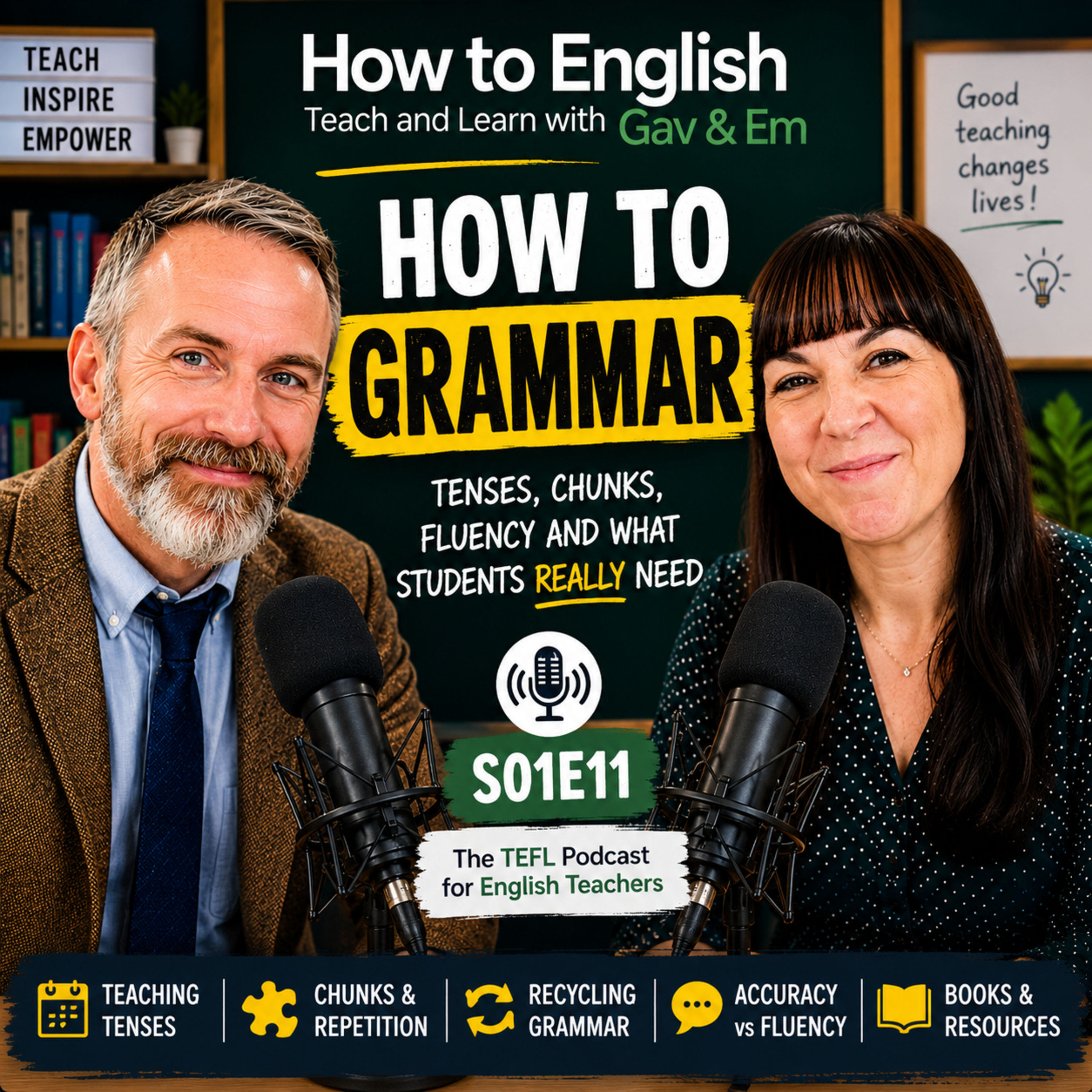
How to Teach Grammar: Tenses, Timelines, Fluency & What Students Really Need - S01E11
from How to English TEFL Podcast · host Gav and Em
How should English teachers teach grammar without overwhelming students — or destroying their fluency?In S01E11 of the How to English TEFL Podcast, Gav and Em tackle the big topic of grammar from both the teacher’s and learner’s point of view.We discuss whether students really need to know terms such as noun, adjective, verb and present participle, and whether grammar is better learned through rules, formulas, chunks, repetition or simply using the language.We also look at practical ways to teach English tenses, including timelines, visual explanations, model sentences and meaningful practice. Em explains why intermediate students can sometimes forget grammar they learned at lower levels, while Gav argues for regularly recycling language rather than teaching a grammar point once and abandoning it.Then there’s the big question: do students really need all those advanced tenses?Future perfect might not appear in every conversation, but it could be exactly what a Business English learner needs for project planning:“By the end of this year, we will have completed…”So should we teach grammar because it’s in the coursebook — or because our students actually need it?We also discuss:• grammar terminology and whether students need it• teaching tenses as formulas• turning grammar structures into natural chunks• using timelines and drawings• balancing grammatical accuracy with speaking fluency• correcting mistakes without stopping communication• recycling and revising previously learned grammar• British and American English differences• third conditional and future perfect• adapting grammar lessons to learners’ real needs• English word order and fossilised errors• useful grammar books for teachers and learners☕ Support How to English and help us keep making the podcast:https://ko-fi.com/howtoenglishpodWebsite: https://howtoenglishpod.wordpress.com/Timestamps00:00 – Welcome to How to English01:30 – What is grammar?02:30 – Do students need grammar terminology?06:00 – Teaching tenses as formulas08:00 – Can thinking about grammar slow down fluency?09:30 – Teaching grammar through chunks and repetition10:30 – Using timelines to explain English tenses13:00 – Different ways to visualise grammar14:30 – Making grammar practice meaningful16:00 – Why intermediate students forget basic grammar17:30 – Recycling and revising grammar19:00 – Why English grammar can feel overwhelming20:30 – Grammar knowledge and teacher preparation21:30 – British vs American English grammar23:00 – Accuracy vs fluency24:30 – Should students worry about perfect grammar?25:30 – Do students really need advanced tenses?27:00 – Third conditional, past perfect and useful grammar29:00 – Does anyone actually need the future perfect?30:30 – Teaching grammar for Business English and project planning32:00 – Should coursebooks decide what grammar we teach?34:00 – English word order36:00 – Fossilised grammar errors37:30 – Recommended grammar books39:00 – Final thoughts on teaching grammar🎧 How to English TEFL PodcastPractical conversations about teaching and learning English with Gav & Em.#tefljobs #EnglishTeaching #Grammar #ESL #ELT #TeachEnglish #EnglishGrammar #TEFLTeachers #EnglishTeachersReferences:Parts of speech: https://www.lexico.com/grammar/word-classes-or-parts-of-speechEnglish Grammar in Use, Raymond Murphy and Surai Pongtongcharoen, Cambridge.Using timelines: https://eflrecipes.com/2014/06/21/timelines/Differences between British and American English with present perfect: https://www.youtube.com/watch?v=A0KWEAWwASQIntermediate Language Practice, Michael Vince, Macmillan. How English Works: A Grammar Practice Book; with Answers, Catherine Walter, Michael Swan, Oxford.
Embed this episode
Ready to play
How to Teach Grammar: Tenses, Timelines, Fluency & What Students Really Need - S01E11
No transcript for this episode yet
Similar Episodes
No similar episodes found.
Similar Podcasts
No similar podcasts found.