
EPISODE · Oct 9, 2020 · 30 MIN
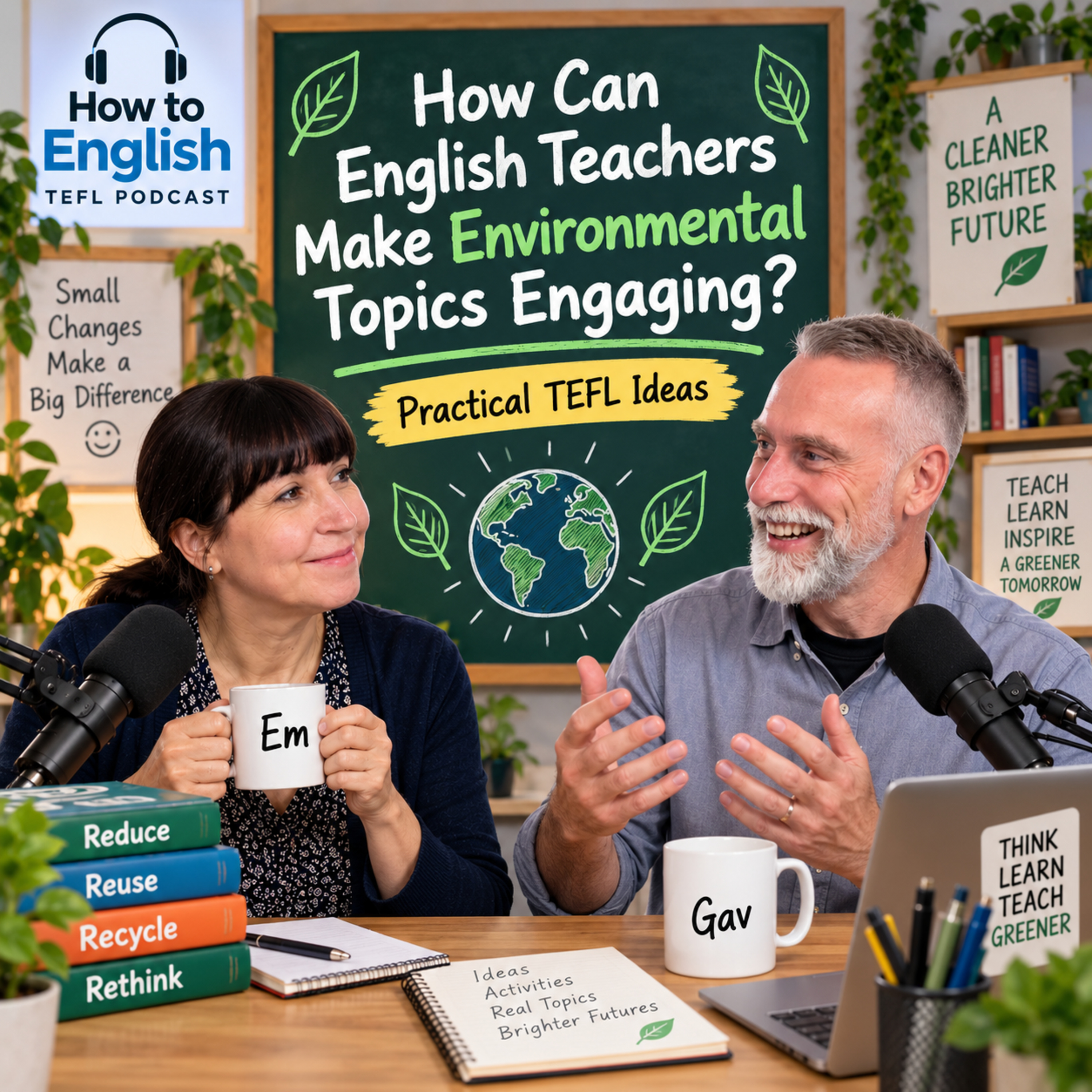
How Can English Teachers Make Environmental Topics Engaging? Practical TEFL Ideas – S01E39
from How to English TEFL Podcast · host Gav and Em
How can English teachers make environmental topics interesting, practical and relevant to learners?In this episode of How to English TEFL Podcast, Gav and Em explore both meanings of “environment”: the spaces in which we teach and learn, and the environmental issues we can bring into English lessons.They discuss how changing an online teaching background, using real websites, maps and virtual locations, or even taking learning beyond the classroom can create fresh opportunities for communication. They then turn to practical ways of teaching environmental English through personal questions, quizzes, statistics and everyday choices rather than relying only on abstract discussions about “saving the planet”.Topics include the three Rs, eco-guilt, reusable bags, recycling, water use, transport, paper versus e-books, reusing coursebooks, the environmental cost of online searches and video streaming, carbon footprints, and ways teachers can turn these subjects into speaking, vocabulary and grammar work.Gav and Em also share examples from their own lessons and discuss why environmental topics can generate stronger conversation when learners are given information they can question, compare and relate to their own lives.☕ Support How to English:https://ko-fi.com/howtoenglishpod🌐 Free TEFL articles, teaching ideas and practical classroom activities:https://www.howtoenglishpod.com/TIMESTAMPS00:00 Introduction00:45 Why talk about “the environment”?01:45 Changing your teaching environment03:25 Community as classroom and learning beyond the classroom05:00 Using real websites, maps and virtual environments06:20 The three Rs and environmental awareness in lessons08:15 The Eco-Guilt quiz15:55 Turning environmental questions into English lessons17:30 E-books vs paper books: which is greener?20:55 Reusing books and reducing classroom waste23:00 What is the carbon footprint of an online search?24:05 What is the environmental cost of streaming video?25:45 Carbon-footprint activities for learners27:00 Environmental topics students can research and discuss28:25 Online vs face-to-face teaching environments29:35 Final teaching tips and recapREFERENCESBackground ideas for online teachers:https://tr.pinterest.com/pin/28217935150687259/?nic_v2=1a6Ctya2GTED Talk by David Barnum – Rethinking Learning Environments: Community as Classroom:https://www.youtube.com/watch?v=98F2AxZwGAEJoe Wicks PE classes:https://www.youtube.com/user/thebodycoach1How To Cultivate Environmental Awareness In Schools:https://www.greenschoolsalliance.org/blogs/60/628English File, Unit 4A, Eco-Guilt, Upper-Intermediate, 3rd edition, Clive Oxenden, Christina Latham-Koenig, Oxford.Future perfect / future continuous topic.E-books or paper books:https://www.custommade.com/blog/e-readers-vs-print-books/https://www.theguardian.com/environment/2013/jan/06/should-i-buy-an-e-readerWhat’s one tonne of CO2?https://www.aashe.org/one-ton-co2-really-mean/What’s the cost of watching videos online?https://www.carbonbrief.org/factcheck-what-is-the-carbon-footprint-of-streaming-video-on-netflixA carbon footprint quiz for kids:https://www.gokid.mobi/carbon-footprint-for-kids-some-facts-a-quiz-and-also-a-worksheet/
Embed this episode
Ready to play
How Can English Teachers Make Environmental Topics Engaging? Practical TEFL Ideas – S01E39
No transcript for this episode yet
Similar Episodes
No similar episodes found.
Similar Podcasts
No similar podcasts found.