
EPISODE · Sep 24, 2021 · 35 MIN
How Can You Teach English Tenses Without Confusing Students? English with Rob – S02E12
from How to English TEFL Podcast · host Gav and Em
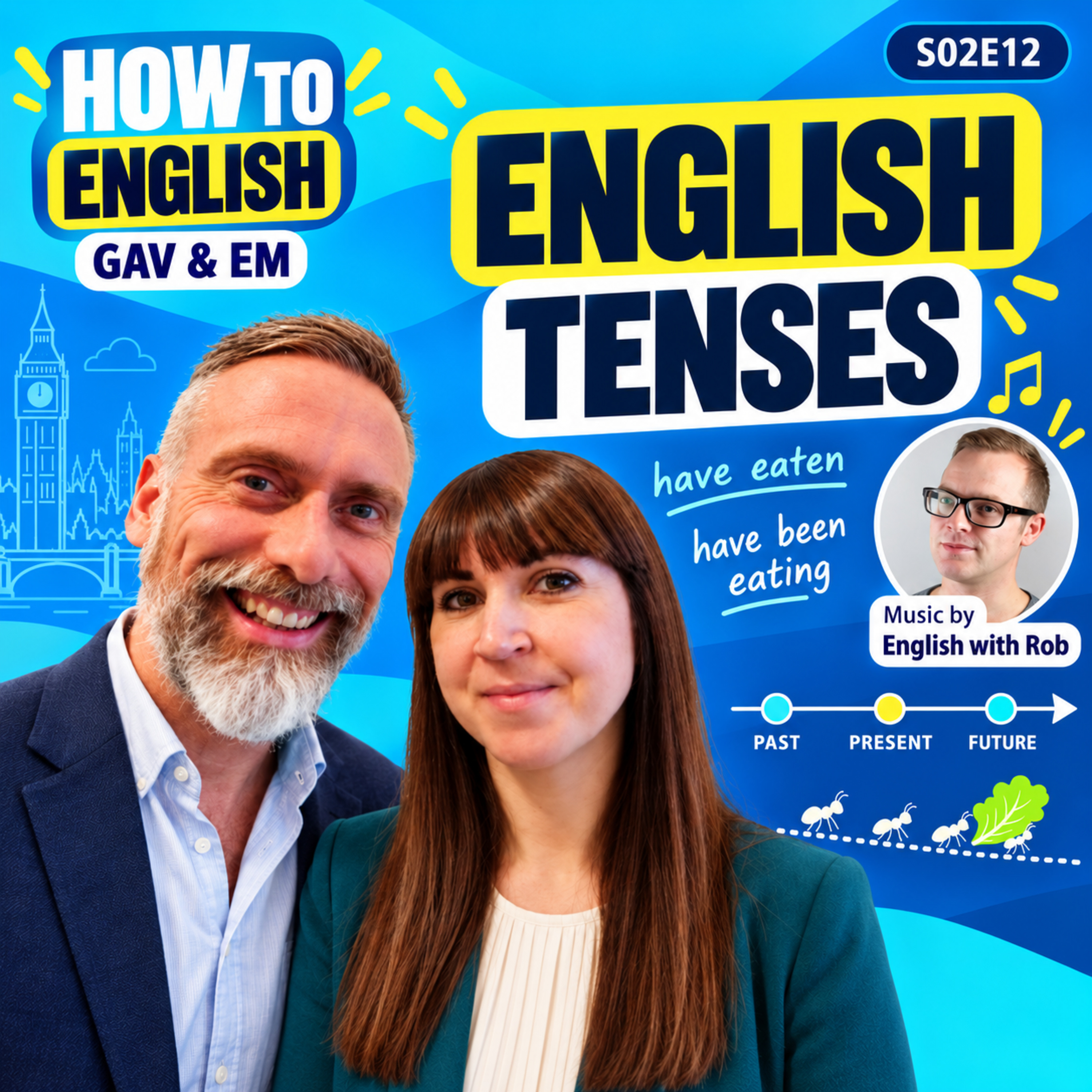
How can teachers explain English tenses clearly without turning the lesson into a confusing grammar lecture?Gav and Em use an unexpected ant invasion to explore practical and entertaining ways of presenting English grammar. Their examples show how memorable stories and situations can help learners understand when and why different tenses are used.Beginning with ants carrying lettuce across Gav’s kitchen, they examine the present simple for facts, routines and schedules before comparing it with temporary actions in the present continuous. They then move through the past simple, past continuous, past perfect and past perfect continuous, showing how these forms help us sequence events and tell more interesting stories.Why do we say “The ants have eaten the lettuce” but “The ants have been eating the lettuce”? Gav and Em unpack the difference between the present perfect and present perfect continuous, including completed and unfinished actions, present results, duration, for and since, and the words just, already and yet.Drawing on their classroom experience, they also discuss state verbs, regular and irregular past forms, storytelling techniques and the challenge of explaining subtle differences in meaning without overwhelming learners.The episode finishes with Rob from English with Rob introducing Tenses of Love, an original song in which each verse demonstrates a different English tense. It offers teachers and learners a creative way to notice and revise grammar through music.Listen and read along with the transcription:https://share.descript.com/view/oaLaaWaMiADIf you find the show useful, you can send us a thanks at https://ko-fi.com/howtoenglishpodVisit https://howtoenglishpod.com for practical English-teaching ideas and resources ready to use.Chapters00:00 Welcome to How to English00:22 Why learners feel tense about tenses01:19 Organic grammar teaching and correction02:57 Gav’s ant infestation begins04:35 Present simple facts, opinions and routines06:31 Present simple for schedules07:23 Present continuous and state verbs08:57 Temporary and permanent situations11:08 Present continuous for future arrangements11:56 Past simple and finished actions12:42 Regular and irregular past verbs13:28 Past continuous and interrupted actions15:31 Past perfect for earlier past events17:07 Using past perfect in storytelling18:25 Past perfect continuous19:49 Introducing the present perfect20:18 Past actions with present results21:48 Using for and since23:22 Just, already and yet24:31 Present perfect continuous25:34 Temporary and permanent situations26:57 Present perfect simple or continuous?27:42 Numbers and completed actions28:08 Have eaten or have been eating?29:44 A future episode about future tenses30:25 Rob introduces Tenses of Love32:01 Tenses of LoveHashtagsEnglishTenses,TeachingEnglishGrammar,EnglishGrammar,TEFL,ESL,ELT,EnglishTeachers,LearnEnglish,GrammarTeaching,PresentSimple,PresentContinuous,PastSimple,PastContinuous,PresentPerfect,PresentPerfectContinuous,PastPerfect,PastPerfectContinuous,EnglishWithRob,GrammarActivities,TEFLPodcastQuestions answered00:31 Why do learners feel tense about English tenses?04:35 When do we use the present simple?07:23 Can state verbs be used in continuous forms?08:57 What is the difference between temporary and permanent situations?13:28 How do the past simple and past continuous work together?15:31 When should we use the past perfect?19:49 How does the present perfect connect the past and present?21:48 What is the difference between for and since?23:22 How do we use just, already and yet?25:34 What is the difference between the present perfect and present perfect continuous?28:08 What is the difference between “have eaten” and “have been eating”?
Embed this episode
Ready to play
How Can You Teach English Tenses Without Confusing Students? English with Rob – S02E12
No transcript for this episode yet
Similar Episodes
Jan 27, 2026 ·39m
Similar Podcasts
No similar podcasts found.