
EPISODE · Oct 21, 2021 · 1 MIN
2: BSW1 The Hiring Fair
from Racontour Archive - 2020 onwards · host Racontour and friends
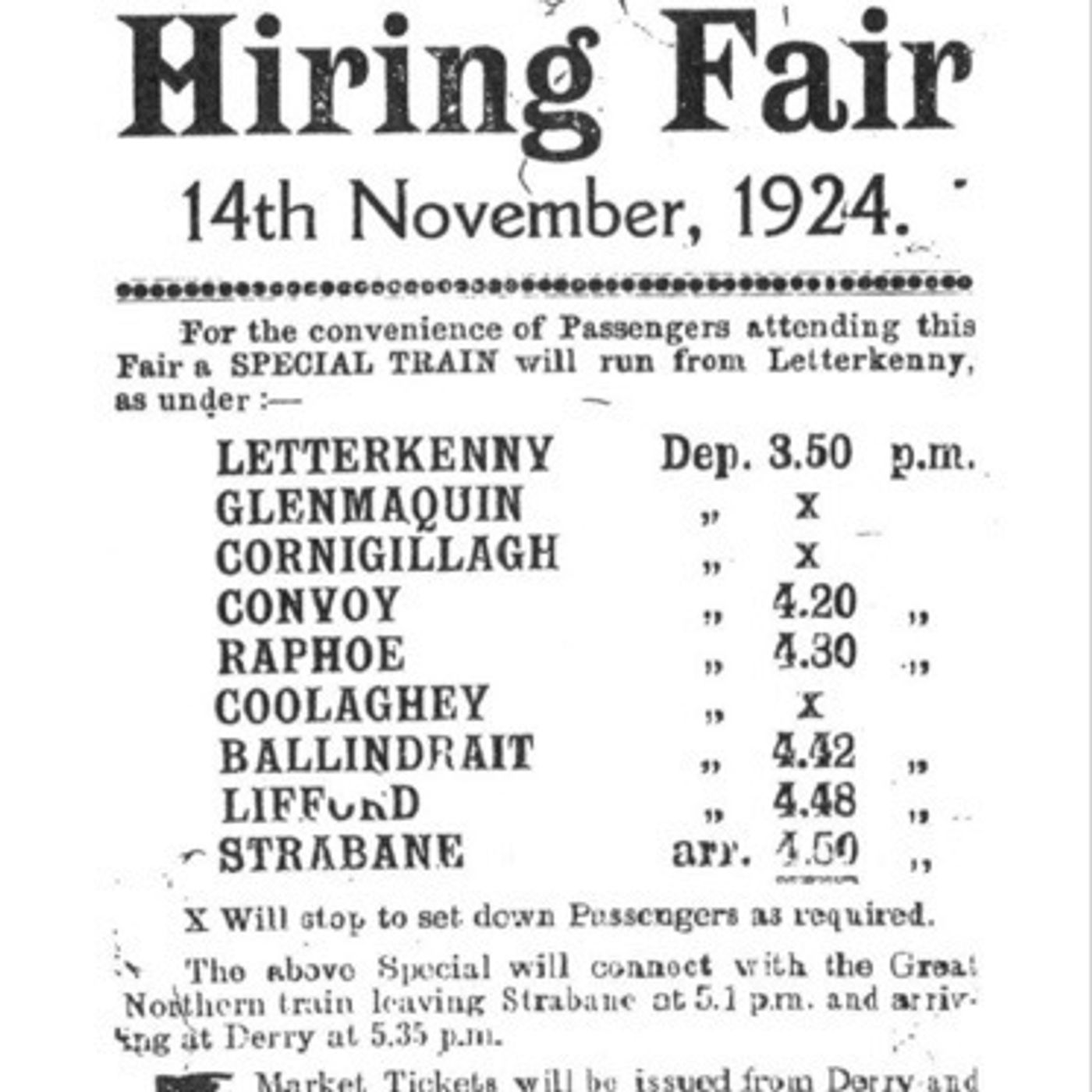
Speaker: Mairead McNultyThe Diamond is where folk would travel for the fair day and the market day. Patents for these days go back as far as the early 1600s when Sir Basil Brooke had taken over the castle from the O'Donnells. The fair day was held on the second Friday of each month while the market occurred every Saturday. Hiring fairs where young men were 'sold' to farmers for up to six months at a time took place here. Between the 17th and 19th centuries, hiring fairs were commonplace throughout Ireland.All over the province of Ulster – from Donegal Town to Ballycastle, hiring days were held in places situated between an area of poor land from where the labourers came and an area of good farming land where labour was needed such as the Lagan Valley. The main centres in the North-West were at Derry, Strabane and Letterkenny with smaller fairs being held in Limavady, Cookstown, Omagh, Ballybofey and here in Donegal Town.Poverty and limited employment opportunities in agriculture were why people needed hiring fairs. Parents with big families needed help to pay for rent and food, so they sent their children to be hired. Paddy ‘The Cope’ Gallagher was one of them as he recalled in his memoir: ‘I was ten years of age 1881. The year before had been a bad one for work in Scotland and my father hadn’t enough money to pay the rent and the debts. It was the same with the neighbours. A crowd of us were got ready for the hiring fair at Strabane’.Signs and symbols were used to show availability for work: men carried sticks, straws, tools or a bundle under their arm whilst women wore aprons and string bags. All those hired went through the ritual of being examined and questioned about their ability to milk cows, thresh or carry out other farm or household chores. It was very much the survival of the fittest with only an early-risers being sought. Weak or feeble individuals were ignored as they stood forlornly in line at the fairs. With major social and economic changes in farming in the 1930s, the practice of hiring declined. The introduction of social welfare benefits in the early 20th century also meant workers increasingly wanted to work and be paid on a weekly basis; whilst new legislation began to push youth into education rather than work. By the mid 19th century, they were a thing of the past, but I can think of one friend whose father was part of the Donegal Town hiring fairs, so they are not quite the distant horror story they deserve to be.Sean Beattie's article has more on the fairs: https://historyofdonegal.com/derry-hiring-fairs-sean-beattie-recalls/
Embed this episode
What this episode covers
From The Bluestack Way Audio Guide, Part One: https://www.racontour.com/Bluestack/
NOW PLAYING
2: BSW1 The Hiring Fair
No transcript for this episode yet
Similar Episodes
No similar episodes found.
Similar Podcasts
No similar podcasts found.