
EPISODE · Dec 11, 2025 · 33 MIN
S15 Ep14: Optimized Immunotherapy Use and Novel Therapeutic Targets Move the Needle for Endometrial Cancer Management: With Ursula A. Matulonis, MD; and Panagiotis (Panos) A. Konstantinopoulos, MD, PhD
from OncLive® On Air · host OncLive® On Air
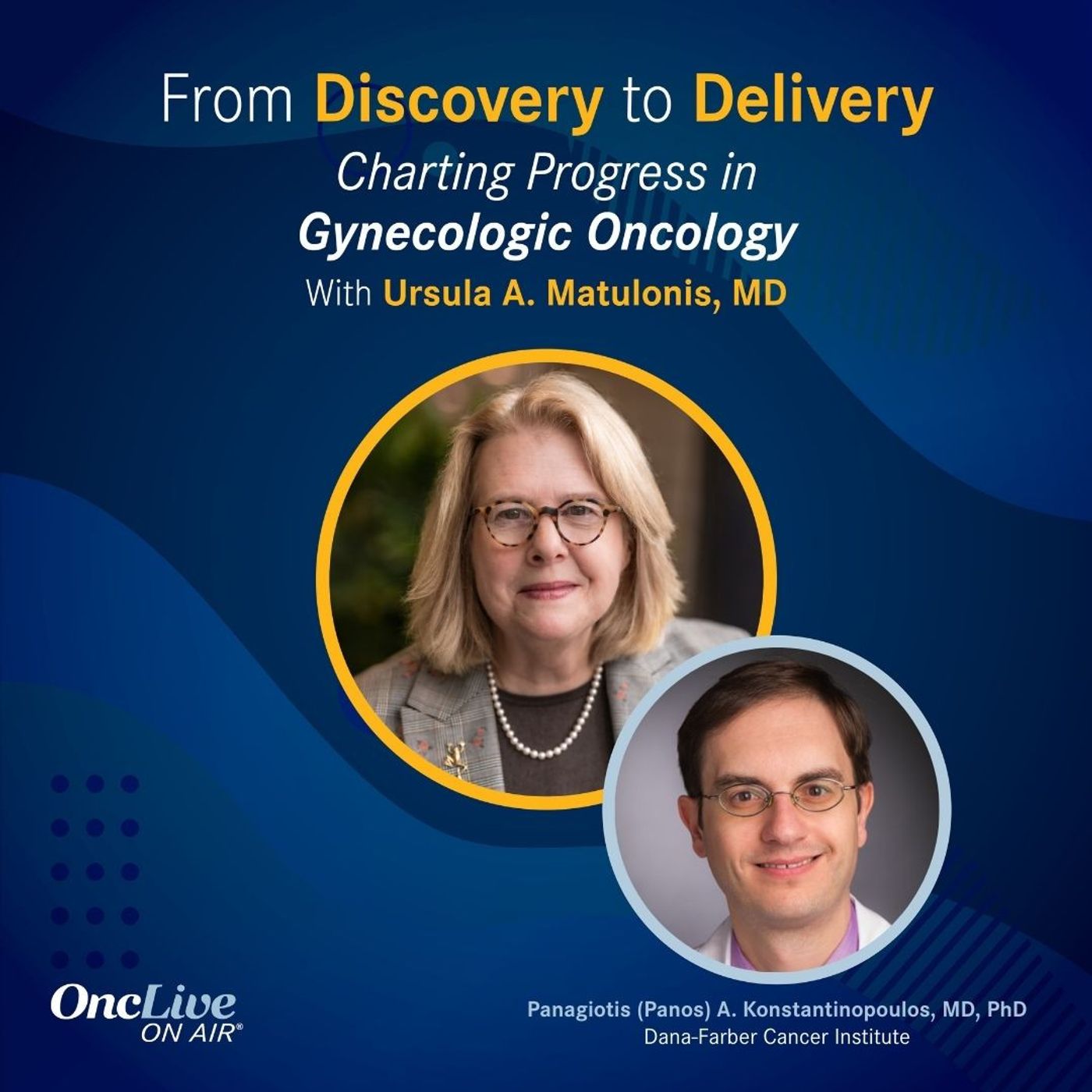
From Discovery to Delivery: Charting Progress in Gynecologic Oncology, hosted by Ursula A. Matulonis, MD, brings expert insights into the most recent breakthroughs, evolving standards, and emerging therapies across gynecologic cancers. Dr Matulonis is chief of the Division of Gynecologic Oncology and the Brock-Wilcon Family Chair at the Dana-Farber Cancer Institute and a professor of medicine at Harvard Medical School, both in Boston, Massachusetts.In this episode, Dr Matulonis sat down with guest Panagiotis (Panos) A. Konstantinopoulos, MD, PhD, to discuss the different subtypes of endometrial cancer and treatment developments for this disease. Dr Konstantinopoulos is the director of Translational Research in the Division of Gynecologic Oncology, the director of the Mellen and Eisenson Family Center for BRCA and Related Genes, and the Velma Eisenson Chair for Clinical and Translational Research at Dana-Farber Cancer Institute; as well as a professor of medicine at Harvard Medical School.Drs Matulonis and Konstantinopoulos explained that patients with mismatch repair–deficient (dMMR) tumors substantially benefit from a decreased risk of progression or death when immunotherapy is added to standard therapy. They noted that immunotherapy appears important for the management of dMMR tumors, even those in earlier stages or in patients who have no measurable disease remaining after surgery.For MMR-proficient (pMMR) tumors, Drs Matulonis and Konstantinopoulos highlighted that PD-1 blockade combined with chemotherapy improves survival vs chemotherapy alone, but that this benefit is not as substantial as that seen in dMMR disease. Crucially, they reported that if a pMMR tumor has no measurable disease after surgery, adding immune checkpoint blockade does not appear beneficial. They stated that tailored treatment approaches are key for managing pMMR disease subtypes. They added that hormonal therapy may be used upfront for slow-growing, estrogen receptor–positive metastatic disease.They continued by saying that DNA damage and replication stress are critical targets, particularly in p53-mutated tumors, like uterine serous cancers. Furthermore, they stressed that although the antibody-drug conjugate fam-trastuzumab deruxtecan-nxki (Enhertu) is highly effective in HER2-positive tumors, treatment with this agent requires monitoring for toxicities, including interstitial lung disease and decreased ejection fraction.
Embed this episode
What this episode covers
Drs Matulonis and Konstantinopoulos discuss the different subtypes of endometrial cancer and treatment developments for this disease.
NOW PLAYING
S15 Ep14: Optimized Immunotherapy Use and Novel Therapeutic Targets Move the Needle for Endometrial Cancer Management: With Ursula A. Matulonis, MD; and Panagiotis (Panos) A. Konstantinopoulos, MD, PhD
No transcript for this episode yet
Similar Episodes
No similar episodes found.
Similar Podcasts
No similar podcasts found.