
EPISODE · May 28, 2026 · 30 MIN
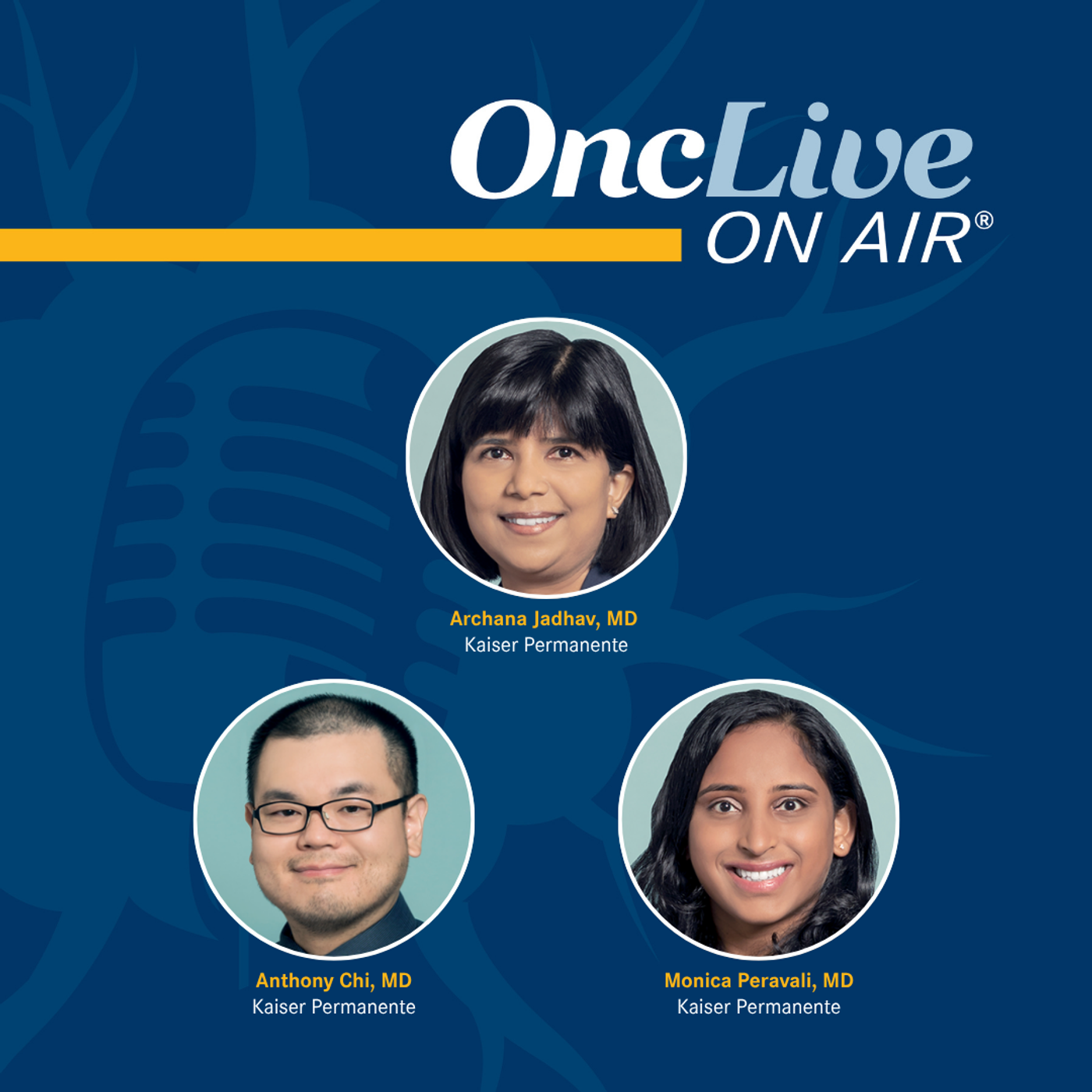
S17 Ep28: In-House Molecular Testing in NSCLC Improves Turnaround Time, Tissue Stewardship, and Multidisciplinary Coordination: Featuring Anthony Chi, MD; Monica Peravali, MD; and Archana Jadhav, MD
from OncLive® On Air · host OncLive® On Air
In today’s episode, we spoke with Anthony Chi, MD, a staff pathologist; Monica Peravali, MD, a medical oncologist; and Archana Jadhav, MD, a medical oncologist, all faculty at the Mid-Atlantic Permanente Medical Group in Maryland. In our exclusive interview, Drs Chi, Peravali, and Jadhav discussed the practical advantages and clinical implications of implementing in-house next-generation sequencing (NGS) testing for patients with non–small cell lung cancer (NSCLC). The conversation focused on how internal molecular testing platforms can improve turnaround times, optimize tissue stewardship, reduce costs, and enhance quality control across the diagnostic and treatment continuums.Chi explained that performing NGS internally eliminates delays associated with specimen transportation and external laboratory accessioning, significantly shortening turnaround times. He also highlighted Kaiser Permanente’s decision to implement a molecular platform distinct from those commonly used by outside vendors, allowing for reduced tissue input requirements and faster processing times. According to Chi, internal testing also gives pathology teams greater oversight of specimen use, enabling more strategic tissue conservation for future immunohistochemical (IHC) staining, repeat molecular analyses, or additional biomarker testing.The panel emphasized the importance of close coordination between pathology and oncology teams in maximizing tissue adequacy, particularly in small biopsies and cytology specimens. Chi described educational initiatives implemented within pathology departments to encourage judicious use of IHC stains and preserve tissue for downstream molecular testing. He also outlined specimen-handling workflows in which tissue is divided into separate cassettes to prioritize molecular analysis and still supporting diagnostic evaluation.Jadhav discussed the oncologist’s role in ensuring adequate tissue acquisition, emphasizing proactive communication with pathologists and interventional radiologists. She noted that when clinicians anticipate limited tissue yield, such as in pleural fluid cytology specimens, they often promptly arrange additional biopsies to avoid delays in treatment initiation and ensure comprehensive genomic profiling can be completed efficiently.The discussion also addressed optimal timing for comprehensive genomic profiling in NSCLC. Peravali explained that Kaiser Permanente routinely performs NGS across all disease stages, including early-stage disease, due to increasing use of neoadjuvant chemoimmunotherapy approaches and the need to identify actionable biomarkers that may influence treatment selection. Although in-house testing serves as the primary platform, she noted that send-out testing remains important in select situations, including cancers of unknown primary origin, clinical trial enrollment, and discordant or clinically suspicious cases requiring additional confirmation.As molecular reports become increasingly complex, the panel highlighted the importance of interpreting co-mutations, variants of unknown significance, and emerging biomarkers within a broader clinical context. Peravali explained that although variants without current therapeutic relevance may not immediately affect treatment decisions, repeat biopsies and serial NGS at disease progression can reveal newly actionable alterations as therapeutic options evolve.Chi further emphasized the growing importance of newly approved biomarkers, including HER2 and c-MET alterations, in NSCLC. He described how pathology teams actively monitor FDA approvals and National Comprehensive Cancer Network (NCCN) guideline updates to identify new therapeutic opportunities for previously profiled patients. In some cases, archived tumor specimens are revisited for additional IHC testing when emerging therapies become clinically relevant.The conversation also highlighted the value of multidisciplinary collaboration and tumor board discussions in complex diagnostic scenarios. The speakers described how integrated molecular analysis can help distinguish separate primary lung tumors from metastatic disease, resolve diagnostically challenging cases involving uncommon metastatic presentations, and support more confident staging and treatment decisions.Finally, the panel underscored that successful implementation of precision oncology workflows depends on seamless collaboration among pulmonologists, pathologists, oncologists, interventional radiologists, and molecular laboratories. Early test ordering, centralized communication systems, and multidisciplinary case review were identified as key components of efficient, patient-centered care that can accelerate diagnosis and improve treatment planning for patients with lung cancer.
Embed this episode
What this episode covers
Drs Chi, Peravali, and Jadhav discuss the practical advantages and clinical implications of implementing in-house NGS testing for patients with NSCLC.
NOW PLAYING
S17 Ep28: In-House Molecular Testing in NSCLC Improves Turnaround Time, Tissue Stewardship, and Multidisciplinary Coordination: Featuring Anthony Chi, MD; Monica Peravali, MD; and Archana Jadhav, MD
No transcript for this episode yet
Similar Episodes
No similar episodes found.
Similar Podcasts
No similar podcasts found.