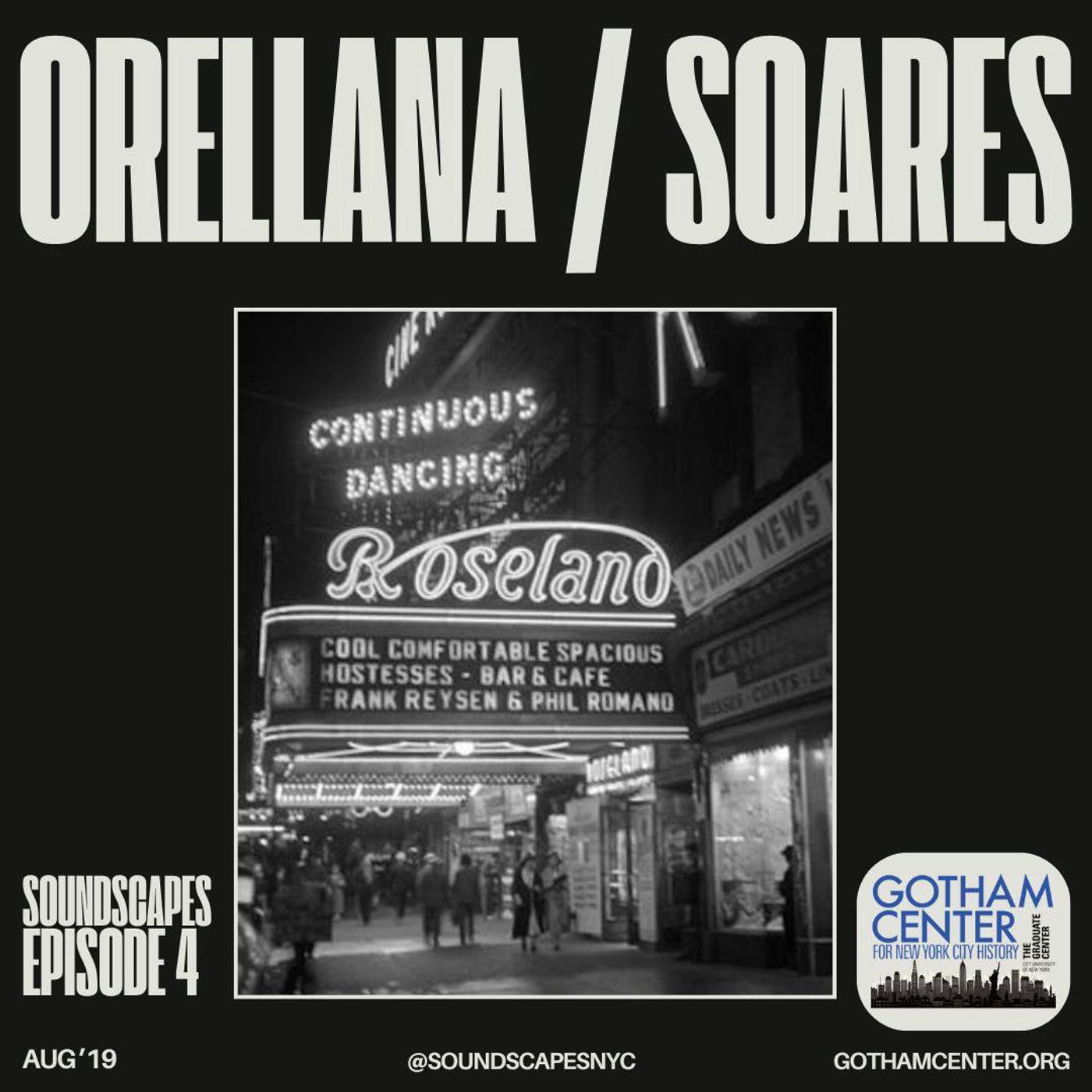
S2.E4. Disco's "Latin Tinge" episode artwork

EPISODE · Aug 19, 2025 · 1H 1M

S2.E4. Disco's "Latin Tinge"

from Soundscapes NYC · host Ryan Purcell

In the 1930s, musician Ferdinand “Jelly Roll” Morton identified the influence of Latin American rhythms like the habanera in jazz, as a sonic “tinge” that fundamentally shaped his style as a stride pianist. In the Seventies, disco presented its own Latin tinge. The Latin American and Latino influence on 1970s New York disco extended far beyond the familiar narratives of the Paradise Garage and Studio 54, creating vibrant spaces that celebrated cultural fusion and community. Clubs like the Ipanema Discotheque, Copacabana, and Roseland Ballroom became crucial venues where Latin rhythms, Brazilian beats, and Caribbean sounds mixed with emerging disco to create something entirely new. These spaces, often overlooked in mainstream disco histories, were essential to the genre's evolution—places where the infectious energy of Latin music met the innovative production techniques of American dance music. The DJs who commanded these dance floors brought not just technical skill but cultural knowledge, understanding how to weave together the musical traditions of their homelands with the cutting-edge sounds emerging from New York's studios and clubs. In the fourth episode of Season Two of Soundscapes NYC, hosts Ryan Purcell and Kristie Soares welcome DJs Ronnie Soares and Luis Mario Orellana Rizzo to explore the Latin American contributions to New York's disco revolution. Soares, born in Brazil and arriving in New York as a teenager, became a DJ by accident in 1974 when asked to spin a Brazilian night at the French club Directoire. Though initially a dancer, he quickly became resident DJ at the famed Ipanema Discotheque and went on to create "Midnight Disco" at Roseland Ballroom—the first club in the city to hold 5,000 people. Rizzo began his career at the very inception of club culture in 1969-70, learning from DJ Francis Grasso before working at legendary venues including Cork & Bottle and Copacabana. As the first DJ to tour nationally and internationally, Rizzo helped spread dance music globally while founding Legends of Vinyl, an archival project celebrating the art of DJing. Learn more about your ad choices. Visit megaphone.fm/adchoices

In the 1930s, musician Ferdinand “Jelly Roll” Morton identified the influence of Latin American rhythms like the habanera in jazz, as a sonic “tinge” that fundamentally shaped his style as a stride pianist. In the Seventies, disco presented its own Latin tinge. The Latin American and Latino influence on 1970s New York disco extended far beyond the familiar narratives of the Paradise Garage and Studio 54, creating vibrant spaces that celebrated cultural fusion and community. Clubs like the Ipanema Discotheque, Copacabana, and Roseland Ballroom became crucial venues where Latin rhythms, Brazilian beats, and Caribbean sounds mixed with emerging disco to create something entirely new. These spaces, often overlooked in mainstream disco histories, were essential to the genre's evolution—places where the infectious energy of Latin music met the innovative production techniques of American dance music. The DJs who commanded these dance floors brought not just technical skill but cultural knowledge, understanding how to weave together the musical traditions of their homelands with the cutting-edge sounds emerging from New York's studios and clubs. In the fourth episode of Season Two of Soundscapes NYC, hosts Ryan Purcell and Kristie Soares welcome DJs Ronnie Soares and Luis Mario Orellana Rizzo to explore the Latin American contributions to New York's disco revolution. Soares, born in Brazil and arriving in New York as a teenager, became a DJ by accident in 1974 when asked to spin a Brazilian night at the French club Directoire. Though initially a dancer, he quickly became resident DJ at the famed Ipanema Discotheque and went on to create "Midnight Disco" at Roseland Ballroom—the first club in the city to hold 5,000 people. Rizzo began his career at the very inception of club culture in 1969-70, learning from DJ Francis Grasso before working at legendary venues including Cork & Bottle and Copacabana. As the first DJ to tour nationally and internationally, Rizzo helped spread dance music globally while founding Legends of Vinyl, an archival project celebrating the art of DJing. Learn more about your ad choices. Visit megaphone.fm/adchoices

NOW PLAYING

S2.E4. Disco's "Latin Tinge"

0:00 1:01:02

No transcript for this episode yet

We transcribe on demand. Request one and we'll notify you when it's ready — usually under 10 minutes.

Relaxing Free Sounds Instant Media Access Welcome to RELAXING FREE SOUNDS — your pocket-sized escape into pure atmosphere. This podcast is built for the moments when you need to soften the noise of the day and replace it with something calmer, steadier, and more natural. Whether you’re winding down after work, focusing on a task, trying to drift into sleep, or simply craving a sense of space, you’ll find immersive soundscapes designed to help you breathe a little deeper and feel a little lighter. Each episode is a carefully curated ambience session, created to feel like you’ve stepped into a different place. Expect soothing nature soundscapes like rainfall on leaves, distant thunder rolling across the horizon, gentle ocean waves, forest wind moving through pines, mountain streams, crackling campfires, and night insects humming under a wide sky. You’ll also hear city and indoor ambience for those who love the comfort of lived-in spaces: cozy café chatter, soft library hush, subtle office room tone, a quiet apartment at night, a The Cure Ivy Lumi The Cure is Ivy Lumi’s debut EP, a personal exploration of love, heartbreak, and the search for meaning.Collaborating with indie producer/musician Steffen Sidi, they craft haunting melodies & cinematic soundscapes that capture the balance between vulnerability & strength, where love is both a curse & a cure.Each track offers a raw, poetic reflection on life’s fleeting yet profound moments. Step into Ivy Lumi’s world, where emotions linger, time bends, and everything feels surreal. WVFP PODCAST NYC WVFP Podcast NYC WVFP is a comedy and culture podcast featuring NYC personalities in a casual atmosphere. Hosted by Nathan Gene @ mainly.manhattanhttps://www.patreon.com/WVFP Cosmic Reflections EpochNative Architecturally crafted as a musical spiritual odyssey, this album is designed to help listeners find their center, align their energy, and facilitate a state of deep cosmic reflection.By merging 1960s Psychedelic Folk with the neon pulse of 1980s New Wave Electropop, Cosmic Reflections bridges the gap between ancient imagination and future innovation. We utilize advanced studio technology and generative tools to manifest ethereal vocals and unique soundscapes that explore the delicate balance between dark and light.By merging 1960s Psychedelic Folk with the neon pulse of 1980s New Wave Electropop, Cosmic Reflections bridges the gap between ancient imagination and future innovation. We utilize advanced studio technology and generative tools to manifest ethereal vocals and unique soundscapes that explore the delicate balance between dark and light.Note: The complete lyrics for these songs can be found in the comments section of the official EpochNavtie YouTube videos.

Frequently Asked Questions

How long is this episode of Soundscapes NYC?

This episode is 1 hour and 1 minute long.

When was this Soundscapes NYC episode published?

This episode was published on August 19, 2025.

What is this episode about?

In the 1930s, musician Ferdinand “Jelly Roll” Morton identified the influence of Latin American rhythms like the habanera in jazz, as a sonic “tinge” that fundamentally shaped his style as a stride pianist. In the Seventies, disco presented its own...

Can I download this Soundscapes NYC episode?

Yes, you can download this episode by clicking the download button on the episode player, or subscribe to the podcast in your preferred podcast app for automatic downloads.
URL copied to clipboard!