
EPISODE · Apr 24, 2020 · 15 MIN
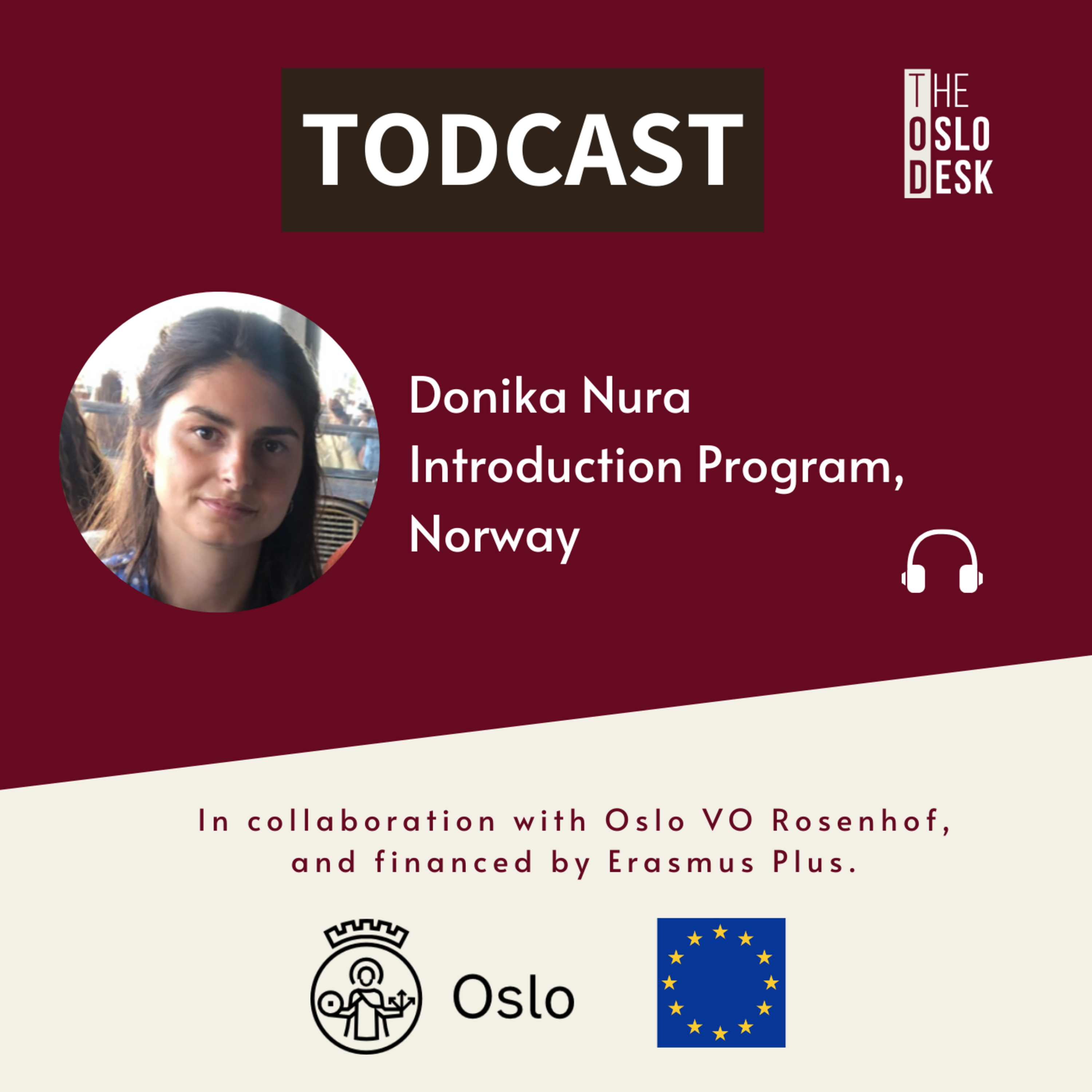
S2E6: Donika Nura on Introduction Program in District Stovner, Norway.
from TODcast - The Oslo Desk Podcast · host The Oslo Desk
The Introduction Program in Norway is focused on getting the participants qualified for work by usually designating them three days a week to Norwegian classes and two days a week to obtain work experience. But, only if their Norwegian language skills are good enough, will they get a Praksisplass - the Norwegian term for gaining training and work experience, which is for two days a week on a 3-month contract. This process is beneficial since the refugees and immigrants need work experience. Some do get a job after practising while others need to take more time to gain work eligibility. “Integration is a shared sense of responsibility,” said Donika Nura the Project Leader of the Introduction Program at District Stovner. The main purpose of this program is to integrate immigrants into work, so that they can become financially independent, especially for refugees who are granted a residence permit. Donika elaborates further on integration, “it’s not enough to just have an introduction program unless society takes a common responsibility for assimilation.” One of the major challenges that Donika faced is finding employers, who are willing to give a chance to immigrants with work experience in another country or ones who have none. It is her job to make sure that the employers do not take advantage of free labour. “I stay in touch with the employer and ask for a plan on what they are meant to go through. When I hear justifications like the participant is good, but they need more time; and they don’t have a proper reason on why the time is needed; then I will tell the employer that they either hire the person or the candidate is told not to go there anymore.” Even though the current climate of the far-right movement and the anti-immigration sentiment looms Europe, Donika sees the reduction of refugees in the District Stovner. However, there may be a silver lining to this which is work can be effective for smaller classes so that there is more contact time for the participants to help them get a job. About European Initiatives For An Inclusive Society: The Oslo Desk was invited to contribute to a third study visit of the Family+ project in Oslo under a three-day conference between 11th and 13th March. The project aims to overcome the social exclusion of families through family education and empowerment activities, adapted to the needs of the disadvantaged and migrant families. Therefore the conference is part of exchanging knowledge and practices between Germany, Sweden and Norway. However, the conference was cancelled due to the coronavirus outbreak and lockdown measures. In collaboration with Oslo VO Rosenhof, an adult learning centre, and funded by Erasmus plus programme of the European Union, are we able to produce a podcast season and series of articles. Text and Podcast cover by Ka Man Mak and Kriti Thepade. Podcast production by Ka Man Mak and Alex Whateley. Articles by Maria Cecelia Ingles Read articles: www.oslodesk.com
Embed this episode
NOW PLAYING
S2E6: Donika Nura on Introduction Program in District Stovner, Norway.
No transcript for this episode yet
Similar Episodes
No similar episodes found.
Similar Podcasts
No similar podcasts found.