
EPISODE · Sep 11, 2026 · 32 MIN
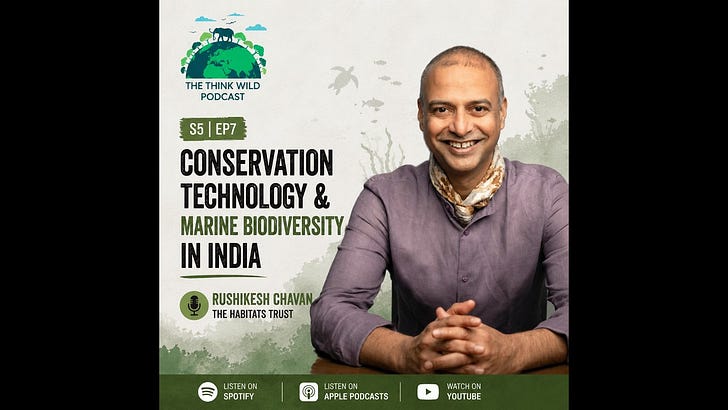
S3|EP7- Marine Biodiversity, Conservation and Philantrophy in India | Rushikesh Chavan, The Habitats Trust
from The Think Wildlife Podcast · host The Think Wildlife Podcast
In this episode of the Think Wildlife Podcast, I am joined by Rushikesh Chavan, Director of The Habitats Trust, one of India’s leading conservation philanthropy organizations. Together, we explore how philanthropy, conservation technology, and systems thinking are transforming biodiversity conservation across India, with a particular focus on marine ecosystems, conservation innovation, and strategic conservation funding.India’s marine ecosystems support extraordinary biodiversity and millions of livelihoods, yet they continue to receive comparatively less conservation attention than terrestrial landscapes. In this conversation, Rushikesh discusses why strengthening Indian marine biodiversity conservation is essential, the ecological significance of coral reefs, and how marine conservation requires an integrated understanding of interconnected ecological, social, and economic systems.The discussion examines The Habitats Trust’s work on coral reef conservation in Lakshadweep, the ecological importance of coral reef ecosystems, and the Sardine Initiative, which seeks to better understand one of India’s most ecologically and economically significant fish species. We also explore the complex relationship between fisheries, livelihoods, ecosystem health, and sustainable resource management within India’s marine environment.A major focus of the episode is the rapidly evolving field of conservation technology. Rushikesh explains how technologies such as remotely operated underwater vehicles (ROVs), artificial intelligence, computer vision, GIS, bioacoustics, and autonomous marine systems are expanding our ability to explore, monitor, and conserve marine ecosystems. Rather than viewing technology as an end in itself, the discussion highlights its role as a practical tool for addressing complex conservation challenges and improving biodiversity research. The conversation also explores the importance of making these technologies and the resulting datasets accessible to researchers and conservation organisations through open collaboration and capacity building.The episode also provides an in-depth overview of The Habitats Trust Grant Program, discussing the philosophy behind conservation philanthropy, funding priorities for lesser-known species and critical habitats, and the challenges associated with financing effective conservation action. Rushikesh reflects on emerging trends in conservation funding, identifies taxonomic groups and ecosystems that remain underrepresented, and discusses how India’s conservation funding landscape can continue to evolve.Finally, Rushikesh shares thoughtful advice for early-career conservationists, emphasizing the importance of systems thinking, interdisciplinary collaboration, technological literacy, and understanding the diverse roles played by governments, NGOs, communities, researchers, corporations, and funding agencies in achieving long-term conservation outcomes. He concludes by reflecting on the reasons for optimism within India’s conservation sector and the opportunities that lie ahead for biodiversity conservation.Chapters00:00 Introduction00:59 About the Habitats Trust02:07 Marine Conservation Challenges05:13 Coral Reef Conservation in Lakshadweep07:18 The Sardine Initiative12:50 Conservation Technology19:04 Democratizing Conservation Tech23:24 Habitat Trust Grant Program27:50 Advice for Young Conservationists32:08 Closing ThoughtsIf you found this discussion informative, please consider liking, subscribing, and sharing the podcast. Your support helps us continue bringing conversations with leading researchers, conservation practitioners, and policy experts working to advance biodiversity conservation across India and beyond.#conservationtechnology #conservationtech #marinebiodiversity #IndianMarineBiodiversity #IndianMarineBiodiversityConservation #IndianMarineEcology #MarineBiodiversityConservation #ConservationGrants #ConservationFunding #Conservation #IndianWildlifeConservation #IndianBiodiversityConservation #Biodiversity #Wildlife #TheHabitatsTrust #Philanthropy #NatureTechnology #NatureTech #NatureConservation Get full access to The Think Wildlife Podcast at anishbanerjee.substack.com/subscribe
Embed this episode
Ready to play
S3|EP7- Marine Biodiversity, Conservation and Philantrophy in India | Rushikesh Chavan, The Habitats Trust
No transcript for this episode yet
Similar Episodes
No similar episodes found.
Similar Podcasts
No similar podcasts found.