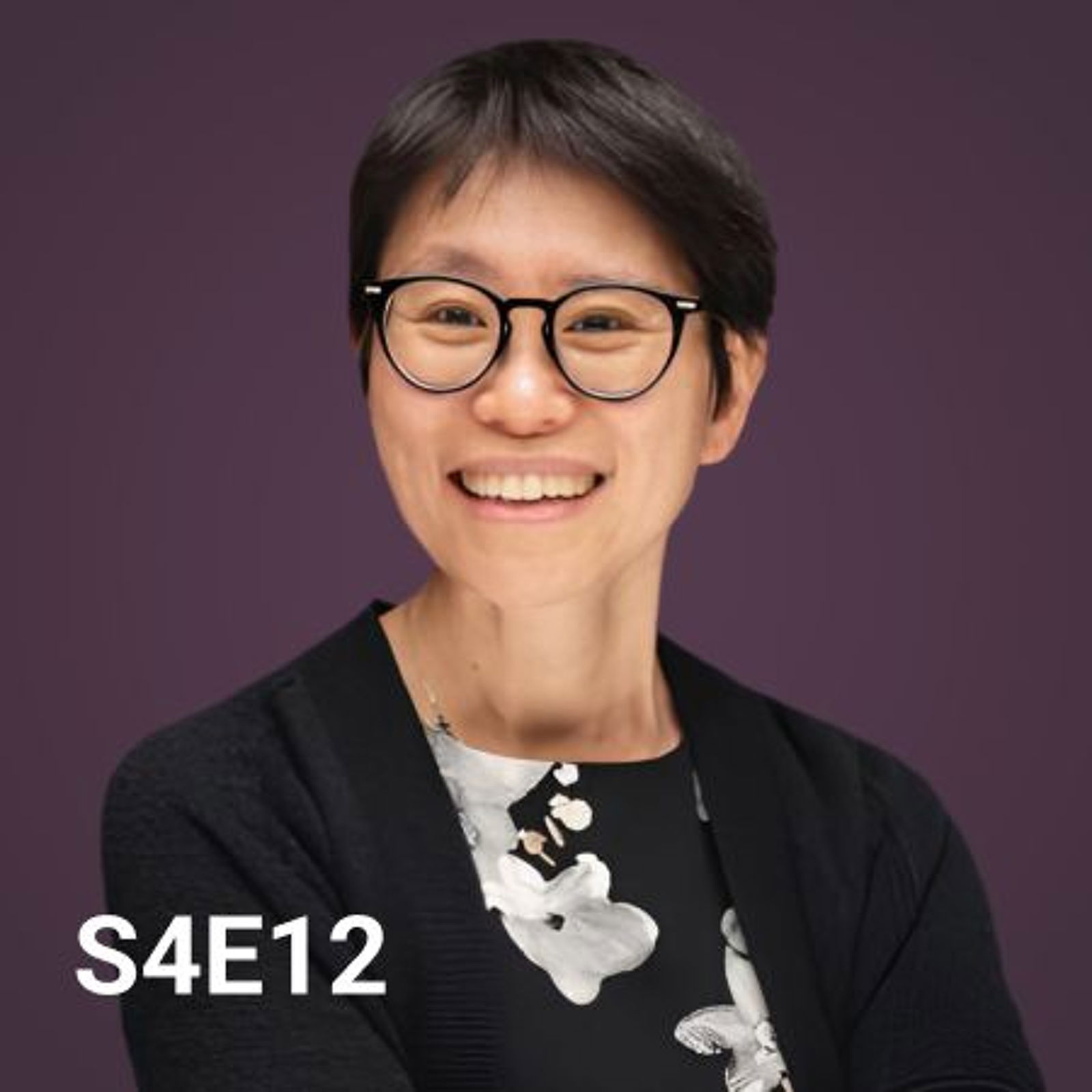
Welcome to Invisible Machines, a podcast where we explore the expanding world of AI agents and conversational technologies. I'm Josh Dyson, co-author of Age of Invisible Machines, a bestselling book all about the agentic approach to automation and the pursuit of organizational AGI. I'm joined each week by Rob Wilson, CEO and co-founder of OneReach.ai. Rob and I wrote Age of Invisible Machines over the course of many, many conversations that were a lot like the ones we have each week on this podcast. Rob has spent decades researching and deploying conversational technologies, and Invisible Machines is where we share big ideas with fellow AI insiders. We're continuing these conversations in partnership with UX Magazine because attention to experience design is critical to the proper deployment of AI agents or invisible machines. This week, we're talking with Jun Kyer, the professor of Korean linguistics at Oxford University. Her new book, The Future of Syntax, Asian Perspectives in an AI Age,
explores the complexity within Chinese, Japanese, and Korean languages, arriving at insights that veer away from traditional approaches to formal syntax. The book also visits or revisits Mark Prensky's digital natives concept, laying groundwork for a new generation of AI natives who will have never lived in a world without intelligent conversational technology. We discuss why it's easier to detect generated content in Asian languages, as well as the universal challenges with designing a positive future for AI natives as technology continues to evolve rapidly. Jun has written extensively about the ways that gestures and nonverbal behavior impact linguistics. and is currently researching how Hallyu, the Korean wave of music, film, and television, has become a cultural and linguistic phenomenon globally. It was great to get Jun's perspective on the unpredictable tides of conversational technologies, and we are excited to share this conversation with you now.
Invisible Machines is produced for UX Magazine in partnership with OneReach.ai. Named a leader by every major analyst group, OneReach.ai's generative Studio X platform was built specifically to facilitate the no-code orchestration of AI agents. GSX is trusted by global giants like PepsiCo, PwC, Deloitte, and DHL, but anyone can experience the level of agent orchestration we talk about on this podcast through interactive demos at OneReach.ai. Now, on with the show. That kind of starts for me. It starts at the beginning, which is...
I think at the higher level when we interact with machines, I'm not sure I'm a big fan of like AI for just smarter machines, right? Because I don't think AI is like this as defined a moment as we all think it is. I think it's just machines have been getting smarter and smarter and smarter and we just took a leap forward. But we had GPSs. Like we have examples of some machines that were already kind of ahead and then we had some far behind. And so I think when you really take a close look, you realize it's just machines getting smarter.
And what's interesting to me is that it seems like when interacting with a machine, people's emotions tend to be more muted. We could just maybe take it to memories. Like one thing about memory, which is a big part of education, a big part of learning, is emotions help us remember. So it makes me wonder if... If there's like a learning from AI will be less emotional, but also less memorable. You've talked a lot about English as a second language and how it reduces anxiety. It's permission to share your ideas without fear of shame or embarrassment, right? It's having a voice where you otherwise may keep quiet. And I don't think that that is limited to people.
that are just English as a second language. I think it's anyone who can't write like an author, anyone who can't, you know, can't just basically do what Josh does, just freeform a great, well-formed, grammatically correct, well-spelled sentence in, you know, off the top of their head where it's cognitive load to just communicate an idea and fear of... you know, of being called out. So now you have this like world where people are less afraid to share ideas. It doesn't mean that it's all about second language learners, but you know, it happens even if we are speaking in our own language, it's always tricky, complex. And for these people and for the situations, actually AI could take away the burden and then make it, you know, and when it's to do with a lot of practice, gives them free platform for them to use and to flourish. But I think it's also we have to, I'm sure that we'll talk about this later, but I think that actually you have to be quite careful.
what to give and who to give. For example, like, you know, just thinking about some scientists who have full of ideas and got, you know, experiments all done, but not really sure he's a writer, you know, and that's quite useful to have sort of AI help to bring the idea and all he has got into the production relatively less, you know, not using too much time. I mean, I think it is kind of a waste of time if you're really into science, you know, you are a scientist, but spending so much time in, you know, revising, making the paper into the format that is required. Right. But at the same time, I think, you know, like, so I've been to South Korea, I was in Korea during the summer and they're using a world-first AI digital textbook age, starting from 10 years old. So they are going to know how they teach. Just because AI, compared to digital textbook, the way AI works is kind of, you can telemate, you know, like all these activities, what they like. Actually, you can make it based on their interests and you can, you know, you can also see how that person works. So you can telemate for each person. So this is really fantastic. But then I was really, you know, so that helps the teachers.
uh to not to be overnighted you know i mean what about the classroom with all everyone with different needs but one teacher and but you know could help somehow develop them to you know um ideas and contents as a bit that actually suits them and they can you know flourish and the teachers can encourage and monitor and there are different roles i think it's so clear that teachers uh in our time actually have to um make sure that they are taking new roles they can't just uh say we are be going to be the same it's just resistant to anything like digital ai or For sure. After COVID, because they have to, I think really I interviewed so many teachers and the reason why they don't like it because, you know, they're given a amount of time that they have to work and normally they're not paid more by doing this. Right. And learning new things actually and delivering it means they have to spend more time. They're already very overloaded and they have to do, if you have to do something extra and that's not really paid. But kind of going back to this question about your children, I'm a slightly worried because actually, you know, you know, chattypity and so on, all this sort of natural, it's kind of becoming easier and easier to use.
And the kids love it. This is a great point. You know, they can think more and write more, but nobody knows what it would be like, you know, long-term impact for this use, for them to learn interacting with non-humans. I mean, no emotion is great sometimes, but if you kind of learn, maybe your default communication is with the AI. I mean, let's say you spend more time in writing, you know, talking with the AI than you once. I think, you know, it brings a lot of full problems and we don't know what that would bring, you know, what kind of impact it would bring to them. Yeah.
cognitive social development and so on, and, you know, neural development, whether, you know, their prefrontal cortex, whether they not be able to even think something complex, they have to think about, you know, some word and then they don't know how to even make things as developed as complex thought. We kind of, you know, wonder maybe they can, but we, we all kind of brought, we, we grow up with human to human interaction and we learn language. We, you know, AI is new. So we have a solid foundation of human to human communication. We, you know, and, you know, full of empathy, full of emotions.
I mean, you know, this new generation, I find they are, you know, very much like sort of born with this AI and, you know, new digital devices. I don't know this gesture. Every kid knows what does it mean universally. Yeah. Like reading, you know, we read books like this, but nowadays this is their default, scheme reading. Yeah. Classroom, yeah. It's such a fascinating place to think about AI, like the technologies involved with AI because...
you know, at least in the US, most classrooms are all kind of set up for a specific style of learner. There's kind of a lot of memorization and testing and certain kids really thrive in that environment, but then a lot of kids really don't. And it seems like a lot of the teacher's time is taken up, making sure that the kids who don't thrive in that environment are catching up. And, you know, it's easy to see how, you know, generative tools could be detrimental to a classroom environment if kids are just using those tools to write all their papers. But if it becomes more of like a learning ally and, you know, the teacher's there to kind of, you know, use AI to help create focused lesson plans for each student's learning style, then that becomes something different. And I think...
You know, the digital native concept is interesting because I feel like we're still trying to figure out how to integrate the hallmark tools of the digital native into a classroom setting. And so now we're faced with this concept of AI natives that you've come up with that, you know, there's a lot more gray area. There's a lot more that we don't know about how it might evolve. And it's all kind of changing quickly in the moment as these, I guess, a lot of the kids that are using these tools are still technically AI immigrants, but they're sort of the ones figuring out how this is going to take shape. I think one of the hardest things to think about is that...
AI machines in general, smarter machines in general, and the fact that our dependence on them is just increasing. When you think about what education is and you think about our responsibility to young people, it's to prepare them for the future. It's not to prepare them for the present. And we think a lot and talk a lot about preparing them for the present. I think we often imagine that we're going to freeze time. And we imagine that they will live in a time that's like this. And then we ask ourselves if they're being properly prepared for now. But they're not going to live now. They're going to live in the future. And that future is going to be so radically different than now that you almost have to... It feels like you almost have to carve out what the future looks like first. And maybe it's like...
focusing on what won't change, right, because it's easier, and saying, okay, what are the things that won't change in the future? And then talk about whether the implications to this technology will affect those things that won't change, right, and how it will affect the things that won't change, like our need to feel emotion, right? Am I worried that kids are going to get addicted and stop wanting to feel emotion? No, I'm not worried that kids are not going to want to feel emotion. They're born with a desire to feel emotion, some more than others, so I'm not worried that they won't want emotion. But am I worried that they'll get it?
from other people or will machines give it to them maybe but maybe not maybe dumb machines give our kids what's unhealthy and that's what we're interacting with today dumb machines but maybe smart machines understand the implications of this behavior and and therefore you know, they navigate us like a GPS would around these things so that we don't, so these implications are accounted for. So there's so much of the today's sort of situation with machines that are a result, in my opinion, of AI artificial incompetence versus like artificial intelligence. And then we go, well, if machines are smarter.
then aren't they smart enough to also know when they're doing damage? Like that's the one most interesting thing about this technology is its ability to inspect itself. That is because we go to this idea of objectives, right? We don't write instructions. We go to objectives and we give them objectives. We can change the objective to be not to do harm. This is something that we can't do today with technology when we're doing if-then statements, right? Because this is too complicated. But with machines, we can say, you know, provide content, but don't provide too much and don't do this and don't do that and be aware.
of negative consequences. So as I look forward to smarter machines, I find it hard to believe that they'll still operate in this obtuse way, like an algorithm on Facebook that just all it wants is likes. It's the most incompetent algorithm you can come up with, in my opinion, as it pertains to delivering ideas and content to people. And so I can't help but imagine that machines will disappear in the future, that this current digital age, this group of digital natives is like, almost like a transitionary group. Like the group that went, that were right before machines went from incompetent to competent and suffered the most consequences of machines being so pervasive in our lives, but yet not smart enough to be responsible. So it's sort of like, now it's like the age of smoking when they didn't know it was bad for you and like babies are in cigar rooms and you know, like that's what we'll look back at our kids and just being like, oh my God, like we put these dumb machines in front of them, right? Like how irresponsible are we?
But then in the future, these smarter machines will remove themselves from the situation if they're not smart like this. And I think, okay, well, companies like they can today manipulate people through creating smarter machines. Will smarter machines manipulate people? But then I look at how this is getting adopted today and I realized, no, it's the students adopting faster than the teachers. It's the employees and customers adopting faster than the companies. That's not the other way around. So I really believe that AI will be adopted. We will adopt it to protect ourselves from...
abuse and that it will be intelligent enough to do so on our behalf. And when I look at Facebook, I think I saw Bill Gates' daughter say, I wish I could adjust the algorithm. I wish I could modify the algorithm on how Clinton's decided to give to me so that I could make sure that it's more, let's just call it healthy. That's not the words, but to get content that's more desirable and less negative because she feels like she has no choice. The content is delivered to her and she has no choice.
But with smarter machines and companies like Apple that will put this on your phone, it seems like now we'll have this sort of nanny AI component that will protect us from this. So the question then becomes, will company AIs, it's almost like hack. Will they try to hack our AIs to try to get through? And it feels like, no, we'll make that illegal. That won't be legal. You can have an AI automatically call a company and try to get you a deal or switch your credit card or make a complaint or get you out of a parking ticket.
I believe that companies will be overwhelmed with company AIs. I think teachers will be overwhelmed with student AIs, like complaining about grades and, you know, questioning, you know, things. And it'll be like, oh my God, and laws will still protect them, but who's going to protect the company from us? Anyway, that was a long, that was a lot of ideas packed in there. But I just wonder if we're just too static in today and we go, well, let's like architect tomorrow first before we decide whether it's going to be positive or not.
I think this is very, what you said is really interesting. And in a way, you know, we all interested in smart machine, you know, like, you know, if the machine is smart enough, they will be able to, we will have a better future with smart AI. But I think sort of, you know, this smartness, I don't know how we should define this smartness, but also because in a way, AI companies always, you know. Perhaps it's, you know, not so much like top down, but, you know, they kind of surprise us all the time with new products. And we kind of all, we aren't ready. We're not ready. And we have to receive it. I think this sort of structure is a kind of problem, but also we can't rectify. We are kind of living in a way that we kind of have to live with as a consumer. And, you know, this kind of smart AI made, produced by this big company, perhaps, you know, for them, of course, they're trying to have more ethical perspective and so on, but no way the profit is there, you know, the good, the goal. And I think it's sort of, we are...
It's a bit sad that we are in this group that somehow we have to, you know, we are using it. We can't just not use it. We are like the whole society is entering into. AI, but then the, who is, you know, has the key, the power to change it is not in anywhere, you know, our teachers or like our governments or, you know, the NGO, but it's our companies, it's just a power. And I think what we really hoping is perhaps rather than a smart machine, you know, the smart machine, but what we really want is for our future, not only for ourselves, for our children, as more reliable, reliable AI, trustworthy AI, because, you know, the smart aid is getting smarter and smarter. And also it's becoming like, as you know, like deep bank is big thing. And it's just, you know.
You know, we kind of were horrified by the fact, but actually it's happening all around the world. And it's way, way, very hard to also, um... to kind of, you know, to deal with it, to control it. And beginning of this sort of, you know, large language world becoming so accessible, I'm thinking whether at least we should have some kind of color band, like, you know, it's not about technology, but probably see, you know, young children, if they know, if they can think about sort of faking something as they kind of play, and if they do it and they, you know, play, but it could harm and it could, you know, destroy society. But in a way, it's all open to everyone and they can use it. And I think this is a problem and there's no like central body.
and the world and i think it's true that you know some countries have the view that of course you know we don't we want to have some more you know what scrutinize the system but what about the other country it's all like competing everywhere so we can't just not do it we have to do it and find out figure it out and it's almost like you know so so cruel that we have to deal with this without having reliable, you know, trustworthy AI. I mean, AI itself actually, you know, as this, you know, proposed, it could make a lot much easier. We can spend more time for something more valuable and creative and so with the children and so on. But if it kind of become almost like makes us addicts, you know, and kids can be over-dependent to this. And it's very, very possible for people to become over-dependent on AI. And in a way, we don't, but then we don't have control. We are very far from control. We don't even know how to, you know, raise some issues with these companies and so on and so forth. And it's really dangerous.
situation. And I think it's sort of, we need something like, you know, kind of spend more energy in terms of like, perhaps safeguarding is too weak, but in a way to regulating or constructively build something more reliable, a format that for any people can use and to think about more like, you know, ethical issues around AI. So I think it's sort of teaching kids or if you buy yourself with your skills, it's not about preparing for the future. I mean, you know, we don't need so much skills like I spent too. You don't need to teach it so safe.
If they cannot use it and explore, if you have interest, it's everywhere. But in a way, I mean, people can do it, but they don't know how to do it. What I mean by that is they don't know whether this is the right thing to do or this is not right. Is it okay to use this? They don't know how to do it. And they feel sometimes guilty. Is it good to use it or not? Oppressed or very gray area. So I think it's important that we kind of have a very ethical, you know, understanding. I was thinking some time, like, you know, for example, I, you know, songs, one of my colleagues was in South Korea and K-pop sort of, he said, okay.
He was in this, you know, competition, it's a song competition, and he himself works with sort of virtual idols. But he gave the first prize to this person, this teacher, but he didn't realize that this song was also made by AI. And of course, the people told me that, okay, I worked together with AI, but, you know, so the first prize is given to him. But he said, oh, something I could at work many hours is done by AI. And because AI also analyzes the patterns and knows what our taste is. So, you know, it's something like this situation. I'm kind of wondering whether we can give, for example, the authorship.
It's between the person. I think about that a lot, like music. I'm a musician. But again, you got to know what music is before we can decide if AI or smarter machines making music is bad or good. And to me, music has two key components. Yes, there's the neuroscience of it, like the prediction and the beat and that whole concept of active inference where we're, you know.
The more we listen, the more we can predict and the more we get this reward for predicting correctly and more free energy, right? There's that sort of neural component. But I think there's another component that's more about not feeling alone. You know, when we listen to music, we listen and we connect and it makes us realize that our feelings and the things we experience, that we're not the only ones, right? AI can't do, like, it's just by the sheer fact that you know it's not a human. Like, this song is a vehicle and it's a language between two humans. So to suggest that...
I'm going to call my mom, but an AI can replace my mom on the other end of the line. It's a crazy idea. No, like, I'm not going to have a fake conversation with my mom in the future unless she's maybe not around anymore. In which case, what's wrong with that, right? Because I can't have one with her, so it's just entertainment. But this idea that I hear a song and someone's lonely or upset about a breakup, and that connects with, like, I'm a teenager and that connects with me. And I think, oh, well, if this person that everybody admires also feels like I feel, I'm not alone, right?
If you know, and that's the story behind it, right? It's a story. They've created, first of all, a fake person. Like, let's be real. These artists don't have real personas online. These are fake. They have fake names. You know, they're fake people. It's not who they really are in life. And it makes us feel good because we're connecting with another human being.
So I can imagine that AI may help an artist, like you said, just like language, right? Help people express themselves in a new way that they couldn't because they're not musicians. And that's fine. But I don't see a danger in them replacing this core component of music, which is to make me feel not alone in the world, to connect, right? Absolutely, I agree. And I think it's so, you know, I totally agree. And in a way, you know, like, and I could actually be up. And for some people, in some situation, it could sort of give them some, you know, comfort. But I don't think, you know, it's an issue that is...
Uh, we should basically, I think, protect this human-to-human communication packed with empathy and feelings. But I also knew, I totally agree with you, but, and I, and the same page, but we'll show, let me give you one example. Like I was just. Again, like I was in Korea this summer and South Korea is very sort of, you know, kind of fast moving in terms of AI. They introduced the AI pet, you know, AI pet for the elderly, for living on their own. I was, and do, you know, obviously not research. I want to sort of interview them later and do some research, but at least I heard from this, you know, TV.
use that, you know, the elderly said they were saying, you know, they're living on their own. They don't have any families and they have this AI that actually gives them, I don't know, this pad, you know, of course it's not like human voice, but ask them, this is time to have, you know, a food and it gives some kind of, you know, comfort. And I was thinking whether, you know, is it better than none? Right, right, right. It's a complex issue because, you know, our general, you know, we are entering into very sort of...
an age where like, you know, population, the age of the population is getting older and older, ideally, if you're living alone, perhaps this is a good idea. It does not actually, you know, replace humans hugely, but for, could it be a good replacement in situations like this? Maybe for these people who have nobody, it could be a good, you know, and then... It's like a painkiller, not a cure, you know? Yeah. It kind of gives them something. For example, like, you know, it monitors the day of this person and tells the children living far away. It gives them something, but it can't replace. And then another example that I was sort of thinking about, I mean, maybe extreme example, but, you know, as you know, like, you know, our first, if, you know, every linguist is obsessed with language learning. If you are kind of exposed to multiple languages and on your words and for an age, then you can, it's more likely that you'll be able to, you know,
speak those languages and it's also that you know like those the people could use ai in a way into this very you know let's say zealous parents how to teach the language, because learning language later period of life is difficult. But if you're of course learning in the early period, that's really easy. So you could just give AI sort of robots for them to learn different languages. Let's dig into that. Like, let's say that an elderly person is lonely and they have an AI. I think we'll all have AIs. So I don't think you need to be elderly or lonely to have one, but let's just say they also have one.
And it's smarter than the ones that you saw. The ones you saw, let's call them incompetent AIs, right? Yeah, let's say that you can't study it because it's not the AI of the future. It's the AI of now, which is not fully utilizing. It's not even that the AI is not ready. It's that we're not implementing it to its full capability yet. But what if it, instead of replacing the interaction with other humans or family, what if it facilitated it? What if it reached out?
to their daughter or son to keep them abreast of what's going on. Like, hey, you know, things are getting better here. Like, things that that elderly person, like, oh, isn't bothering them with. And what if it facilitates connection? Like, hey, this Sunday would be a great time to visit. Like, what if it was smarter than what you saw, right? Usually a group that stays connected has, like, a connector, right? Somebody that gets everybody together.
and what if ai becomes this connector what if that's the role it takes like the connector role and and says no no i'm organizing a family dinner we're all getting together this this year we're not i know we're all busy but i'm you know organizing it and making sure everyone brings their stuff if we like if we deploy ai an intelligent way we're not going to deploy it to replace we're going to deploy it to facilitate so maybe it fixes this johnny these dumb machines that are that are not facilitating human to human. So this kind of brings us to something like we talked a lot about before this, which is seeing the world through like a pinhole, right? I'm in my phone. I'm like my reality and my memories. Like, so when you think of like memories are built from high definition, all of the sights and senses of being physically there, but then we do compress them into like, you know, very low fidelity mental models that we place in our memory so that when we remember, we don't remember all of the data that were in the physical world. We remember key highlights that we extracted and then build mental models of that memory, right?
And so now everyone's looking through this pinhole at the world, right? It's almost like the compression is happening for them. Someone else is compressing the memory, leaving out the details, right? Which you might pick different details to care about than I might pick, right? So your AI might know the kind of details you care about and pick those out for you, creating better memories, right? Ultimately, those memories become our predictions and all of that stuff. So I keep thinking that maybe AI is going to bring us back to the physical world.
bringing, like fix the digital natives of today and bring them back to the physical world by facilitating physical interaction, but also improve our view of the world and give us a more realistic, not an edited version of it online. I don't know. I guess maybe this is all just me being like very optimistic. I think at the very least though, a conversational interface has the benefit of pulling us away from our screens more. So even there, that's kind of step one, right? Like if we can just have more meaningful conversations with like a smart speaker in our house or in our office, that can pull us away from having to...
jump between apps or even like be staring at that pinhole phone. All right. Well, thanks for hanging out with us again here on Invisible Machines. Don't forget to like and subscribe wherever you get your podcasts. Always remember that you can watch this podcast too on our Invisible Machines YouTube channel. Head over to uxmag.com. We have a podcast page there where you can explore our back catalog and you can look at episodes centered around popular topics. Many, many thanks to our incredible production team here in the U.S. and in Ukraine. Elias Parker, Michael Lipinov, Allison Harshberger, Alas Lesarenko, Vera Pakolkov, and Dorena Moskovchuk. Till next week. Owaki.