
EPISODE · Sep 3, 2026 · 31 MIN
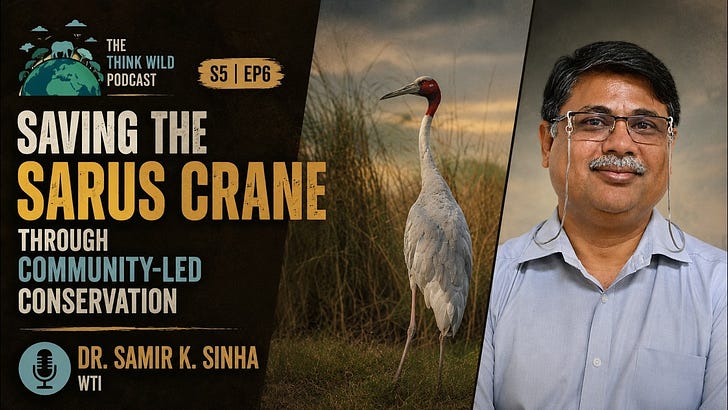
S5|EP6 - Saving the Sarus Crane through Community-led Conservation | Samir K. Sinha | Wildlife Trust of India
from The Think Wildlife Podcast · host The Think Wildlife Podcast
The Sarus Crane is the world's tallest flying bird, yet its future depends on something surprisingly ordinary—India's farms and wetlands. In this episode of the Think Wildlife Podcast, we are joined by Samir Kumar Sinha, who leads the Sarus Crane Conservation Program at the Wildlife Trust of India (WTI). Together, we explore how one of India's most iconic birds continues to survive in human-dominated landscapes through innovative community-led conservation, partnerships with farmers, and long-term habitat protection.From the remarkable lifelong social bonds of Sarus cranes to the challenges posed by agricultural intensification, wetland loss, climate change, pesticides, and power lines, this conversation provides an in-depth look into the ecology and conservation of a species that has become a symbol of coexistence between people and wildlife. We also dive into the groundbreaking Sarus Mitra volunteer network, habitat restoration, wetland conservation, and the importance of protecting India's agrobiodiversity and agricultural ecosystems for future generations.Whether you're interested in Sarus Crane conservation, wetland biodiversity, agrobiodiversity conservation, conservation biology, community engagement, or sustainable agricultural landscapes, this episode offers valuable insights into one of India's most successful conservation initiatives.Timestamps00:00 Meet the Sarus Crane00:28 Samir Sinha Joins01:28 Why Study Sarus04:19 Pairs and Social Bonds04:48 Surviving Farmlands07:37 Farming Change Impacts09:08 Climate and Other Threats11:26 WTI Conservation Strategy14:11 Habitat and Community Networks18:01 Inside Sarus Mitra22:06 Long Term Protection Plan24:59 How You Can Help27:09 Challenges and Favorite Moments30:54 Closing ThanksDuring this episode we discuss:• Why the Sarus Crane remains one of India's most remarkable conservation success stories.• The fascinating ecology and behaviour of the world's tallest flying bird.• How Sarus cranes survive within agricultural ecosystems and farming landscapes.• Why traditional rice farming supports Sarus breeding while changing cropping patterns threaten populations.• The growing impacts of wetland loss, pesticides, infrastructure, climate change, and land-use change.• How the Wildlife Trust of India's Sarus Crane Conservation Program works alongside farmers and local communities.• The role of Sarus Crane Mitra volunteers in monitoring nests, protecting chicks, recording mortality, and supporting conservation.• Why community-led conservation is essential for protecting wildlife living outside protected areas.• The importance of conserving wetland biodiversity hotspots, wetlands, and agricultural landscapes together.• Practical ways students, researchers, conservationists, and members of the public can contribute to Sarus Crane conservation.The story of the Sarus crane demonstrates that successful conservation is not only about protected areas—it is equally about empowering local communities, supporting sustainable agriculture, conserving wetlands, and creating long-term partnerships between people and nature. It offers an inspiring blueprint for conserving biodiversity across working landscapes throughout India and beyond.If you enjoyed this episode, please consider liking, subscribing, and sharing the podcast. Every share helps bring more attention to wildlife conservation, biodiversity research, wetland protection, and community-driven conservation initiatives.#sarus #SarusCrane #SarusCraneConservation #SarusCraneEcology #SarusCraneThreats #CommunityLedConservation #SarusCraneConservationProgram #SarusCraneMitra #AgriculturalEcosystems #Agrobiodiversity #AgrobiodiversityConservation #AgrobiodiversityHotspot #AgriculturalLandscape #AgriculturalEcosystemConservation #WetlandConservation #WetlandBiodiversityHotspot #WetlandBiodiversity #WildlifeTrustOfIndia #ConservationBiology #ThinkWildlifePodcast Get full access to The Think Wildlife Podcast at anishbanerjee.substack.com/subscribe
Embed this episode
Ready to play
S5|EP6 - Saving the Sarus Crane through Community-led Conservation | Samir K. Sinha | Wildlife Trust of India
No transcript for this episode yet
Similar Episodes
No similar episodes found.
Similar Podcasts
No similar podcasts found.