
EPISODE · Sep 10, 2026 · 19 MIN
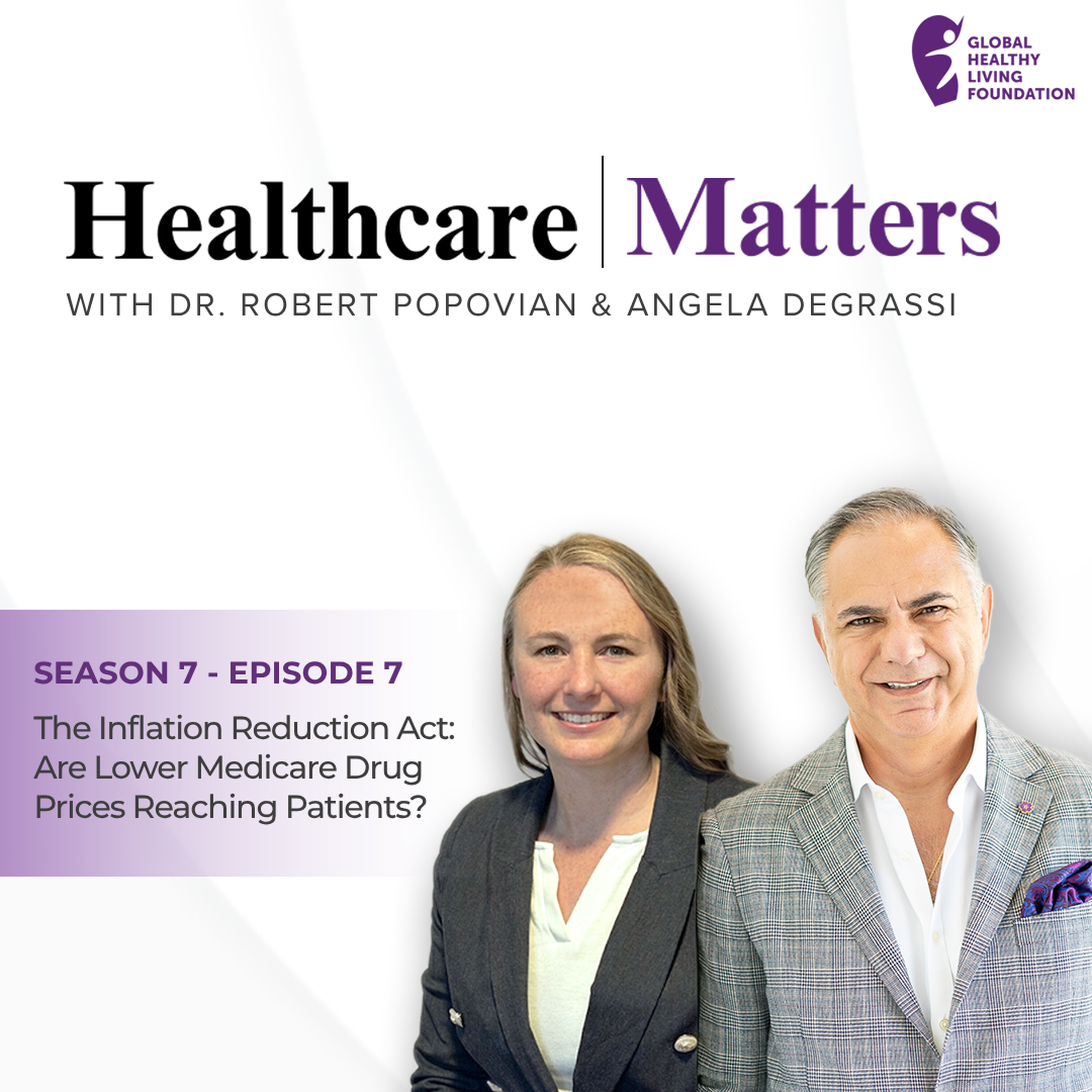
S7, Ep 7- The Inflation Reduction Act: Are Lower Medicare Drug Prices Reaching Patients?
from Healthcare Matters · host Global Healthy Living Foundation
In this episode of Healthcare Matters, Dr. Robert Popovian and co-host Angela Degrassi examine the Inflation Reduction Act’s Medicare Drug Price Negotiation Program and whether lower prices negotiated by the government are translating into meaningful savings for patients at the pharmacy counter. The conversation explains that the Inflation Reduction Act included several important changes for Medicare beneficiaries, including an annual cap on Medicare Part D out-of-pocket spending, the elimination of cost sharing for vaccines covered under Part D, and the introduction of government-negotiated maximum fair prices for selected medicines. Dr. Popovian emphasizes, however, that the maximum fair price determines what Medicare plans pay, not necessarily what patients pay. The episode also discusses research from Pioneer Institute using real-world prescription data from the four largest pharmacy benefit managers, which together account for approximately 85% of the Medicare Part D market. The research tracks what patients paid for 24 non-insulin medicines selected for the first two rounds of negotiation, as well as how frequently prescriptions were filled with no out-of-pocket cost. The findings show a complicated and uneven picture. From 2024 to 2025, patients paid more for 14 of the 24 medicines studied and less for ten, although the number of prescriptions filled at no cost increased because of the new out-of-pocket cap. During the first quarter of 2026, patients paid less for eight of the first nine negotiated medicines than in the same period in 2025, but several remained more expensive than in 2024. Robert and Angela also discuss why lower negotiated prices may not produce equivalent reductions in patient costs. Benefit design, manufacturer price reductions, generic and biosimilar competition, premiums, deductibles, formulary tiers, prior authorization, and step therapy can all affect what patients ultimately pay and whether they can access their medicines. The key message: lower government-negotiated prices should not be confused with lower patient out-of-pocket costs. Some provisions of the Inflation Reduction Act clearly help patients, but the ultimate test is whether Medicare beneficiaries pay less overall and can still obtain the medicines they need. Pioneer Institute Study: https://pioneerinstitute.org/the-inflation-reduction-act/ Comments by Pioneer Institute to CMS: https://www.regulations.gov/comment/CMS-2026-2080-0019 Contact Our Hosts Dr. Robert Popovian, Chief Science Policy Officer at GHLF: [email protected] Angela Degrassi, Senior Manager, Patient-Centered Research Operations & Engagement: [email protected] A podcast series produced by Amelia Violet Prouse. We want to hear what you think. Send your comments, or a video or audio clip of yourself, to [email protected] Listen to all episodes of Healthcare Matters on our website or on your favorite podcast channel.See omnystudio.com/listener for privacy information.
Embed this episode
Ready to play
S7, Ep 7- The Inflation Reduction Act: Are Lower Medicare Drug Prices Reaching Patients?
No transcript for this episode yet
Similar Episodes
Mar 30, 2026 ·14m
Similar Podcasts
No similar podcasts found.