
EPISODE · Mar 9, 2026 · 3 MIN
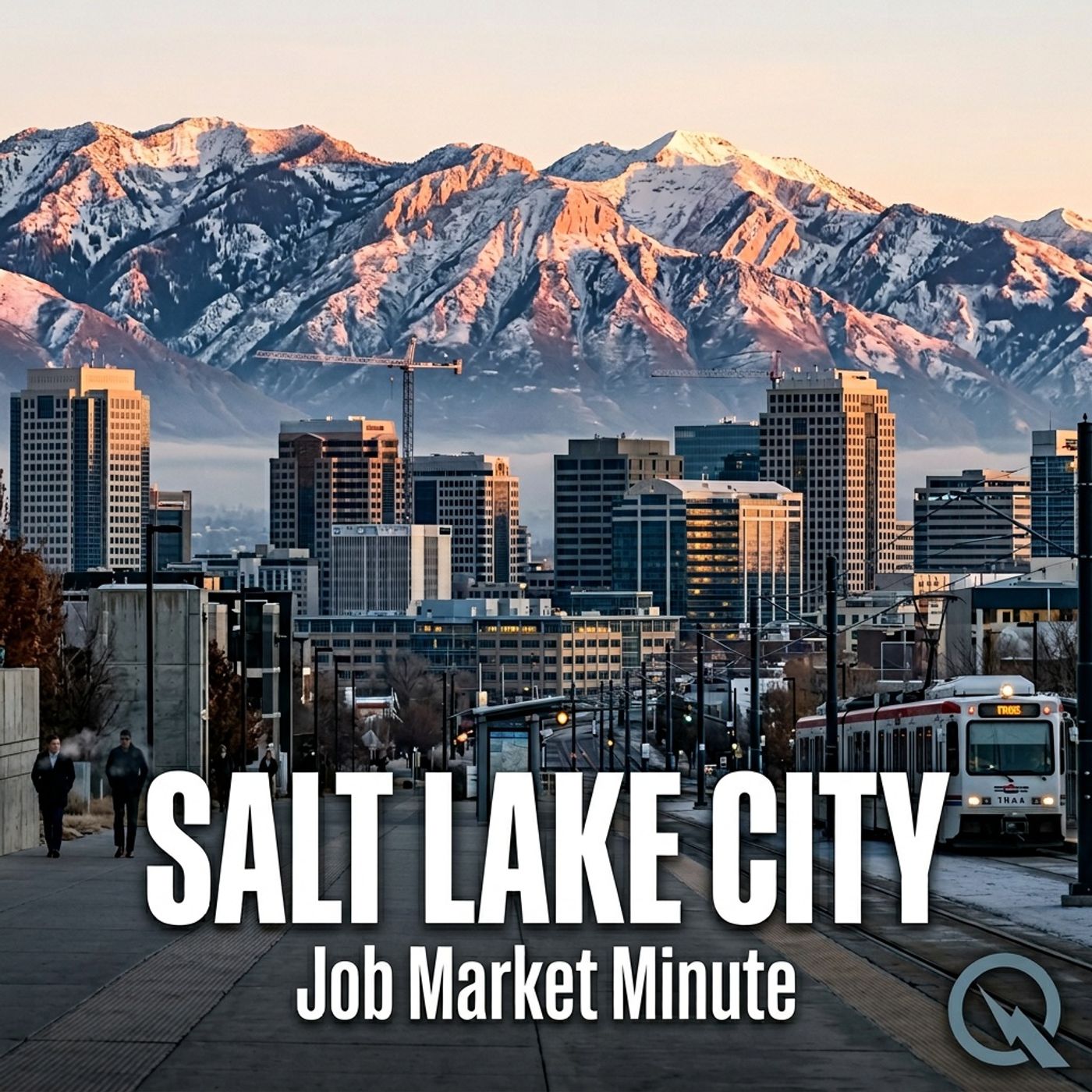
Salt Lake City's Job Market: Strong Growth Despite National Slowdown
from Salt Lake CIty Job Market Minute · host Inception Point AI
Salt Lake Citys job market remains resilient amid national slowdowns, with low unemployment and growth in key sectors despite broader U.S. job losses of 92,000 in February 2026, as reported by the Bureau of Labor Statistics via Mortgage News Daily and KUTV. The employment landscape features a diverse economy driven by tech, healthcare, finance, and tourism, employing over 800,000 workers in the metro area according to Lightcast first quarter 2025 data cited in Deseret News. Key statistics show unemployment at around 3.5 to 4 percent locally, lower than the national 4.4 percent per recent federal reports, though nursing shortages persist with Utah ranking 49th in nurses per 1,000 population per the Utah Health Workforce Information Center. Trends indicate steady expansion in healthcare and construction outside housing, offsetting national declines like 11,000 construction jobs lost per Construction Executive. Major industries include healthcare with employers like Intermountain Healthcare and University of Utah Health, tech firms such as Adobe and Qualtrics, and finance giants like Goldman Sachs. Growing sectors are nursing and advanced healthcare, fueled by new facilities and an aging population projected to need 20 percent more seniors by 2060, as noted by University of Utah Nursing Dean Marla De Jong in Deseret News. Recent developments highlight a nursing paradox: fewer vacancies than years ago but tightening pipelines from declining RN graduates, with metro RN median salary at $80,000, 7 percent below national average per Lightcast. Seasonal patterns show tourism peaks in winter skiing and summer outdoors boosting hospitality, while commuting trends favor short drives or public transit in the urban core, supported by favorable rankings in livability studies from AOL. No specific government initiatives are detailed in recent sources, though workforce education expansions address nursing needs. The market has evolved from post-pandemic recovery to cautious growth amid demographic shifts and AI impacts, per experts in National Today. Data gaps exist on precise 2026 local unemployment and commuter stats, relying on 2025 projections. Key findings: Healthcare leads opportunities with low unemployment, but rural nursing shortages loom. Current openings include registered nurse at Intermountain Healthcare ($74,000-$80,000), software engineer at Qualtrics, and construction project manager amid non-residential gains. Thank you for tuning in, listeners, and please subscribe for more updates. This has been a Quiet Please production, for more check out quietplease.ai. For more http://www.quietplease.ai Get the best deals https://amzn.to/3ODvOta This content was created in partnership and with the help of Artificial Intelligence AI.
Embed this episode
Ready to play
Salt Lake City's Job Market: Strong Growth Despite National Slowdown
No transcript for this episode yet
Similar Episodes
No similar episodes found.