
EPISODE · Sep 5, 2025 · 4 MIN
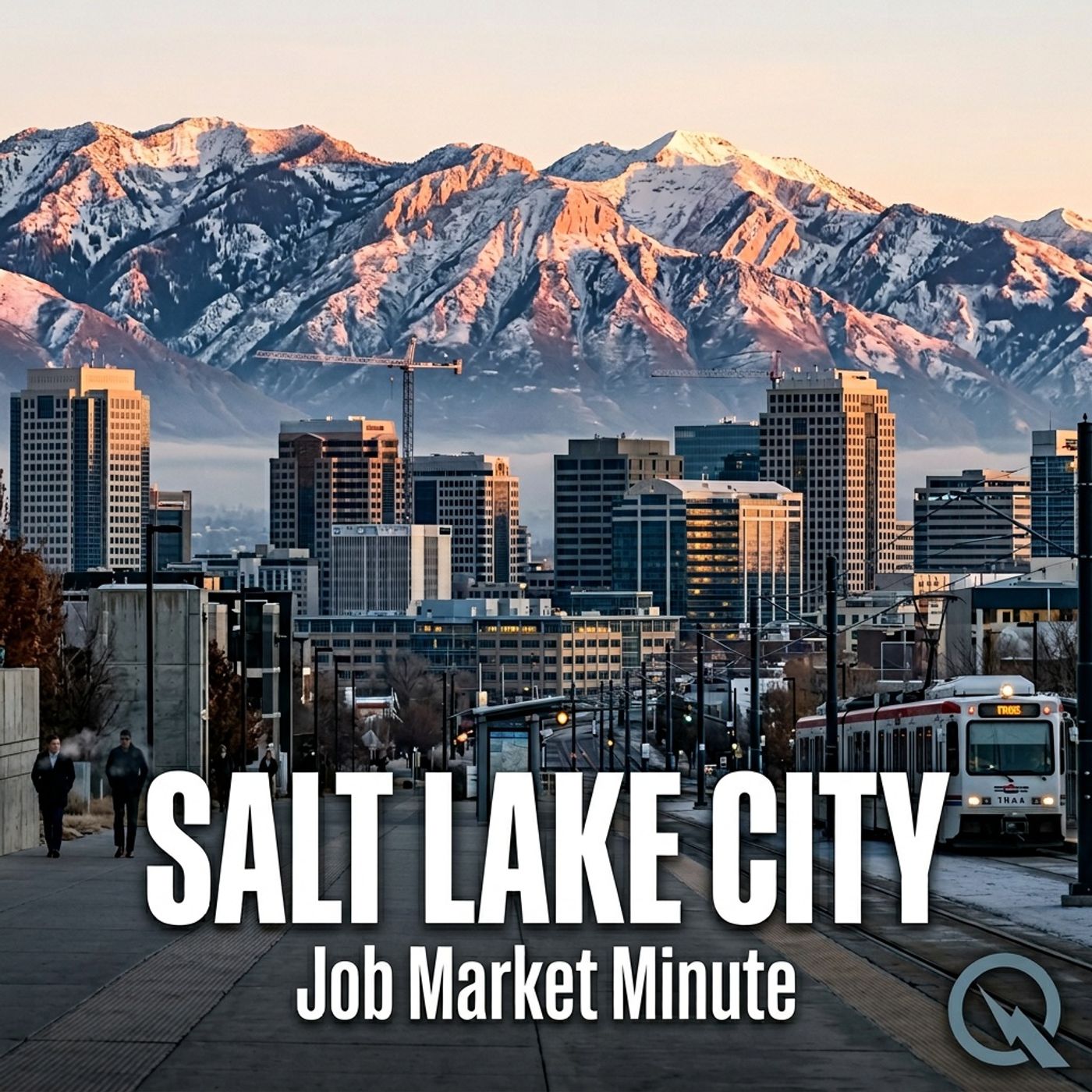
Salt Lake City's Resilient Job Market Navigates National Slowdown
from Salt Lake CIty Job Market Minute · host Inception Point AI
Salt Lake City’s job market in 2025 shows both resilience and cooling as the overall U.S. employment scene softens. According to the Bureau of Labor Statistics, while the national unemployment rate has risen to 4.3 percent, Salt Lake City itself still records one of the lowest jobless rates in the country, with state-level figures at 1.9 percent, signaling a tight local labor market and robust hiring compared to national trends. Despite this, hiring momentum has slowed: U.S. job growth has fallen dramatically from pandemic-era highs, with only 22,000 jobs added nationwide in August 2025 and job growth stalling across many sectors. Ernie Tedeschi of Yale University highlights that current job expansion mostly comes from the net birth of new firms, and private sector gains are concentrated in healthcare and social assistance—a trend echoed by Labor Department reports. Salt Lake City’s employment landscape is shaped by several enduring drivers. The area benefits from a dynamic tech sector, a growing life sciences cluster, and the consistent strength of healthcare, education, and government employment. Tech and IT firms, construction, homebuilding, and healthcare providers remain among the city’s largest employers. Utah Realty reports a boom in suburban homebuilding driven by tech growth. Major employers include Intermountain Healthcare, the University of Utah, Zions Bancorporation, and tech firms like Adobe, with government and education also critical players. New developments in housing and infrastructure, as well as a tech-driven migration, are drawing high-skill workers into the metro area, although high property costs present recruitment and retention challenges. Several industries are expanding in Salt Lake City, notably technology, construction, and healthcare, fueling in-migration and elevating the city’s profile for young professionals and families. The University of Utah’s expanding research footprint, along with a surge in women-run businesses—up 26 percent between 2022 and 2023—signal shifting dynamics and opportunities in the workforce. However, a persistent gender pay gap means women earn only 73 cents for every dollar earned by men, according to the Utah Women & Leadership Project. Commuting patterns show steady inflows from surrounding counties, with an expanding public transit network helping mitigate congestion. Government initiatives, from targeted business incentives to investments in the “missing middle” housing and infrastructure, aim to support labor force growth and affordability. Seasonal jobs in tourism, construction, and retail create cyclical hiring across the spring and summer months, while remote work flexibility is reshaping traditional commuting. Listeners should note gaps in granular, occupation-level data for 2025 but can rely on recent trends: Salt Lake City continues to evolve quickly and maintains a healthy, highly competitive labor market even as national job creation slows. In summary, the city’s job market This content was created in partnership and with the help of Artificial Intelligence AI.
Embed this episode
Ready to play
Salt Lake City's Resilient Job Market Navigates National Slowdown
No transcript for this episode yet
Similar Episodes
No similar episodes found.