
EPISODE · May 13, 2026 · 4 MIN
Samsung fast-tracks construction of P6 chip plant in Pyeongtaek
from Korea JoongAng Daily - Daily News from Korea · host LEE JAE-LIM
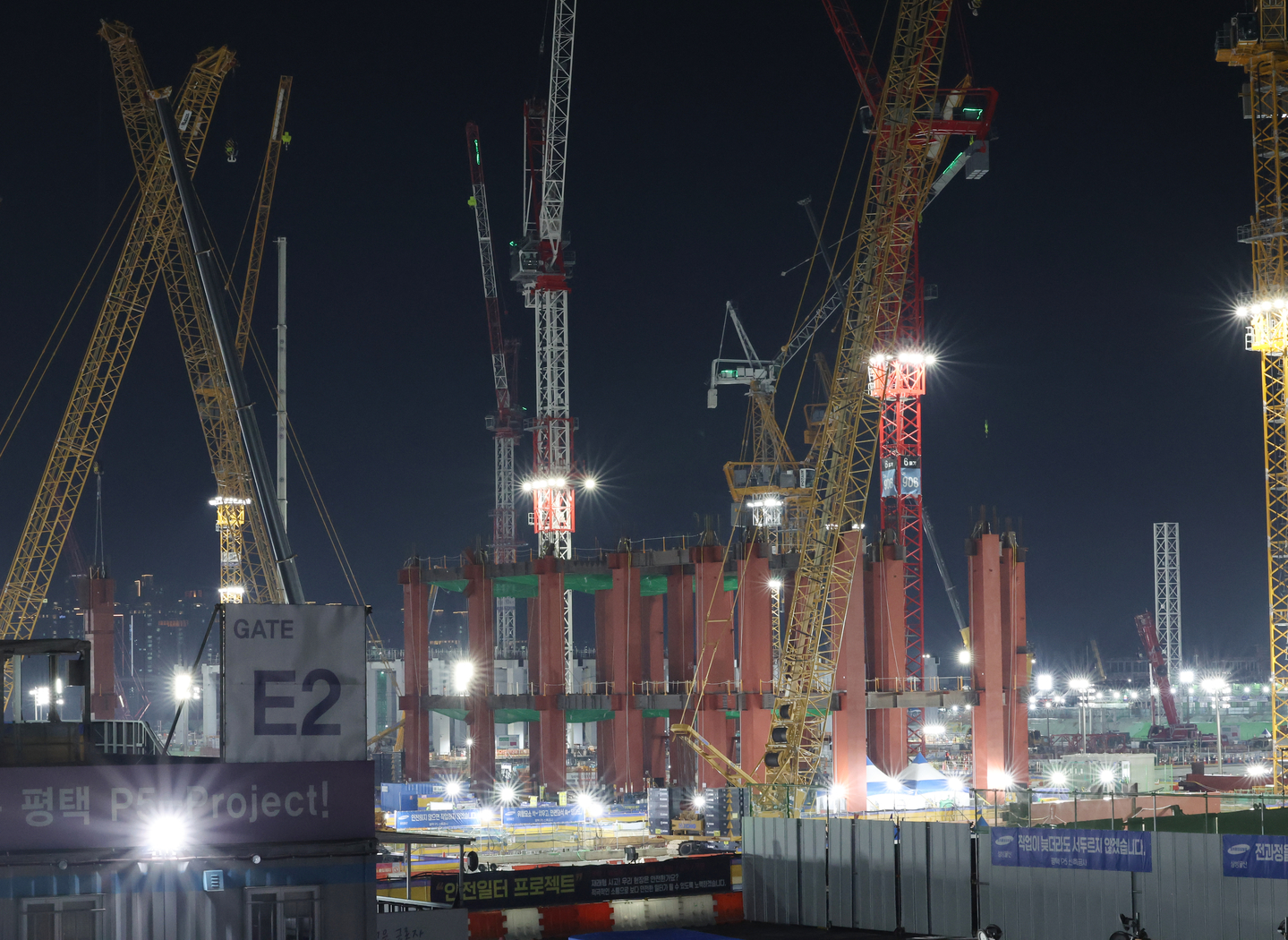
This article is by Lee Jae-lim and read by an artificial voice. [NEWS ANALYSIS] Samsung Electronics is moving up the construction schedule for the final chip manufacturing plant at its sprawling complex in Pyeongtaek as it seeks to capitalize on the unprecedented high demand for high-end semiconductors that shows no signs of letting up. Samsung C&T has increased its investment nearly fivefold from the prior contract to 2.89 trillion won ($1.94 billlion) to develop the complex's Zone 2 site and P5 fab, according to a regulatory filing on March 25. Samsung's construction arm has been the shell construction contractor for prior facilities built at the Pyeongtaek campus in Gyeonggi. Zone 2 consists of the remaining two factories at the complex. The news was followed by a report by the Korea Economic Daily earlier this month that Samsung will break ground on its sixth fab in Pyeongtaek, known as P5-2 or P6, in July, six months ahead of the original schedule in early 2027, due to a persisting memory supply crunch as Big Tech races to build AI data centers. "Their own demand analysis appears to have convinced them that a gradual capacity expansion would leave them dangerously behind," said an analyst who requested anonymity. "The thinking seems to be that the widely anticipated AI demand chasm may not materialize after all." A Samsung Electronics spokesperson declined to comment on the specific timeline but said the sixth fab "is expected to operate in tandem with P5, functioning effectively as a single integrated fab." P5 and P6 are expected to form a multifab complex focusing not only on high bandwidth memory but also dynamic random-access memory, NAND flash and foundry lines. The combined production capacity of the two fabs is expected to reach 600,000 wafers per month, nearly on par with Samsung's current entire DRAM production capacity of 650,000 wafers per month. The push comes as the semiconductor supply shortage is expected to last even longer than the previous domestic market consensus of 2027, prompting the chipmaker to accelerate the buildout of its production facilities to keep pace with booming demand. Pyeongtaek is currently Samsung's largest semiconductor production site. Fabs P1 to P3 are active, while parts of P4 and P5 are under construction — and ground is now expected to be broken for P6 as well. Construction of P4 and P5 was halted at the initial stage due to the semiconductor downturn before resuming in November of last year, with the company pledging to invest 450 trillion won through 2029, with the majority earmarked for expanding domestic chip capacity. If ground for P6 breaks in July as planned, production is expected to begin in 2029, a year earlier than originally planned. Production at P5 is also anticipated to begin in March 2028. Several brokerage reports have recently forecast that the imbalance between chip supply and demand may persist beyond 2027 as the AI market is still nascent and is poised to expand aggressively into new domains, including humanoid robotics and autonomous driving. Roh Geun-chang, head of Hyundai Motor Securities' research center, expects the shortage to last into 2028, citing chip equipment bottlenecks for TSMC, the chip "big three" of Samsung, SK hynix and Micron, as well as Chinese semiconductor firms for difficulty in expanding capacity as planned. "AI demand shows no signs of slowing down and is expected to grow in three waves: AI data centers, AI in telecom networks and physical AI," Roh wrote. "Should the crossover between these three waves proceed smoothly, even if an AI chasm does occur, its impact may be limited." Analysts also point to multiple large-scale AI projects in the United States as another driver of strong, lasting AI demand. Alongside OpenAI's Stargate, other major AI computing initiatives such as Anthropic's Fluidstack and xAI's Colossus has emerged. "The physical AI market centered on humanoid robots — which will serve as a core pillar of the AI 3.0...
Embed this episode
NOW PLAYING
Samsung fast-tracks construction of P6 chip plant in Pyeongtaek
No transcript for this episode yet
Similar Episodes
No similar episodes found.
Similar Podcasts
No similar podcasts found.