
EPISODE · Apr 25, 2026 · 7 MIN
Samsung is making record profits. But why are employees leaving in droves for a key competitor?
from Korea JoongAng Daily - Daily News from Korea · host LEE JAE-LIM, SARAH CHEA
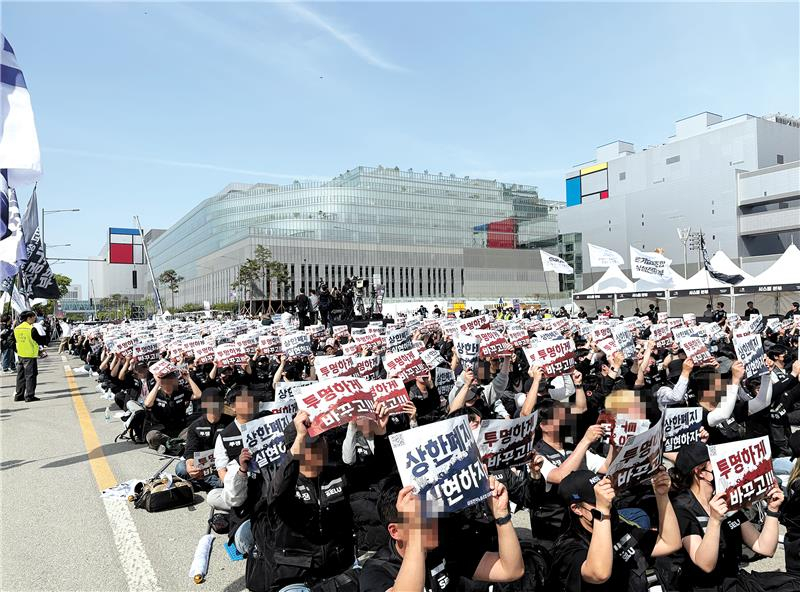
This article is by Lee Jae-lim, Sarah Chea and read by an artificial voice. [NEWS ANALYSIS] PYEONGTAEK, Gyeonggi — Samsung Electronics is on course to print its fattest quarterly profit on record in the first quarter of this year — one so outsized it would eclipse every won the company earned across all of 2025 combined. The profits may be historic, but the internal mood is souring. Hundreds of chip engineers from a division for high bandwidth memory have quit the Korean electronics giant this year alone, while tens of thousands of existing employees are threatening a strike. More than 30,000 employees — roughly one in four of Samsung's Korean work force — have spilled out onto the streets in protest on Thursday, a rare and striking display of collective discontent from a company not exactly known for public labor drama. What lit the fuse? A combustible mix of two things. One is the spectacle of Samsung minting money hand over fist during what the Korean media has branded a chip "supercycle," while workers feel their paychecks have not kept pace with the company's fortunes. The other is word from across town that SK hynix employees are expected to take home bonuses of up to 1.2 billion won ($809,124) per person this year. The National Samsung Electronics Union (NSEU) has declared an 18-day strike beginning May 21 and running through June 7, a stoppage it estimates would cost Samsung Electronics 18 trillion won in losses if no settlement is reached beforehand. Should it proceed, it would be the longest strike in the company's 57-year history. In turn, Samsung filed for an injunction against the union on April 16 to prevent the strike. The drain across town Samsung has characterized the strike as unlawful, maintaining that it has negotiated in good faith and put industry-leading terms on the table — only to be met with rejection. What it offered was not negligible. Samsung proposed allocating more than 10 percent of operating profit to a performance bonus pool, contingent on the semiconductor division posting the highest domestic revenue and profit figures, with memory division employees guaranteed payouts that would outpace those at rival firms. The union, however, did not budge. It dismissed the offer as a one-time gesture dressed up as reform. With SK hynix's generous compensation structure looming large in the background, the bar for what counts as satisfactory has shifted considerably. So rather than waiting for a resolution, some engineers from Samsung's core semiconductor units are simply choosing to cross over to SK hynix, which has been on an aggressive hiring drive for both fresh graduates and seasoned engineers this year. More than 200 Samsung employees have made the move between January and April alone, according to the union — a figure it suspects understates the true exodus, as departing workers often cite other reasons given the charged internal atmosphere. One semiconductor engineer in her 30s, who moved from Samsung to SK hynix last year, told the Korea JoongAng Daily that compensation was the decisive factor — and that she has no regrets. "Looking at last year alone, I was making roughly 3.5 times what my maximum take-home at Samsung had been," she said. "Work-life balance is significantly better here, too, and there's much more autonomy within my team. Factoring in that the compensation gap will likely grow wider this year, I expect the total difference to be around 10 times." When she arrived at SK hynix, more than 100 former Samsung employees were already there. The largest single group came from the high bandwidth memory packaging side, precisely the talent pool most critical to the AI chip boom now driving the two chipmakers' record profits. A protester in his 50s, who asked to be identified only by his surname Bae, said the shift is continuing. About 3 percent of the work force from his engineering department has left for SK hynix, and he feels that "quietly, others are preparing to do the same." "...
What this episode covers
This article is by Lee Jae-lim, Sarah Chea and read by an artificial voice. [NEWS ANALYSIS] PYEONGTAEK, Gyeonggi — Samsung Electronics is on course to print its fattest quarterly profit on record in the first quarter of this year — one so outsized it would eclipse every won the company earned across all of 2025 combined. The profits may be historic, but the internal mood is souring. Hundreds of chip engineers from a division for high bandwidth memory have quit the Korean electronics giant this year alone, while tens of thousands of existing employees are threatening a strike. More than 30,000 employees — roughly one in four of Samsung's Korean work force — have spilled out onto the streets in protest on Thursday, a rare and striking display of collective discontent from a company not exactly known for public labor drama. What lit the fuse? A combustible mix of two things. One is the spectacle of Samsung minting money hand over fist during what the Korean media has branded a chip "supercycle," while workers feel their paychecks have not kept pace with the company's fortunes. The other is word from across town that SK hynix employees are expected to take home bonuses of up to 1.2 billion won ($809,124) per person this year. The National Samsung Electronics Union (NSEU) has declared an 18-day strike beginning May 21 and running through June 7, a stoppage it estimates would cost Samsung Electronics 18 trillion won in losses if no settlement is reached beforehand. Should it proceed, it would be the longest strike in the company's 57-year history. In turn, Samsung filed for an injunction against the union on April 16 to prevent the strike. The drain across town Samsung has characterized the strike as unlawful, maintaining that it has negotiated in good faith and put industry-leading terms on the table — only to be met with rejection. What it offered was not negligible. Samsung proposed allocating more than 10 percent of operating profit to a performance bonus pool, contingent on the semiconductor division posting the highest domestic revenue and profit figures, with memory division employees guaranteed payouts that would outpace those at rival firms. The union, however, did not budge. It dismissed the offer as a one-time gesture dressed up as reform. With SK hynix's generous compensation structure looming large in the background, the bar for what counts as satisfactory has shifted considerably. So rather than waiting for a resolution, some engineers from Samsung's core semiconductor units are simply choosing to cross over to SK hynix, which has been on an aggressive hiring drive for both fresh graduates and seasoned engineers this year. More than 200 Samsung employees have made the move between January and April alone, according to the union — a figure it suspects understates the true exodus, as departing workers often cite other reasons given the charged internal atmosphere. One semiconductor engineer in her 30s, who moved from Samsung to SK hynix last year, told the Korea JoongAng Daily that compensation was the decisive factor — and that she has no regrets. "Looking at last year alone, I was making roughly 3.5 times what my maximum take-home at Samsung had been," she said. "Work-life balance is significantly better here, too, and there's much more autonomy within my team. Factoring in that the compensation gap will likely grow wider this year, I expect the total difference to be around 10 times." When she arrived at SK hynix, more than 100 former Samsung employees were already there. The largest single group came from the high bandwidth memory packaging side, precisely the talent pool most critical to the AI chip boom now driving the two chipmakers' record profits. A protester in his 50s, who asked to be identified only by his surname Bae, said the shift is continuing. About 3 percent of the work force from his engineering department has left for SK hynix, and he feels that "quietly, others are preparing to do the same." "...
NOW PLAYING
Samsung is making record profits. But why are employees leaving in droves for a key competitor?
No transcript for this episode yet
Similar Episodes
No similar episodes found.
Similar Podcasts
No similar podcasts found.